Overnight market key turning point! Netanyahu: Pause airstrikes on Iranian energy facilities, war may end "earlier than expected"

Wallstreetcn
2026.03.20 01:04

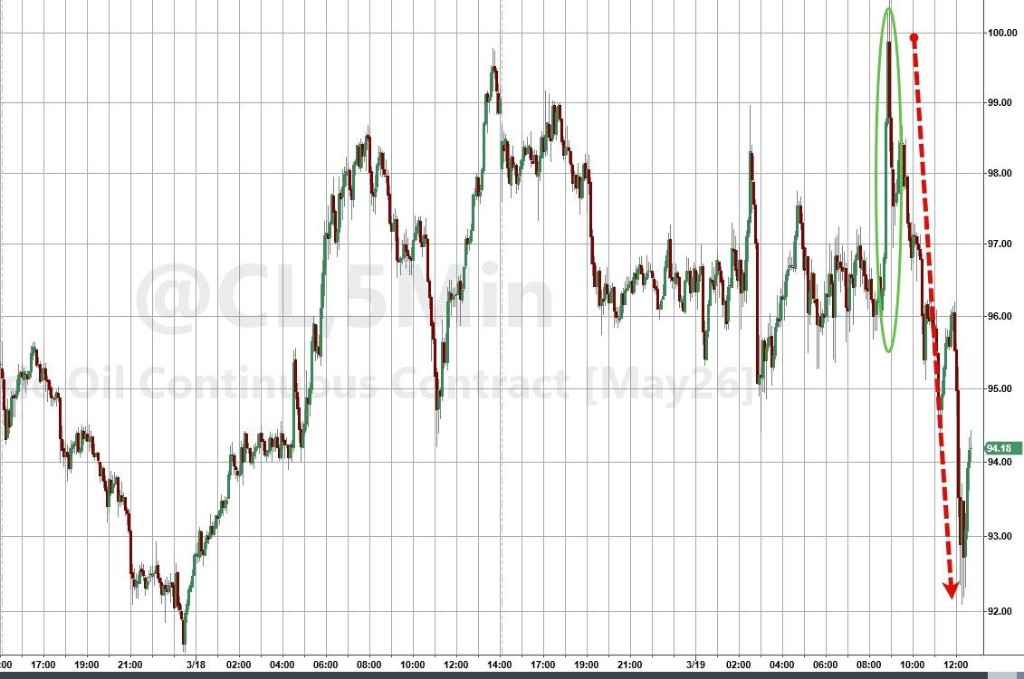
Last night, the global market experienced a critical turning point. Initially suppressed by the collective "hawkish" stance of global central banks and concerns over the protracted war, gold plummeted below $4,500, and WTI crude oil briefly broke $100. However, Netanyahu subsequently declared that Iran's nuclear missile capabilities had been destroyed, and he expected the war to end "sooner than anticipated." He also promised to suspend attacks on energy facilities and assist in reopening the Strait of Hormuz, causing WTI crude oil to plunge over 8%, while the decline in U.S. stocks significantly narrowed in the late trading session

Last night, the global capital markets experienced intense fluctuations. The market was originally under severe pressure from the collective "hawkish" stance of global central banks and concerns over the prolonged Middle East conflict, but a speech by Israeli Prime Minister Benjamin Netanyahu became a key turning point in reversing market sentiment.

On the evening of March 19 local time, Netanyahu held a press conference in Jerusalem. Regarding the developments in the Middle East, according to Xinhua News Agency, Netanyahu stated that after 20 days of airstrikes by the U.S., Iran has lost its uranium enrichment and ballistic missile production capabilities. He mentioned that there are three objectives for military action against Iran: to eliminate the "nuclear threat" from Iran, to eliminate the ballistic missile threat from Iran, and to achieve "regime change."

Regarding the subsequent situation, Netanyahu provided a time expectation. He said, "I believe this war will end much faster than people think. In war, you must grit your teeth." Netanyahu dismissed the idea of launching endless military actions against Iran, stating at the press conference that the goals he set are achievable.

Energy War Cools Down: Israel Promises to "Pause" Airstrikes on Iranian Energy Facilities

A few days ago, Iran's largest gas field, the South Pars gas field, was attacked, prompting Iran to retaliate against Gulf energy hubs such as Qatar. Core energy facilities were struck, which temporarily pushed Brent crude oil to break through $119 per barrel in early trading on Thursday.

However, the situation took a turn that evening. Xinhua News Agency reported that Netanyahu confirmed at the press conference that Israel "independently" conducted airstrikes on Iranian gas fields. But he promised on the spot to "comply" with U.S. President Trump's request to "pause" subsequent airstrikes on energy facilities.

Earlier that day, Trump stated at the White House in response to media questions that he had informed Netanyahu not to attack energy facilities within Iran. Trump had previously claimed to be "unaware" of the attack on the South Pars gas field.

Regarding the energy chokepoint most concerning to the oil market—the Strait of Hormuz, Netanyahu stated that Israel is assisting the U.S. in efforts to reopen the blocked Strait of Hormuz.

Meanwhile, Wall Street Journal mentioned that the U.S. Treasury Department (OFAC) issued a general license, easing restrictions on the delivery and sale of certain Russian crude oil, which further alleviated concerns on the supply side of the oil market.

Market Quickly Prices In: Oil Prices Plunge from Highs, U.S. Stocks Stabilize at Close

Netanyahu's statements, combined with the U.S. policy easing on oil supply, directly removed the "risk premium" from the oil market WTI crude oil briefly broke through $100 per barrel during the session but quickly plummeted after the statement, falling over 8% from the day's high. Brent crude oil turned down more than 3% in the last hour of U.S. trading.

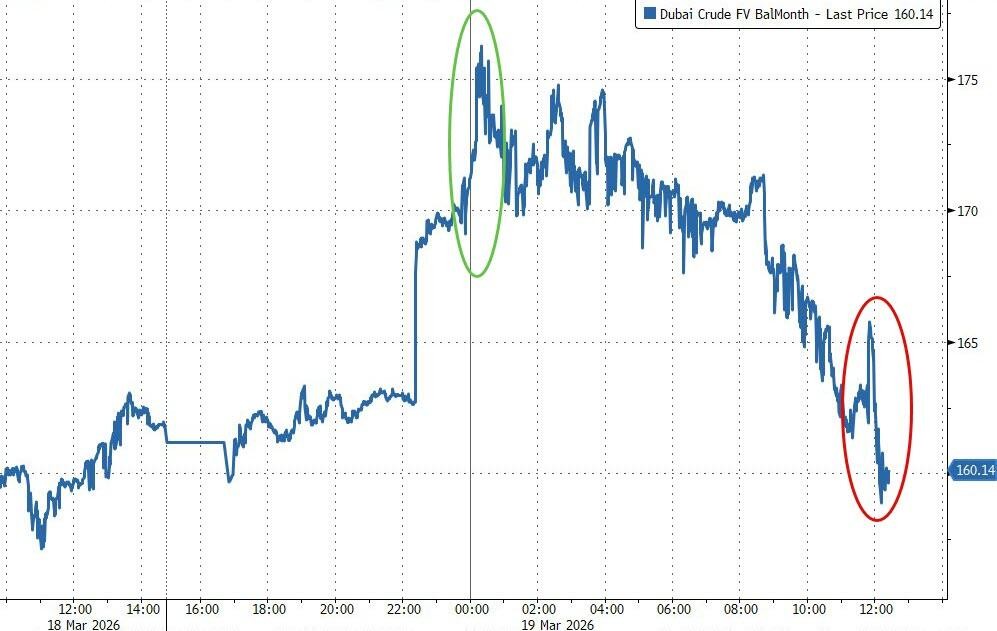
Oil prices in the core Middle Eastern production regions of Oman and Dubai also plummeted, with Dubai oil prices hitting a historic high of $177 per barrel during extreme panic, before significantly retreating.

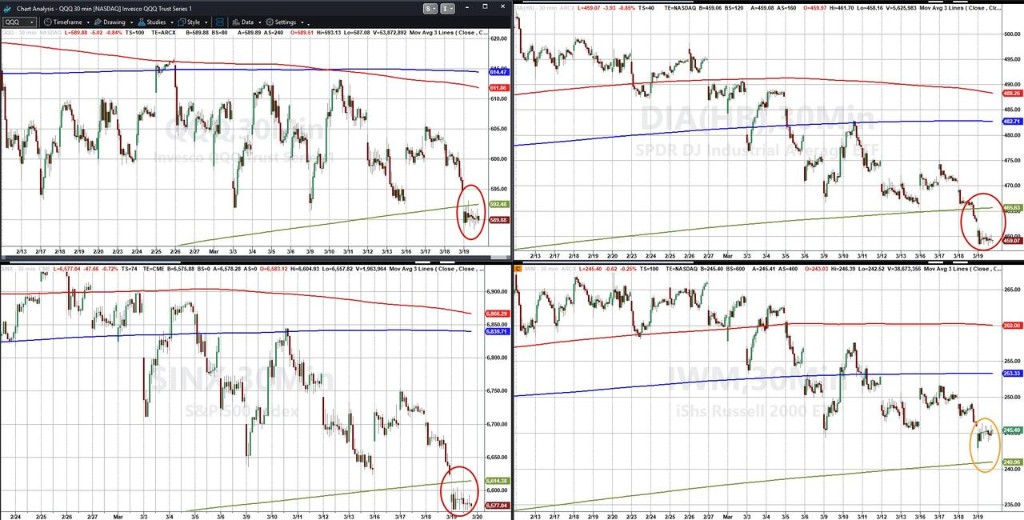
The rapid decline in oil prices seemed to ease the pressure on risk assets. The yield on the two-year U.S. Treasury note cooled from a high of 3.96%, ultimately stabilizing around 3.784%. The three major U.S. stock indices recovered most of their losses in the last hour before closing, with the Dow Jones only down 0.44%, and the Russell small-cap index even managed to rise 0.65%.

Data from Susquehanna Investment Group shows that the skew of bullish options on the S&P 500 has fallen to the 3rd percentile, indicating that with the short-term cooling of the situation in the Middle East, the market is brewing space for a technical rebound.

Market Before the Speech: Global Central Banks' Collective "Hawkish" Stance Ignites Inflation Concerns

Before Netanyahu's speech, the market was shrouded in the gloom of stagflation and the protraction of war. In the past 24 hours, major global central banks have made concentrated statements, viewing the inflationary pressures brought by the Middle East conflict as a significant uncertainty for policy outlook.

According to a summary by Wall Street Journal, the Federal Reserve, the Bank of Japan, and the central banks of Switzerland and Sweden all announced that they would maintain interest rates unchanged, with a hawkish tone. The European Central Bank, while holding steady, lowered growth expectations and raised inflation forecasts, directly pointing to stagflation risks; the Bank of England explicitly stated it was ready to "take action" to address inflation, catching the market off guard.

Under the strong hawkish statements from global central banks and expectations of a high interest rate environment, concerns about the prolonged war driving up global inflation reached a peak. As a non-yielding asset, gold was the first to face fierce selling, with spot gold dropping over 3.4%, briefly falling below the $4500 mark, hitting a six-week low; silver plummeted by 12% during the session.

Israel's Three Major Objectives Established, Ground Operations Remain a Concern

While the hot war dimension of energy has temporarily eased, the long-term resolution of this conflict is still incomplete.

Xinhua News Agency reported that Netanyahu clearly outlined three objectives for military action against Iran: first, to eliminate the "nuclear threat" from Iran; second, to eliminate the threat of ballistic missiles; and third, "regime change." He declared, "We are winning, and Iran is being destroyed." Regarding the ultimate goal, Xinhua News Agency specifically pointed out that Netanyahu stated that achieving a "regime change" in Iran cannot rely solely on airstrikes; there must be a "ground component." This strongly suggests that Israel still retains the option for ground operations. He claimed that there are cracks within the Iranian leadership and at the front lines.

Netanyahu also stated that military actions against Iran will "continue as long as necessary." During the press conference, the Israel Defense Forces detected missiles being launched from Iran towards Israel, triggering air defense alerts in the northern region.

In response to external accusations that "Israel is dragging the United States into war," Netanyahu firmly denied this, clarifying the boundaries of responsibility in the U.S.-Israel alliance. "Does anyone really think someone can tell President Trump what to do? Come on. President Trump always makes decisions based on what is beneficial for the United States."

Iran claims it will no longer exercise restraint if infrastructure is attacked again; U.S. may seize islands to force Iran to open the Strait of Hormuz

According to reports from Xinhua News Agency, the Iranian Islamic Revolutionary Guard Corps announced on Thursday that the war between Iran and the United States and Israel has entered a "new phase." According to CCTV, Iranian Foreign Minister Amir-Abdollahian warned that if domestic infrastructure is attacked again, Iran will have "zero restraint"; Iran released satellite images showing damage to U.S. military facilities and equipment in Bahrain, the UAE, and Iraq.

A U.S. F-35 fighter jet reportedly made an emergency landing after being hit by Iranian fire. Reports cited two informed sources saying that the F-35 made an emergency landing at a U.S. Air Force base in the Middle East, with the aircraft suspected of being hit by Iranian fire.

The U.S. is also increasing troop deployments to the Middle East and may seize key Iranian oil export hubs to force Iran to open the Strait of Hormuz.

According to reports cited by Xinhua News Agency, approximately 2,200 U.S. Marines from the 31st Marine Expeditionary Unit are en route to the Middle East aboard an amphibious assault ship from Japan, expected to arrive in about a week. The U.S. may use this force to occupy Halke Island as leverage to compel Iran to open the Strait of Hormuz.

JP Morgan analysts warned that investors betting on a quick resolution to the war are taking high-risk bets. Until Israel's objectives are achieved, the fragile geopolitical balance remains a sword of Damocles hanging over assets