Huawei Cloud CEO Zhou Yuefeng: The core competitive advantage of model competition has already shifted to "post-training"

Wallstreetcn
2026.03.20 10:54

Building the "black land" of the AI era

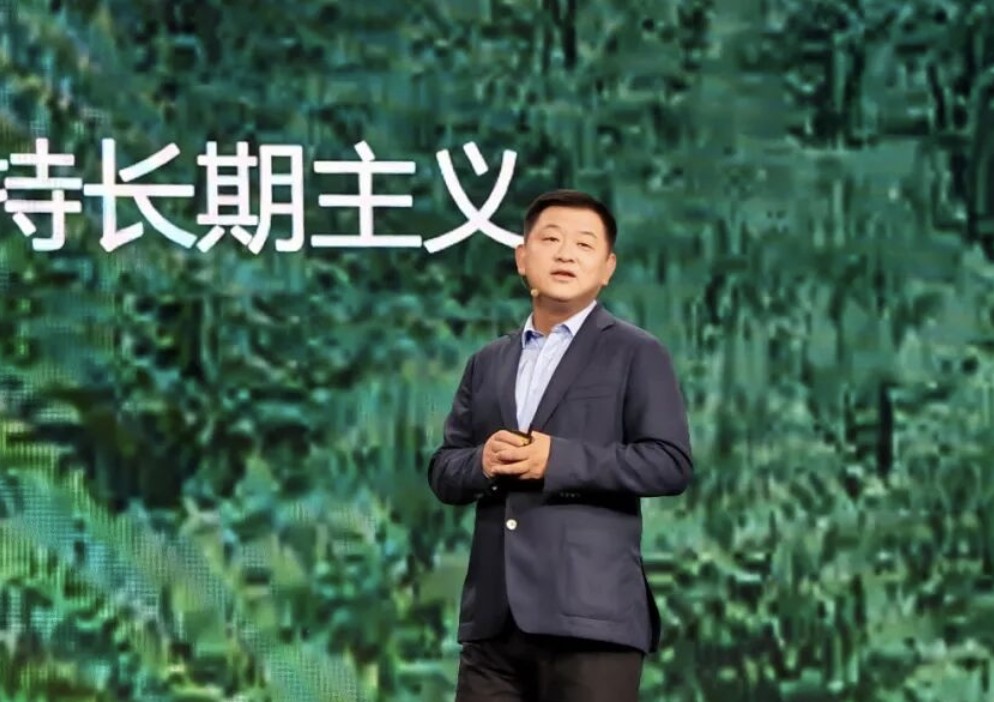
Huawei Cloud CEO Zhou Yuefeng

The focus of the global AI competition has shifted from general model capabilities to practical industry application capabilities. In this new business race, how should enterprises build their exclusive AI combat capabilities?

On March 20, at the Huawei China Partner Conference 2026, Huawei Cloud provided its own solution.

Huawei Cloud CEO Zhou Yuefeng pointed out that public cloud is the optimal solution for the implementation of enterprise AI and the best platform to support future AI productivity.

In response to the current trend of "hundreds of models competing," he clearly proposed a path based on open-source openness and building core differentiation of models through "post-training," aiming to create AI solutions for enterprises that are practical and have exclusive competitive advantages.

New Winning Move: Post-Training?

As the industry enters the era of intelligent agents, Zhou Yuefeng put forward a forward-looking industry insight: the core winning move in model competition has shifted to "post-training" capabilities.

Although general large models are "knowledgeable," they often lack deep industry know-how. The core value of post-training is to enable these general large models to thoroughly understand exclusive industry knowledge and accurately adapt to specific business scenarios.

Based on this, Huawei Cloud has developed a post-training suite that covers the entire process of technology capabilities from CPT (Continuous Pre-Training), SFT (Supervised Fine-Tuning) to RL (Reinforcement Learning).

Through this suite, enterprises can deeply infuse their own industry knowledge on top of leading foundational models and integrate Huawei's unique Harmony coding capabilities and Ascend operator optimization as core "nutrients."

It is reported that this combination not only enhances the accuracy of models in specific business scenarios but also optimizes the adaptability of the Harmony system and the operational efficiency of Ascend's underlying computing power.

At the same time, Zhou Yuefeng revealed that Huawei Cloud has a research and development team focused on reinforcement learning and post-training. This team conducts post-training and reinforcement learning for self-developed, open-source large models across various industries and scenarios, enabling them to possess more differentiated capabilities, which is Huawei Cloud's strategy regarding models.

Why Public Cloud is the "Optimal Solution"

Zhou Yuefeng pointed out that at this critical stage where artificial intelligence is transitioning from technological exploration to large-scale application, the advantages of public cloud are becoming increasingly significant compared to building private data centers.

Data shows that by 2025, 85% of global AI computing power resources will be deployed in the cloud, and over 87% of enterprises will choose to conduct AI business and innovation practices in the cloud, making cloud the absolute mainstream of AI investment.

The underlying business logic is not complicated.

In terms of cost and talent, building offline data centers faces the heavy burden of long cycles and huge investments, while top AI talent is in high demand and short supply in the market.

In this regard, the cloud gathers a large AI computing power cluster, as well as a vast number of AI engineers and algorithm design engineers. Enterprises utilizing AI capabilities in the cloud can not only achieve cost optimization but also effectively alleviate severe talent anxiety, thereby focusing valuable energy on core business logic and AI innovation itself In terms of security, which is extremely important to enterprises, public cloud provides a protective barrier far superior to self-built environments. Taking Huawei Cloud as an example, relying on its intelligent unified operation plan, up to 99% of security threats can be closed within 5 minutes, and 99% of network attacks can be handled automatically, which solidifies the security baseline for enterprise AI assets.

More critically, in the face of the rapid evolution trend of AI large models that iterate weekly, traditional offline deployment models cannot keep up with technology through frequent upgrades. The public cloud model effectively ensures that enterprises always access the latest computing resources and continuously gain the industry's leading AI capabilities.

Adhering to Open Source

Zhou Yuefeng also emphasized that Huawei Cloud always adheres to the open-source philosophy.

In terms of large model strategy, Huawei Cloud fully opens its self-developed Pangu large model, launching a full-size version matrix ranging from 718B to 1B and making it open source, while also supporting over 160 top SOTA models that are ready to use out of the box, including mainstream high-quality models such as DeepSeek, Qwen, and Zhipu GLM.

At the same time, Huawei Cloud has achieved rapid response for top models with "release and go live," such as the Zhipu GLM-5 model, which achieved Day 0 access on the same day, undoubtedly providing enterprise developers with the richest and most cutting-edge arsenal.

Facing the intelligent era, Huawei Cloud aims to become the "black land" for enterprise-level AI innovation.

It is reported that Huawei Cloud CodeArts intelligent agent began public testing in February this year; the enterprise commercial version of Huawei Cloud's one-stop enterprise-level intelligent agent development platform AgentArts will officially start public testing in April, while the open Jiuwen enhanced version is scheduled to be officially open-sourced in May