


Japanese Cars Collapse in Thailand! 60-Year Hegemony Ended by Chinese Automakers
At the 47th Bangkok International Motor Show, Chinese brands surpassed Japanese brands in pre-orders for the first time, becoming the new market dominator. BYD led with 17,354 units, ahead of Toyota's 15,750 units. The market share of Japanese brands is rapidly declining, with sales in Thailand projected to drop 68% by 2025 compared to 2019. Chinese brands have already captured a 47.34% market share in Thailand and hold an 80% share in the electric vehicle sector, demonstrating strong competitiveness
The 47th Bangkok International Motor Show has concluded, with organizers releasing the total pre-order volume for the show: 132,951 vehicles.
While this number might seem ordinary, it has kept Japanese brands awake at night: For the first time in Thailand, the total pre-orders for Chinese brands have surpassed those of Japanese brands.
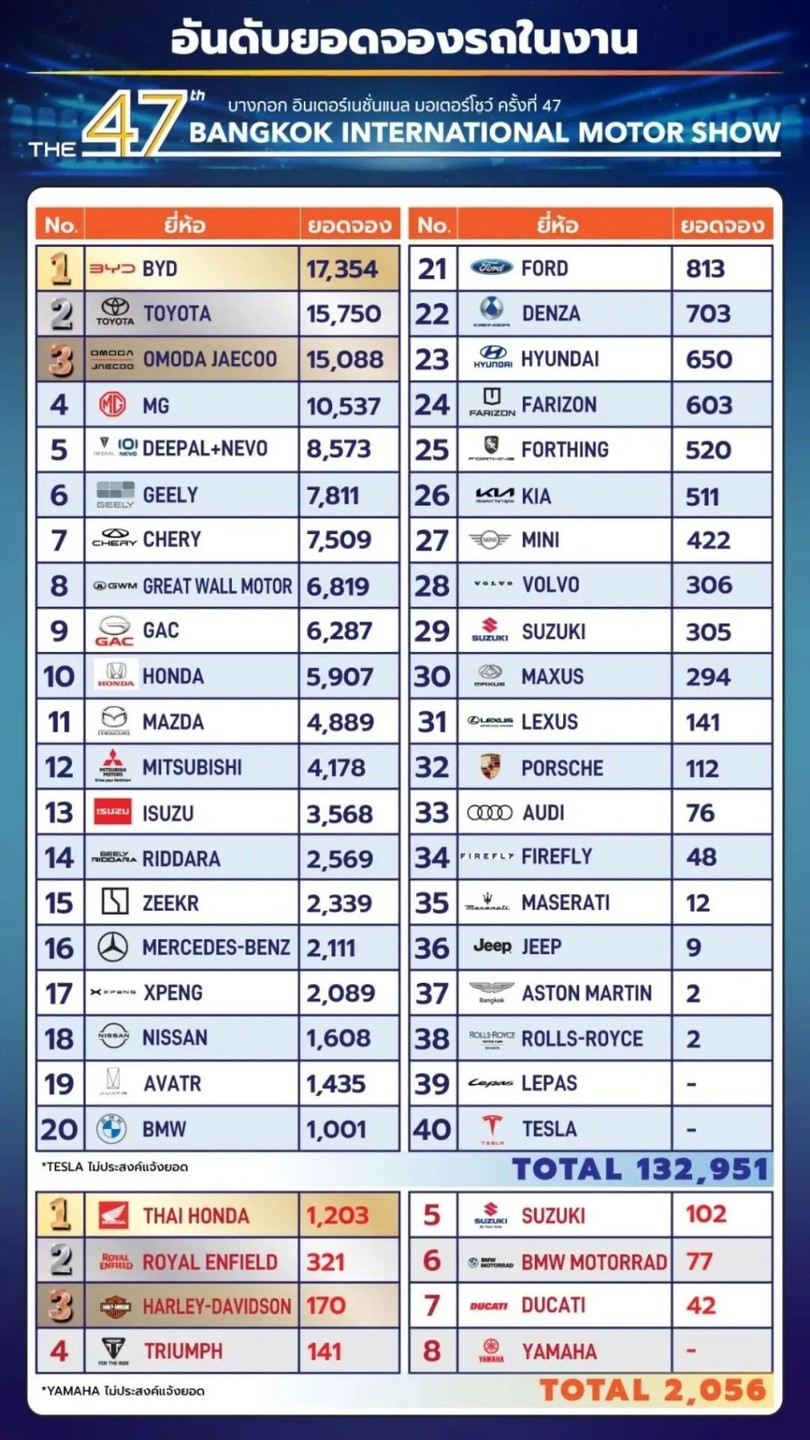
Source: Bangkok Motor Show Organizing Committee
Among them, BYD led with 17,354 units, surpassing Toyota's 15,750 units, securing the top position. In the top ten pre-ordered models, Chinese brands occupied seven spots, with only Toyota and Honda from Japanese brands struggling to maintain a presence. Established automakers like Suzuki and Subaru were absent from the top ten.
It used to be said that Southeast Asia was the "backyard" of Japanese cars, with the "Toyota tsunami" sweeping everything aside. Now, it appears the "green torrent" from China is far more powerful than the "Toyota tsunami."
A Watershed Moment Behind the Bangkok Motor Show Data
Over the past half-century, Japanese brands, leveraging their mature internal combustion engine supply chains, built a comprehensive product matrix in Southeast Asia covering pickups, sedans, and SUVs. Toyota, Honda, and Isuzu have long been the dominant market players.
However, the reign of Japanese brands is rapidly declining.
According to Nikkei Asia, by 2025, sales of Japanese cars in six major countries including Indonesia, Thailand, and Vietnam are projected to decrease by 22% compared to 2019, with a drastic drop of 68% in Thailand alone. Meanwhile, data from Yiche shows that in January of this year, the combined market share of Chinese brands in Thailand reached 47.34%, narrowly surpassing Japanese brands (47.338%) for the first time, marking a historic turnaround.
This trend was vividly demonstrated at the 2026 Bangkok Motor Show.
Upon closer examination of the order data from this motor show, it marks the first time Chinese brands have ousted the long-standing leader, Toyota, at a major auto show in Southeast Asia.
Source: BYD Thailand Official Website
Furthermore, seven Chinese automakers, including MG, Changan, Great Wall, Geely, and GAC, collectively entered the top ten, forming an "encirclement" of Japanese brands.
Not only that, but the electrification wave in the Thai market has completely widened the gap between the two.
According to statistics from the Federation of Thai Industries, pure electric vehicle sales in Thailand are expected to exceed 120,000 units in 2025, an 80% year-on-year increase, with Chinese brands holding over 80% of the market share. Even in the high-end new energy sector, brands like Zeekr, Xpeng, and Avatr have garnered over a thousand orders each, further consolidating their advantage.
You might argue that this is simply Thailand reaching an inflection point in electrification, and domestic brands, primarily focused on new energy vehicles, are seizing the opportunity.
Dianche Tong believes this is merely the Japanese brands giving up on the electrification path, allowing Chinese brands to gain a crucial time advantage.
When you think about it, Japanese brands are not lacking in technology; for instance, Toyota still ranks among the leaders in terms of new energy technology patent counts. The issue is that Japanese brands have been rooted in the Thai market for too long. Their substantial investments in internal combustion engine vehicles, supply chains, and vested interests make them hesitant to let electric vehicles disrupt their existing fuel vehicle market share.
Chinese brands, free from these historical burdens, have directly appealed to consumers with technologies such as intelligent cockpits, advanced driver-assistance systems, and high-voltage fast charging.
To put it plainly, this is a "dimensionality reduction strike."
A "Dimensionality Reduction Strike" in Supply Chains, Technology, and Ecosystems
Why have Chinese cars been able to penetrate a market that Japanese cars have dominated for sixty years in just three years?
Many people's first thought is price. Indeed, the BYD Dolphin has been priced under 600,000 Thai baht, nearly 30% cheaper than a comparable Toyota Corolla. However, this is merely superficial; the real focus lies on the value chain.
The conservatism of Japanese cars in terms of intelligence is evident. Step into a Toyota Yaris, and the interior still feels overwhelmingly plastic, with a central control screen that looks like it's from a decade ago. In contrast, Chinese automakers offer large rotating screens and intelligent cockpits, transforming cars into "smartphones on wheels."
Moreover, Chinese automakers' "micro-innovations" tailored for the Southeast Asian market have caught Japanese car manufacturers off guard.
Xpeng has specifically optimized its battery thermal management system for Thailand's hot and humid climate; BYD has invested heavily in charging network deployment, having already established branded charging stations in Thailand. This level of customization based on real-world scenarios is something Japanese automakers, accustomed to "globally unified models," find difficult to match.
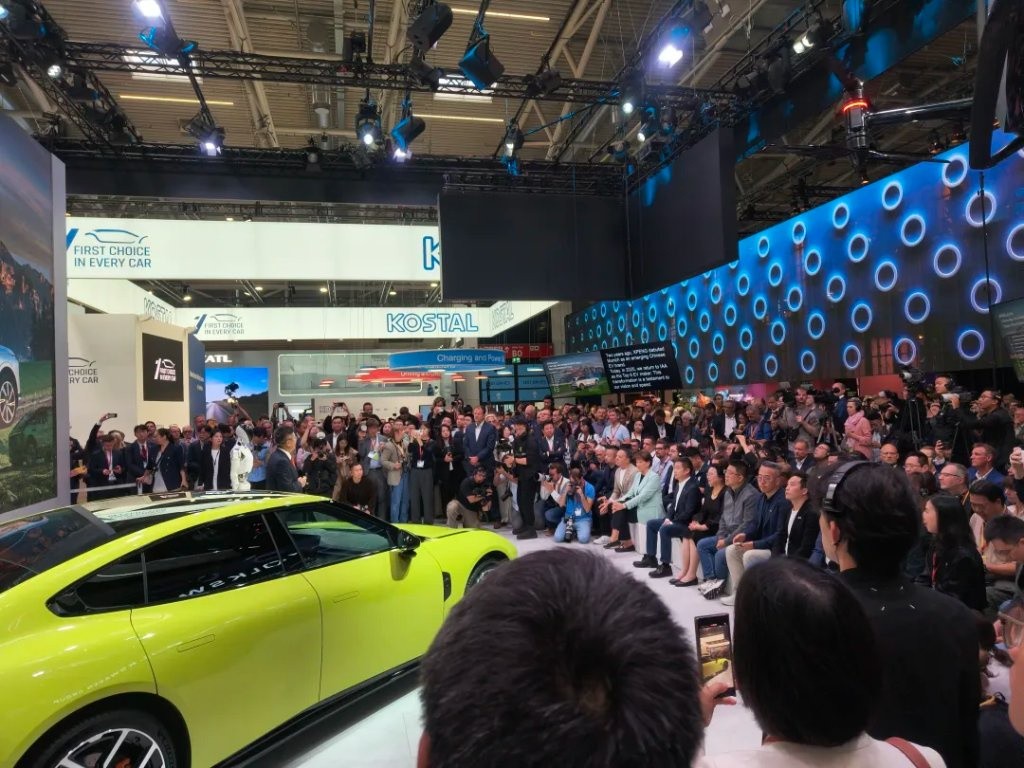
Source: Photographed by Dianche Tong
Let's look at the supply chain. The moat of Japanese cars in Southeast Asia is their zero-inventory system and dealer network built over decades. However, the problem is that this system is based on "engine plus transmission." In the era of electrification, its advantage has diminished significantly.
What have Chinese automakers done? They've chosen to start anew.
According to data released by the Thai Ministry of Industry, as of the first quarter of 2025, there are 420 Chinese auto parts companies registered in Thailand, a threefold increase since 2020. A representative example is Gotion High-Tech, which has established a battery pack factory in Thailand, focusing on the design, development, and manufacturing of battery modules and packs.
This means that in the core areas of electric vehicles – the three components (battery, motor, electronic control) – Chinese automakers have achieved localized production, resulting in lower costs and faster supply chain integration. In contrast, Japanese car manufacturers either import batteries from Japan or purchase them from Chinese suppliers. On this point alone, Japanese cars are gradually falling behind from the starting line.
Finally, the brand strategies differ. The success of Japanese cars in Thailand largely relied on pickups and entry-level sedans, which are their traditional strengths. Chinese brands have adopted different approaches: some establish brand image with high-end SUVs and sedans, while others have rapidly entered the B2B mobility market. For instance, GAC Aion, since its first vehicle entered the market in 2023, registered a cumulative total of 1,271 units in the first three quarters of last year, capturing 49% of the market share in its segment and ranking first among brands.
In Dianche Tong's view, Chinese automakers are not just selling cars; they are simultaneously building an ecosystem of mobility, finance, and charging. This "system-building" approach is something Japanese automakers have never encountered before.
Southeast Asia is More Than a Market; It's a "Springboard for Counterattack"
For Chinese automakers, defeating Toyota in Thailand holds strategic significance far beyond Southeast Asia itself.
If we broaden our perspective, we'll discover a more interesting trend: Chinese automakers are using Southeast Asia as a springboard to infiltrate other territories traditionally dominated by Japanese cars.
For a long time, Japanese cars were undisputed leaders in places like Australia, New Zealand, and the UK. Chinese carmakers wanted to enter these markets, but they previously lacked the experience in developing right-hand drive vehicles and the production bases.
However, things are different now. Thailand is one of the world's largest producers of right-hand drive vehicles, conveniently serving as a bridgehead for Chinese automakers to overcome this challenge. Chinese brands such as Great Wall and BYD have already established right-hand drive production bases in Thailand.
In the future, these "Made in Thailand" Chinese new energy vehicles can enter the Australian market with zero or low tariffs.
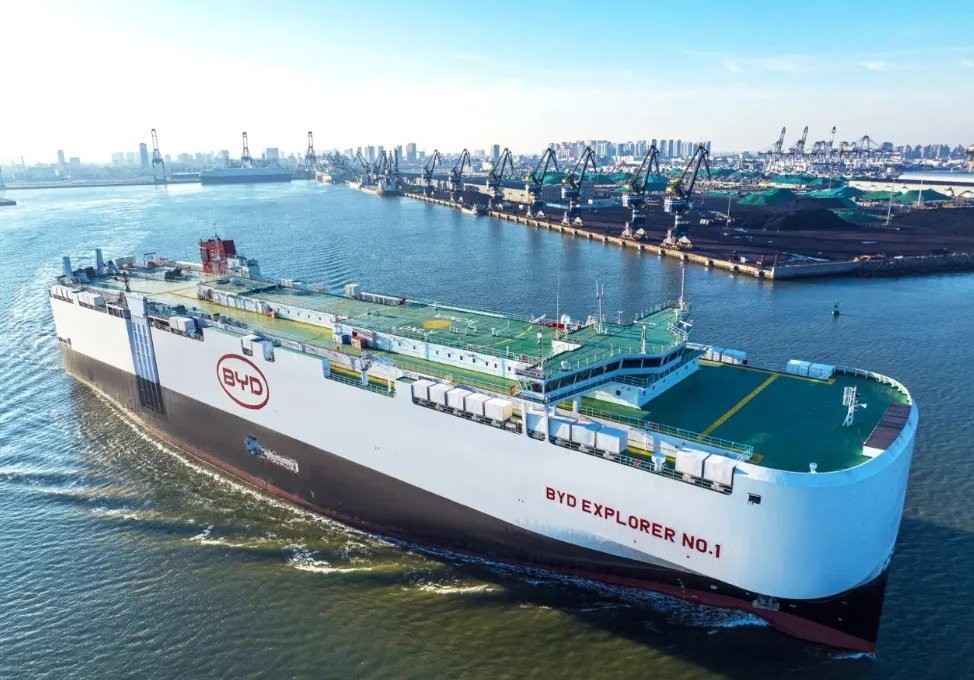
Source: BYD Official
Let's also consider tax issues and local subsidies that car companies face when going global. European and American countries have imposed high tariffs on Chinese pure electric vehicles, and Japan's subsidy policies for Chinese new energy vehicles are also not favorable.
Thailand, however, has free trade agreements with many major markets. For example, last year, Thailand signed a Free Trade Agreement (FTA) with the European Free Trade Association (EFTA), helping to expand trade and investment opportunities in the European market.
By assembling and exporting from Thailand, Chinese automakers can bypass many geopolitical risks.
Dianche Tong believes that once Chinese brands establish a firm foothold in Southeast Asia, a crucial battleground for the global automotive industry, it will naturally serve as a model for expansion into Latin America, the Middle East, and Africa.
Furthermore, on the crucial technical front, while Japanese brands still hold an advantage in hybrid technology, Chinese automakers have built significant technological barriers in pure electric and plug-in hybrid vehicles. At the Bangkok Motor Show, domestic brands not only showcased their automotive products but also demonstrated 800V high-voltage platforms, urban NOA (Navigate on Autopilot) advanced driving assistance, and extreme energy management technologies.
The technical barriers of "fuel efficiency and durability" built by Japanese cars over decades have become pale in comparison to the "extremely low running costs and superior acceleration performance" of Chinese electric vehicles.
Perhaps Japanese brands have built high brand loyalty in the Thai and even broader Southeast Asian markets, but how long can this loyalty last in the face of tangible benefits?
Chinese Brands Should Not "Pop the Champagne Early"
Although we achieved impressive results at the Bangkok Motor Show, it is not yet time to "celebrate prematurely."
We must soberly recognize that internal combustion engine vehicles remain the absolute mainstream on Thai roads, and Japanese brands still sell the best.
Therefore, in the latter half of the competition in the Southeast Asian market, Chinese brands must not solely focus on sales but also establish their "brand" and "quality."
Why do Japanese cars sell at higher prices and still find buyers? The reason is simple: Toyota dealerships have a high coverage rate in the Thai market, reaching even remote rural areas. This is currently a shortcoming for Chinese automakers and a critical area that must be addressed. Fortunately, some companies have taken the lead; for example, Dongfeng Fengxing plans to create a "10-kilometer service radius" in Bangkok, deeply embedding and widely expanding its after-sales service network.
Another aspect is to compete on value rather than price. Thailand has introduced the "30-30 Policy," which aims for at least 30% of cars produced in Thailand to be zero-emission vehicles by 2030. The policy direction clearly favors Chinese automakers, and what Chinese car companies need to do is to ride this wave and truly embed their brands in the local market.
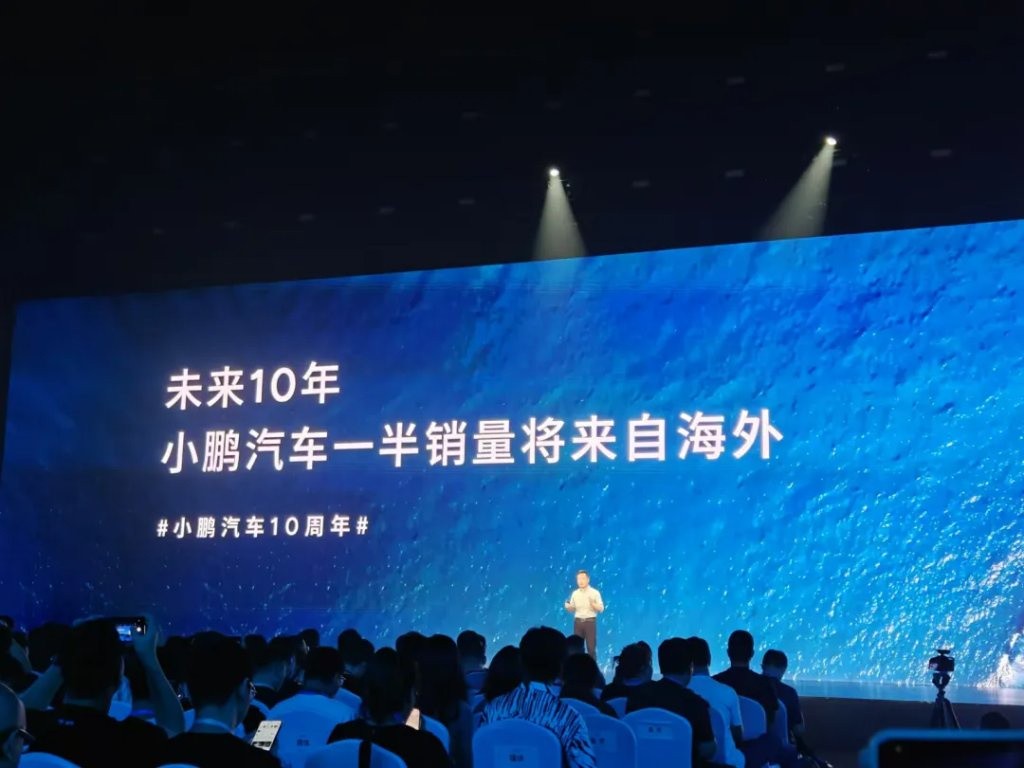
Source: Photographed by Dianche Tong
Looking back at the Bangkok Motor Show, this set of results can be considered a true breakthrough for Chinese automotive exports. More and more young Thais are beginning to choose Chinese cars as their first option. The "battle for Asian car king," which has lasted for decades, is visibly tilting.
Japanese brands spent sixty years building a solid castle in the Thai market. Chinese automakers took three years to knock down the city gates.
In Dianche Tong's view, the overseas market will become a prolonged street fight, a tough battle, but this time, Chinese automotive companies will not give their opponents a chance to breathe.
Risk Disclosure and Disclaimer
Markets are risky, and investments require caution. This article does not constitute personal investment advice, nor does it consider the specific investment objectives, financial situation, or needs of individual users. Users should consider whether any opinion, view, or conclusion in this article is suitable for their specific circumstances. Investment based on this is at the user's own risk.
