5%: A New Trajectory Amid Reflation
Q1 GDP growth of 5% exceeded expectations, driven primarily by exports, investment, and technology. The rebound in nominal GDP is expected to improve low inflation expectations, benefiting corporate and household consumption. Investment has stabilized, supported by major projects and green transition layouts. Consumption faces headwinds; attention should be paid to the impact of energy prices on consumption, with supportive policies rolled out as needed
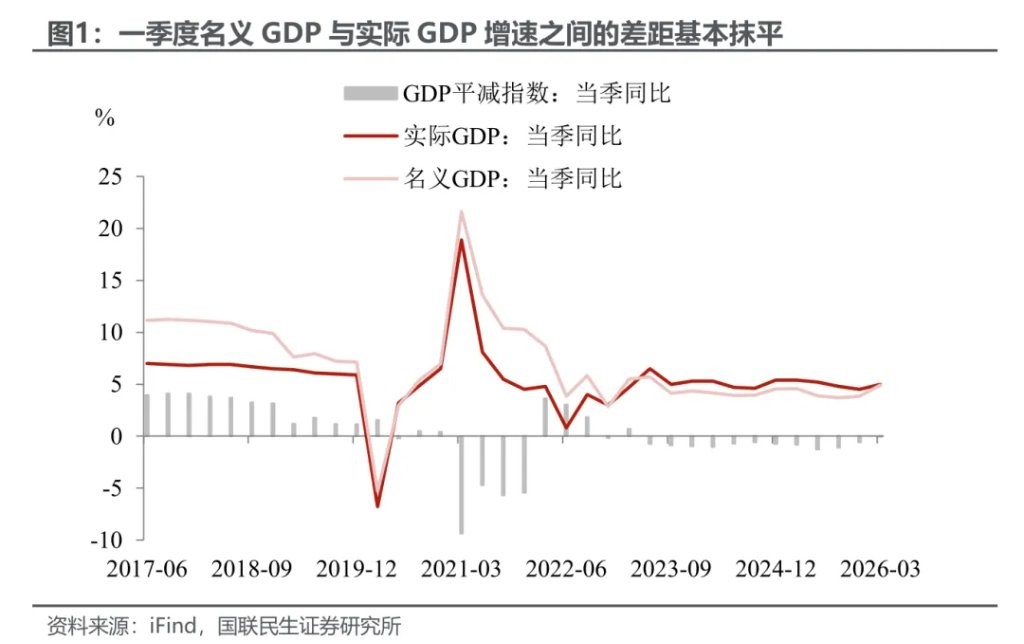
What drove Q1 GDP growth of 5%, exceeding expectations? Export chains, investment chains, and technology. However, more importantly, the faster rebound in nominal GDP signals that the "general price level" is about to turn positive. This will undoubtedly help reverse previous corporate behaviors and household expectations under low inflation. As long as the transmission of rising oil prices is controlled in the future, we believe this turnaround will have net benefits for the real economy within the year.
Meanwhile, amid US-Iran tensions and shifts in the Middle East, some restructuring of China's industrial landscape is accelerating. We believe that whether from a production or investment perspective, these developments will enhance China's economic resilience against external shocks in the future. However, suppression factors affecting consumption also require close monitoring.
First, the deflator is poised to turn positive, marking a critical inflection point for low inflation expectations. The rebound in Q1 nominal GDP growth significantly outpaced real GDP growth, ending an 11-quarter streak of negative deflators. Although this change was partly driven by input factors from international geopolitical conflicts pushing up oil prices, it objectively helps improve prior low inflation expectations, providing certain positive incentives for corporate profitability and household consumption. In the short term, the reflation trend appears sustainable, and achieving a full-year PPI turnaround is not overly difficult.

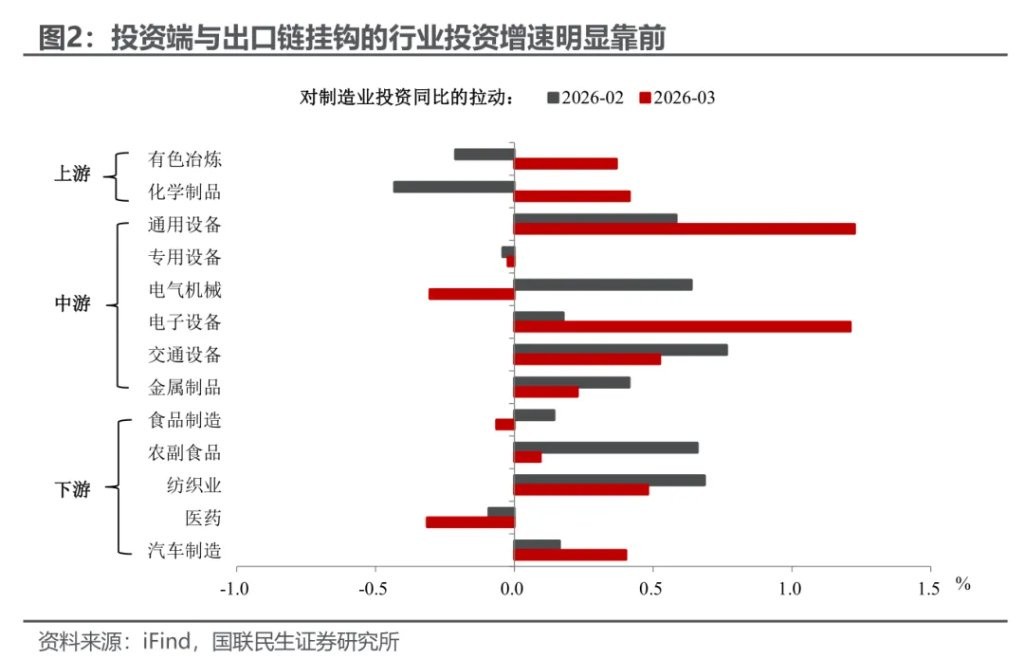
Second, the "stabilization" of investment reflects a deep logic prioritizing both development and security. Industries linked to export chains saw notably strong investment growth, with general equipment and electronic equipment sectors performing particularly well. Two main threads underpin this: first, accelerated deployment and implementation of major projects during the "15th Five-Year Plan" period at the start of the year; second, steady progress in structural layouts centered on balancing development and security while promoting green transitions. These measures not only bolster economic resilience but also build confidence in security and technology amidst global geopolitical tensions.

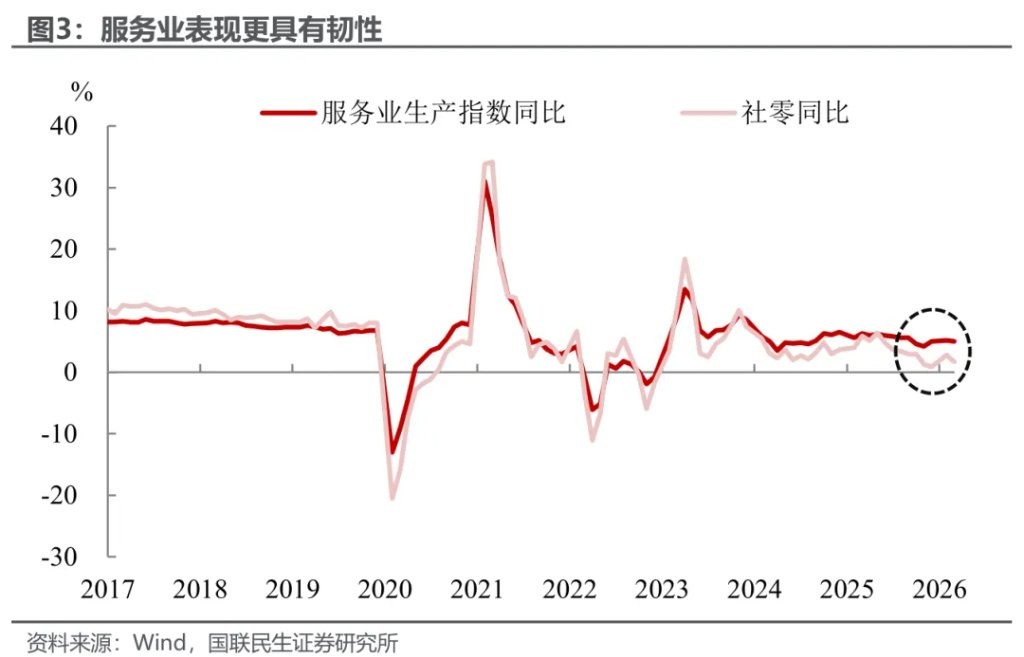
Third, under the influence of external dynamics, consumption faces temporary headwinds. The phasing out of trade-in programs combined with rising energy prices due to Middle East tensions has created a crowding-out effect on goods consumption. However, a positive signal is that the services sector maintains relative resilience, providing structural support for overall consumption. Going forward, it is recommended to closely monitor the extent to which rising energy prices squeeze consumption, while simultaneously rolling out targeted support policies in a timely manner to "prepare for a rainy day."

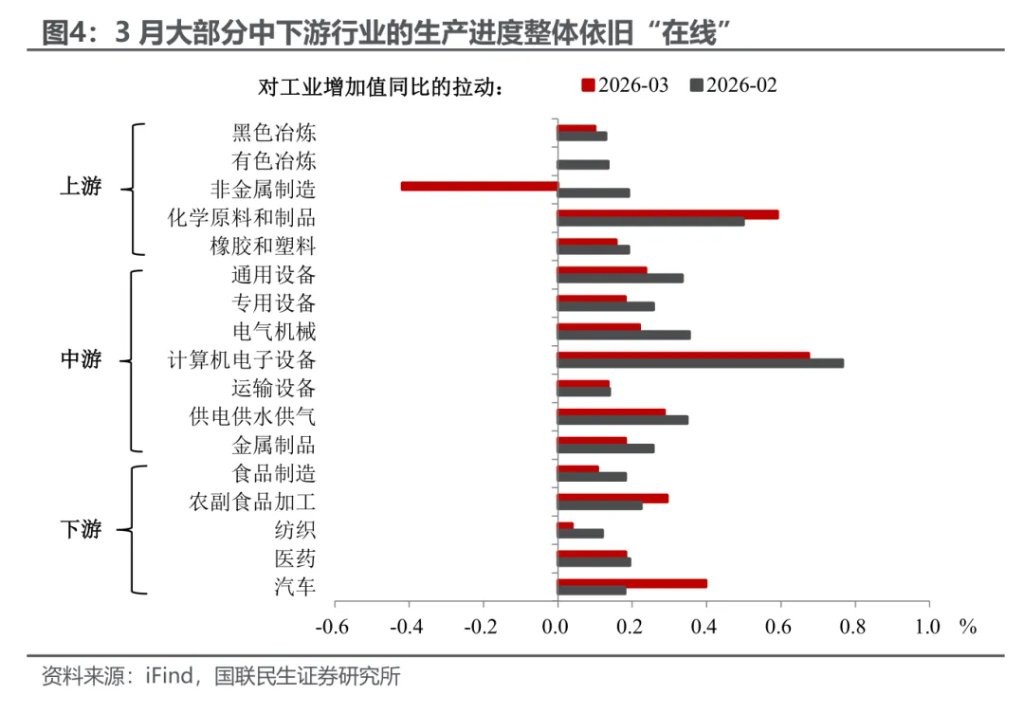
Industry: Behind the increase in "volume," capacity utilization hits new lows again. March industrial value-added growth slowed slightly from 6.3% year-on-year to 5.7%. This largely reflects the natural fading of calendar effects and low base effects—with Chinese New Year occurring later this year, January-February saw elevated year-on-year readings due to pre-holiday rush production, while post-holiday resumption cycles shifted later, exerting downward pressure on March's year-on-year data. Production schedules for most mid-to-downstream industries remained largely "on track" in March.

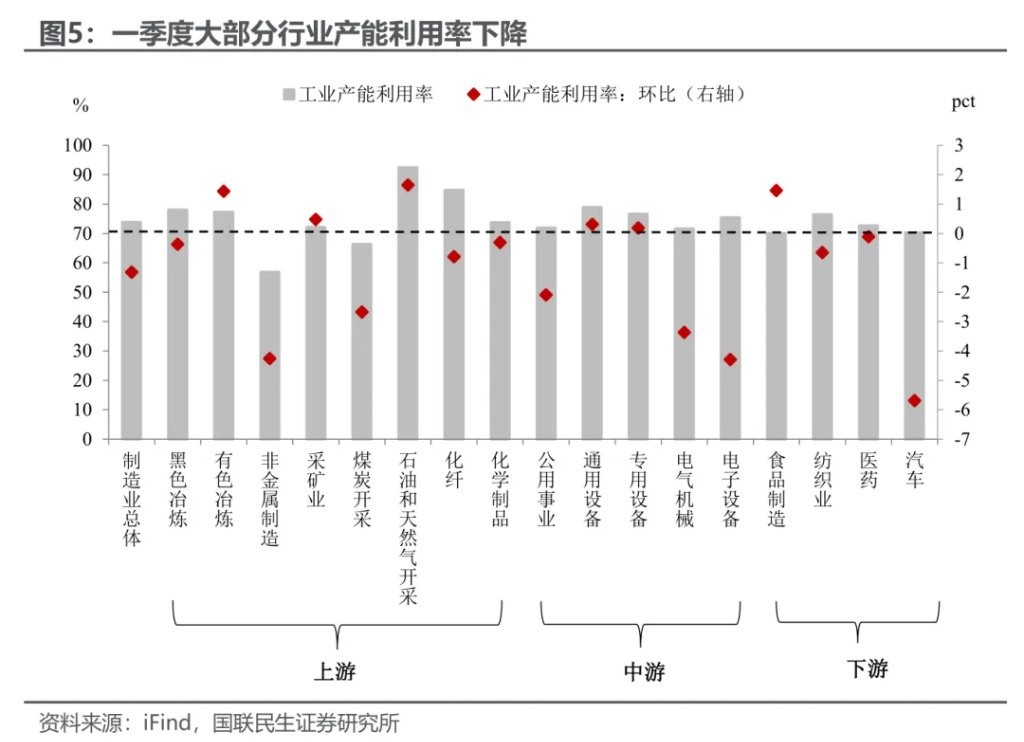
However, caution is warranted regarding further declines in capacity utilization. Overall industrial capacity utilization dropped to 73.6% in Q1, a level last seen in Q1 2024. Particularly concerning is that capacity utilization improvements in sectors such as automobiles, electrical machinery, and non-metallic mineral products remain modest. While output volumes continue to rise steadily, effectively boosting capacity utilization remains an urgent challenge for high-quality industrial development.

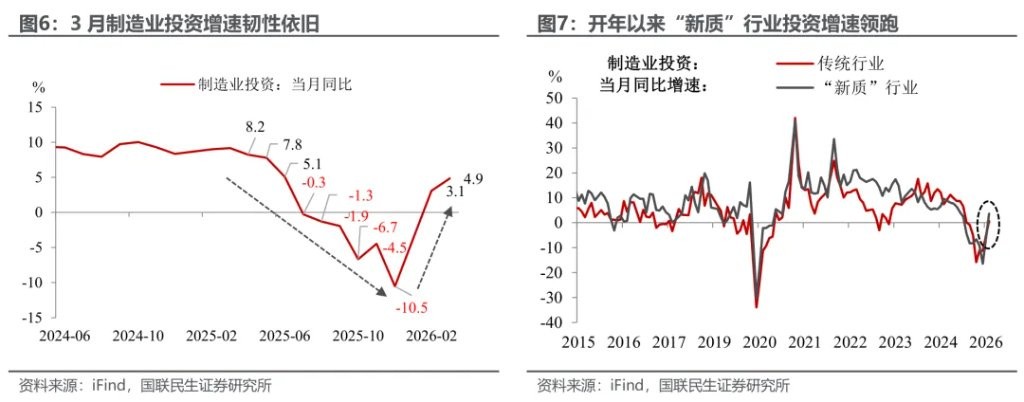
Manufacturing: Certainty in the investment segment. March manufacturing investment grew 4.9% year-on-year, up steadily from 3.1%, demonstrating strong resilience driven by emerging productive forces-related sectors. Meanwhile, many upstream industries also saw their investment growth turn from negative to positive, warranting attention. With marginal improvements in export expectations and the low-base effect following last year's "reciprocal tariffs," manufacturing investment is expected to maintain a gentle recovery trajectory, becoming the most certain supporting force in the investment segment.

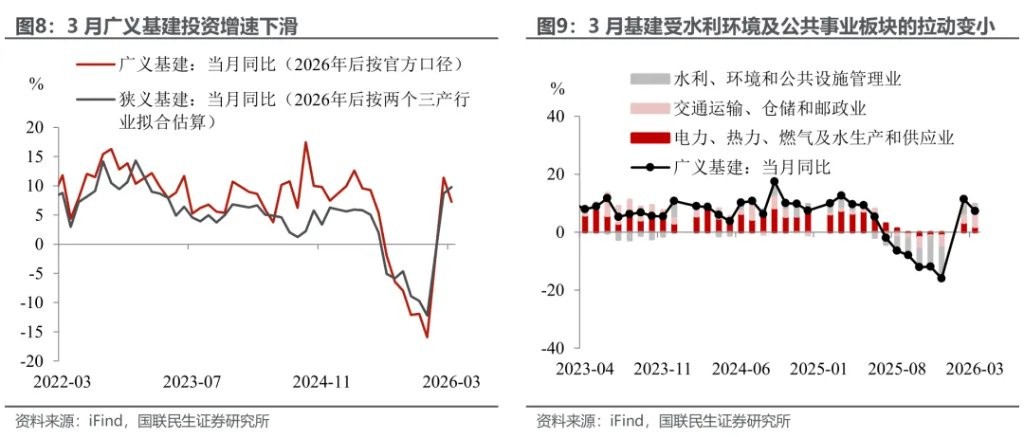
Infrastructure: Easier to achieve "stabilization" than sustained high growth. March broad-based infrastructure investment grew 7.2% year-on-year, down from 11.4% at the start of the year, while narrow-sense infrastructure (based on two major and three tertiary industries) saw its growth rate rise instead, mainly driven by acceleration in transportation, warehousing, and postal services investments.

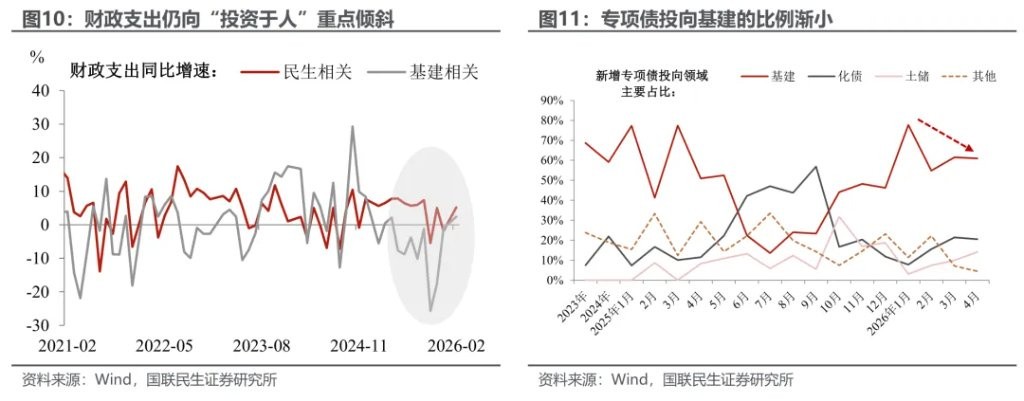
With fiscal support, stabilizing infrastructure investment is not difficult, but significant upside may remain limited. The current resilience in infrastructure growth stems primarily from sustained fiscal efforts since late 2025—increased fiscal spending on infrastructure and a higher proportion of special bonds allocated to infrastructure. However, neither of these supports is sustainable (recent special bond issuance has weakened, and the allocation ratio to infrastructure is declining). Thus, infrastructure investment is likely to maintain a growing trend, but high-growth rates are unlikely to persist.

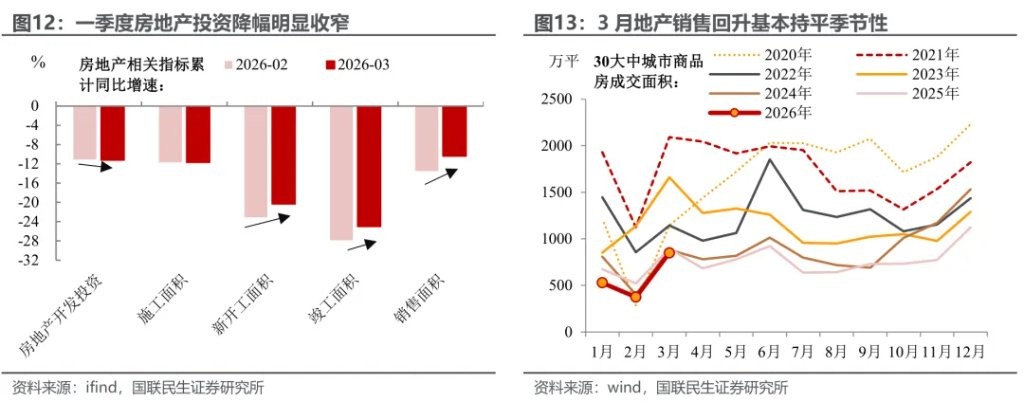
Real Estate: Investment decline narrowed significantly at the start of the year, showing signs of demand improvement. Nationwide real estate development investment fell 11.2% year-on-year cumulatively in January-March, a marginal narrowing compared to end-of-last-year levels, partially benefiting from a low base effect early in the year. Meanwhile, sales showed signs of marginal improvement; March residential transaction volume recovered in line with seasonal patterns, without signs of renewed weakness. If this sales recovery continues beyond March and establishes a trend, it could provide support for gradually stabilizing real estate investment within the year.

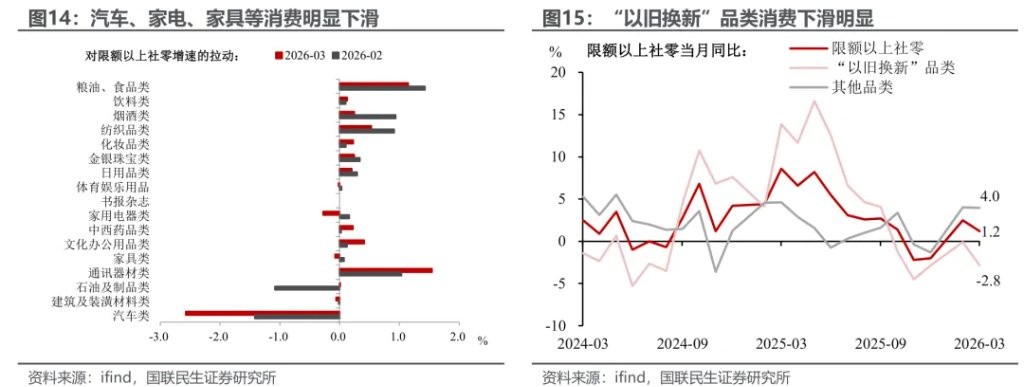
Consumption: Phasing out of "two new initiatives" combined with external dynamics creates headwinds for goods consumption. March total retail sales of consumer goods grew 1.7% year-on-year (cumulative 2.8% in January-February), indicating continued weakness in goods consumption. While part of the decline can be attributed to the fading of seasonal Spring Festival effects, the core drag comes from the marginal reduction in trade-in program intensity, compounded by rising energy prices due to external disruptions, which squeezed households' actual purchasing power. Structurally, durable goods related to the "two new initiatives" saw particularly sharp declines, with automobiles, home appliances, and furniture recording significant negative growth. Oil-sensitive downstream categories like grain/oil and textiles also softened.

In contrast, the services sector demonstrated stronger resilience. March services production index grew 5% year-on-year, dropping only 0.2 percentage points from the previous month, reflecting relatively robust growth and providing structural support for overall consumption. Facing temporary consumption headwinds going forward, authorities should continuously monitor the crowding-out effect of energy prices on consumption while also preparing in advance. This includes accelerating the rollout of an additional 62.5 billion yuan in national subsidy funds and introducing timely targeted support measures for the services sector.
Risk Disclosure and Disclaimer
Investment involves risk; investors should exercise caution. This article does not constitute personalized investment advice and does not account for individual investors' specific objectives, financial conditions, or needs. Users should consider whether any opinions, views, or conclusions presented herein align with their particular circumstances. Any investment decisions made based on this content are the sole responsibility of the investor.