Bank of America's Hartnett: This US Stock Rally Is Evolving Into a "Bull Trap"

Wallstreetcn
2026.04.19 06:42

The Nasdaq has set a record for its longest consecutive rally in 15 years. Amid the tech stock frenzy, Bank of America Chief Strategist Michael Hartnett issued a stark warning: a record $172.2 billion cash outflow is driving frenzied buying; the market shifted from oversold to overbought in just 11 trading sessions, the second-fastest pace since 1982. This rapid rebound is turning into a costly "bull trap"

The Nasdaq Composite Index has posted its longest consecutive rally in over 15 years, and technology sector ETFs have reached new weekly highs. However, according to Bank of America's Chief Global Investment Strategist Michael Hartnett, this exhilarating rapid rebound may be evolving into a costly "bull trap".

The Nasdaq Composite Index has risen for 13 consecutive days recently, marking the longest streak since July 2009; the technology ETF XLK hit a new weekly high, closing above $153. Meanwhile, the financial sector ETF XLF failed to hold its 200-day moving average, creating a divergence with the technology sector that serves as a potential warning signal. In Hartnett's view, this rebound, driven by record cash outflows, is shifting from an "oversold repair" phase into a dangerous zone where bulls could get trapped.

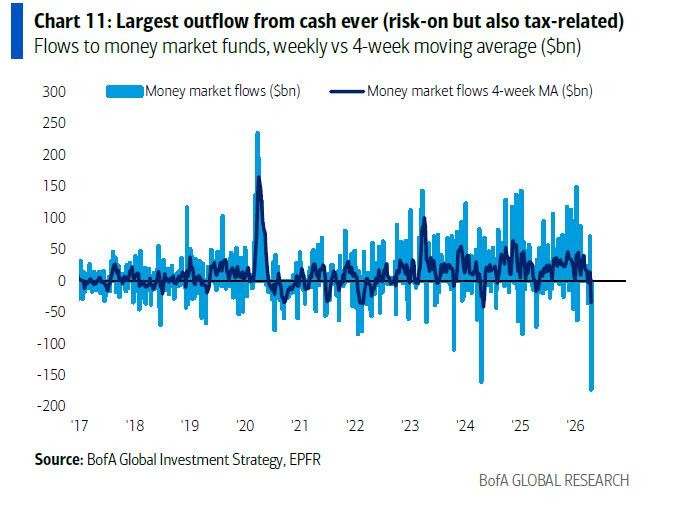
Regarding fund flows, a record $172.2 billion in cash flowed out last week alone. Of this, $11.3 billion entered the stock market, $7.9 billion flowed into bonds, while gold and cryptocurrencies each received approximately $1.2 billion in net inflows.

Meanwhile, Bank of America's April Global Fund Manager Survey shows institutional pessimism is at its highest level since June 2025. Yet actual fund flows tell a completely different story—global equity fund inflows in 2026 are expected to exceed $1 trillion, potentially setting a historical record.

Addressing this contradiction, Hartnett offered a sharp assessment: "Watch what they do, not what they say." Bears worry that inflation has not yet peaked and that the bond market faces a new wave of selling pressure; bulls are betting on earnings support to push indices to new highs. However, Hartnett's overall conclusion is clear: the market has now entered the "bull trap" zone.

Technical Cracks Emerge: The Speed of the Rebound Itself Is a Warning

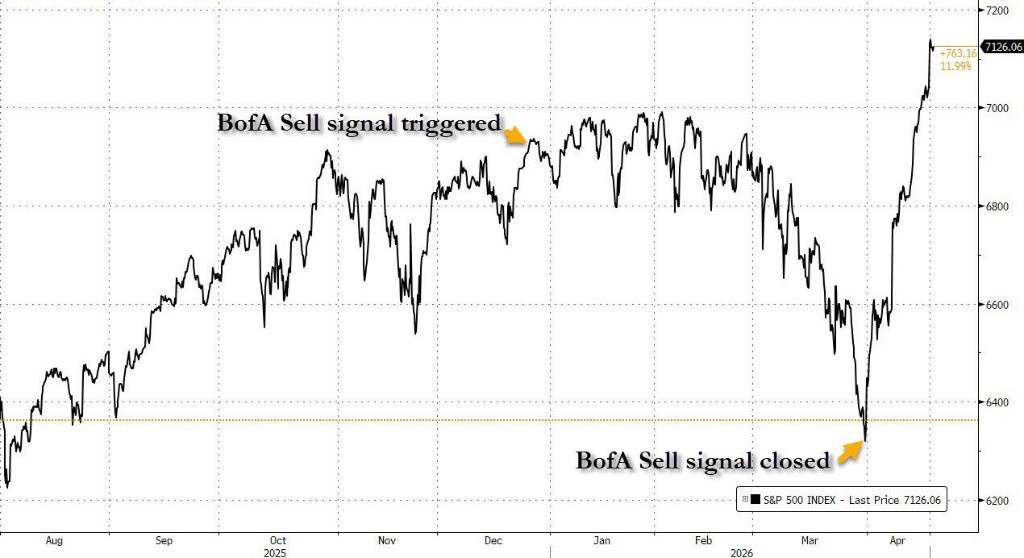
The rhythm of this rebound is abnormal. According to Bank of America data, the market shifted from an oversold state to an overbought state in just 11 trading sessions, the second-fastest record since 1982.

This transition speed was driven by both liquidity expansion and deleveraging, raising questions about the sustainability of the move. Previously, Bank of America's "sell" signal was triggered at the end of March, and Hartnett accurately predicted the starting point of this rebound near market lows.

On the technical indicator front, the Nasdaq's 13-day consecutive gain ties the record set since July 2009; XLK has broken out to new weekly highs with significant gains.

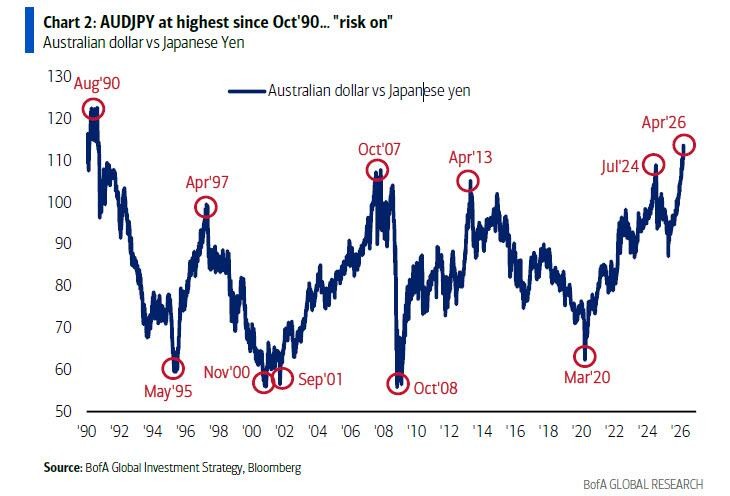
In contrast, XLF broke below its 200-day moving average, suggesting the current rally lacks sufficient market breadth due to weakness in the financial sector. The Australian dollar against the Japanese yen rose to its highest level since October 1990 during the same period. Hartnett views this as a microcosm of extremely high risk appetite and lists this extreme strength of the "periodic currency versus safe-haven currency" pair as one of the reference indicators for an overheated market.

Record Cash Outflows: Chasing Prices Amplifies Market Fragility

Last week's fund flow data displayed a classic pattern of chasing prices. A single-week cash outflow of $172.2 billion set a historical record, with funds subsequently flowing into various risk assets: $11.3 billion into stocks, $7.9 billion into bonds, and approximately $1.2 billion in net inflows each for gold and cryptocurrencies.

From an annual perspective, global equity fund inflows in 2026 are expected to surpass $1 trillion, with investment-grade bond inflows also projected to reach historical records simultaneously.

From hedge funds to CTA strategies, the current pattern of adding positions and chasing prices closely resembles the previous round of rapid decline repairs. Hartnett points out that such price-chasing behavior driven by forced entry often occurs when market moves are most stretched.

Divergence Between Surveys and Actions: Fund Managers' "Words vs. Deeds"

Bank of America's April Global Fund Manager Survey indicates that overall institutional pessimism has risen to its highest level since June 2025, yet this sentiment reading completely contradicts the actual inflow data.

Hartnett rarely criticized the survey he himself oversees, stating it is "full of reverse noise and devoid of signal value," and bluntly called fund managers "only good at one thing: lying," advising investors to "watch what they do, not what they say."

This statement carries significant weight, considering Hartnett is the very organizer of this survey. The persistent divergence between positions and sentiment is both a structural driver pushing up the current market via capital inflows and could become a trigger for concentrated selling if market sentiment reverses.

Bull-Bear Battle: Core Opposition Between Inflation Trajectories and Valuation Support

Current market divergence centers on two core variables: inflation trends and valuation support.

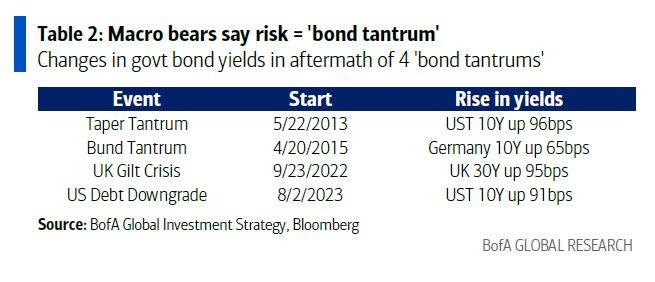
Bears argue that risk assets should not be bought until inflation peaks. Their core concern scenario involves rising oil prices in Q2, higher CPI, and rising interest rates, which could trigger a bond market "selling storm" similar to those seen in 2013, 2015, 2022, and 2023.

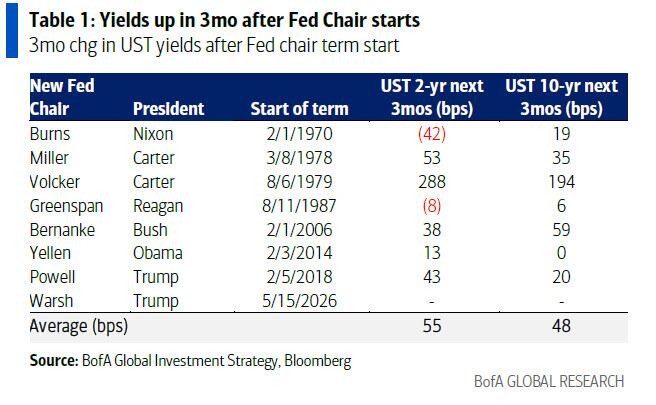
Specific risk factors include unexpected acceleration in the labor market, a weakening US dollar amid geopolitical tensions, and initial dovish expectations following the appointment of new Federal Reserve Chair Warsh. Historical data shows that in the first three months after the past seven Fed Chairs took office, US Treasury yields rose by an average of 50 basis points.

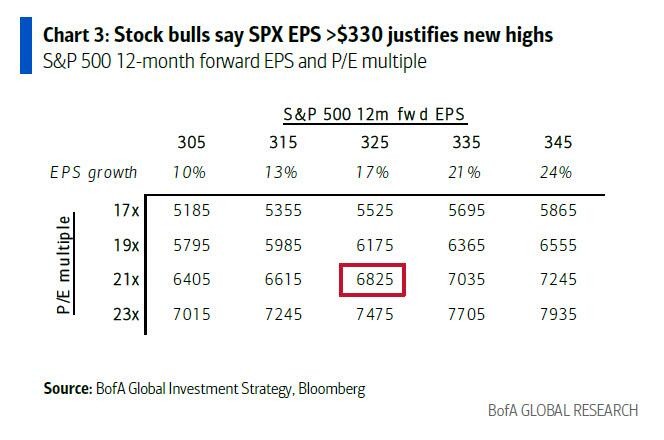
Bulls, however, argue that as long as US Treasury yields and unemployment rates remain within the 4% to 5% range, there is no need for excessive concern. S&P 500 earnings per share are expected to exceed $330, sufficient to support the index reaching new historical highs.

Bulls also cite macroeconomic policy logic: policymakers tend to maintain strong nominal GDP growth to appease voters; furthermore, the widespread market consensus that "stocks are too big to fail" provides additional psychological support.

Hartnett's Outlook: Rate Cut Expectations Narrow Further, Buy China

In terms of specific investment outlooks, Hartnett expects Federal Reserve rate cut expectations to compress further. Market expectations have already narrowed significantly from a maximum of 125 basis cuts in October last year and a maximum of 20 basis hikes in March this year, down to the current expectation of only 5 basis cuts; Hartnett believes this figure still has room to decline further.

Hartnett simultaneously advised investors to "Buy China": China's technology exports grew 43% year-over-year, reaching a total scale of $234 billion; the RMB-JPY exchange rate rose to its highest level since August 1992, and against the Korean won, it is the strongest since February 2009; China's resource reserves in alternative energy and Russian oil are viewed as critical conditions supporting its AI development.

Additionally, Hartnett mentioned the US Securities and Exchange Commission's (SEC) proposal to cancel the $25,000 minimum capital threshold for individual day trading, interpreting it as a potential signal that regulators intend to create a "final wave" of retail-driven market action. He concluded with a highly ironic remark: "If there were no warning signs." — implying that a large-scale influx of retail funds may become the final leg of this market rally.