


SAP AG-Sponsored Cloud Revenue Surges 19% Beyond Expectations, Q1 Profit Beats Forecasts by 17% | Earnings Insights
SAP SE released its first-quarter fiscal 2026 earnings report. Cloud revenue reached €5.962 billion, growing 27% at constant currency and 19% at actual currency year-over-year, both exceeding market expectations; GAAP earnings per share were $1.94, also beating estimates. The company maintained its full-year cloud revenue guidance of €25.5 to €26.2 billion unchanged. After the earnings release, ADRs rose approximately 7% in after-hours trading
Europe's largest software company, SAP AG-Sponsored, saw its cloud business revenue exceed analyst expectations in the first quarter, with U.S. stock after-hours ADRs rising about 7%.
After U.S. markets closed on April 23, SAP AG-Sponsored released its fiscal 2026 first-quarter earnings report, delivering results better than expected:
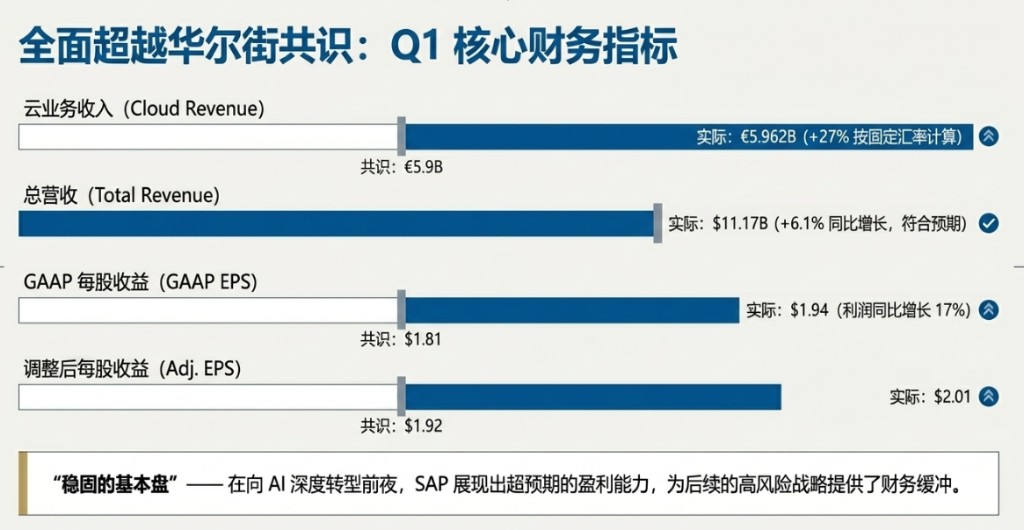
- Total revenue for the quarter reached $11.17 billion, up 6.1% year-over-year, broadly in line with market expectations.
- Cloud business revenue reached €5.962 billion (approximately $6.96 billion), growing 27% at constant currency, higher than the analyst mean expectation of €5.9 billion; actual growth was also 19%, exceeding analyst expectations.
- Quarterly profit grew 17% year-over-year. GAAP earnings per share were $1.94, exceeding the expected $1.81. Adjusted earnings per share were $2.01, also surpassing the market expectation of $1.92.
- SAP SE maintained its full-year cloud business revenue forecast of €25.5 to €26.2 billion unchanged.
Christian Klein, CEO of SAP SE, stated:
The company had a strong performance in the first quarter; our growth rate is outpacing the market as we win share with AI solutions.
Notably, the backlog for cloud business grew 25% at constant currency to $25.58 billion, in line with analyst expectations.
This metric was once a sensitive point for the market. In January, when SAP AG-Sponsored reported the same figure of 25%, the stock price dropped sharply. Christian Klein had previously described this growth rate as "disappointing."
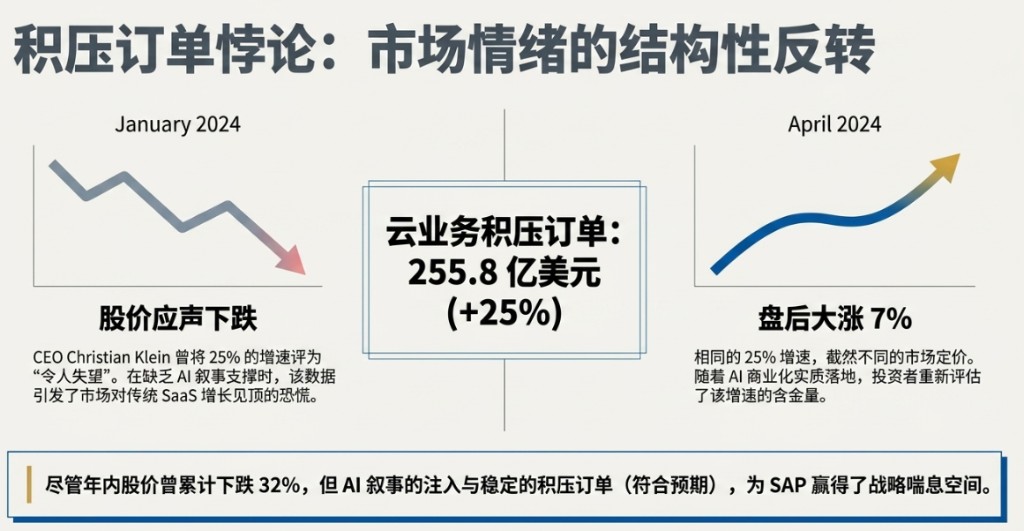
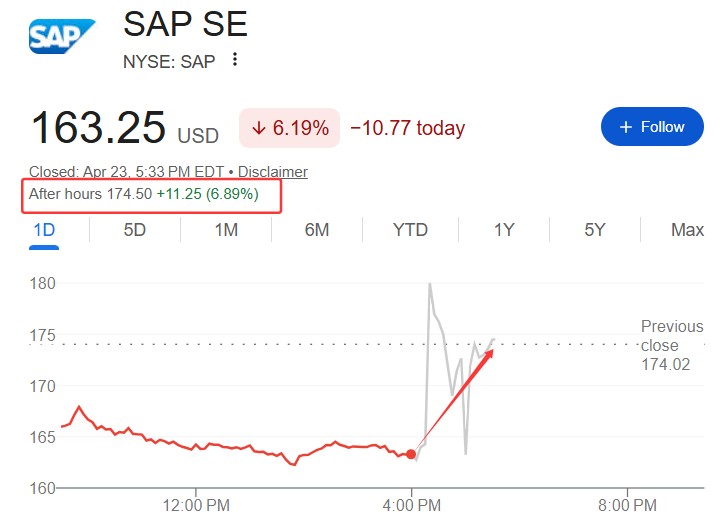
However, the market reaction this time was vastly different. After the earnings release, the company's ADRs rose approximately 7% in after-hours trading.
Investors appear more willing to reassess the value of this growth rate in conjunction with the progress of AI commercialization. Although SAP AG-Sponsored's stock has fallen cumulatively by 32% so far this year, this earnings report undoubtedly provides some breathing room.
Cloud Business Blossoms Across Three Major Global Regions
Disaggregated by region, SAP AG-Sponsored's cloud business recorded strong growth across all three major global markets.
At constant currency, EMEA (Europe, Middle East, and Africa) cloud revenue reached €2.625 billion, up 29% year-over-year; Americas cloud revenue was €2.754 billion, up 23%; Asia-Pacific and Japan (APJ) cloud revenue was €947 million, up 30%, leading the growth among the three regions.
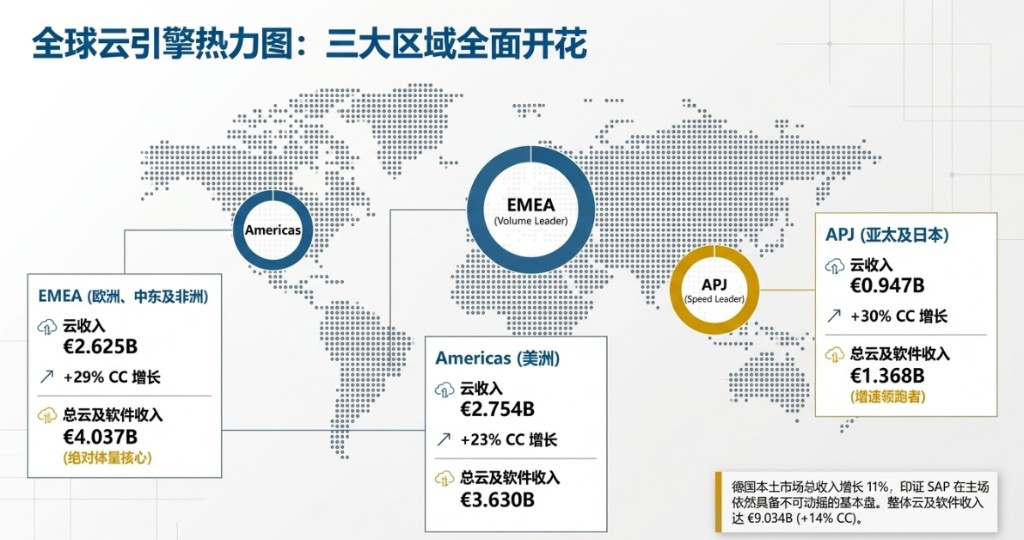
Overall cloud and software revenue reached €9.034 billion at constant currency, up 14%.
EMEA remains the largest contributor, with cloud and software revenue of €4.037 billion; the Americas and APJ contributed €3.630 billion and €1.368 billion respectively.
In terms of total revenue, the domestic German market grew 11%, indicating that SAP SE still maintains a solid home base.
AI Strategy Shifts from Subscription Fees to Usage-Based Billing
The main narrative theme for SAP SE this quarter is the strategic transformation of deeply embedding AI into its cloud service system. Christian Klein stated in the earnings announcement:
Our momentum in commercial AI supported this quarter's performance. We are already delivering tangible, visible results for customers and continue to gain share in the market.
However, this transformation has not been smooth sailing. Christian Klein admitted that the AI transition period may bring "short-term pain" as the company gradually shifts its business model from traditional subscription-based models to usage-based billing models driven by AI consumption.
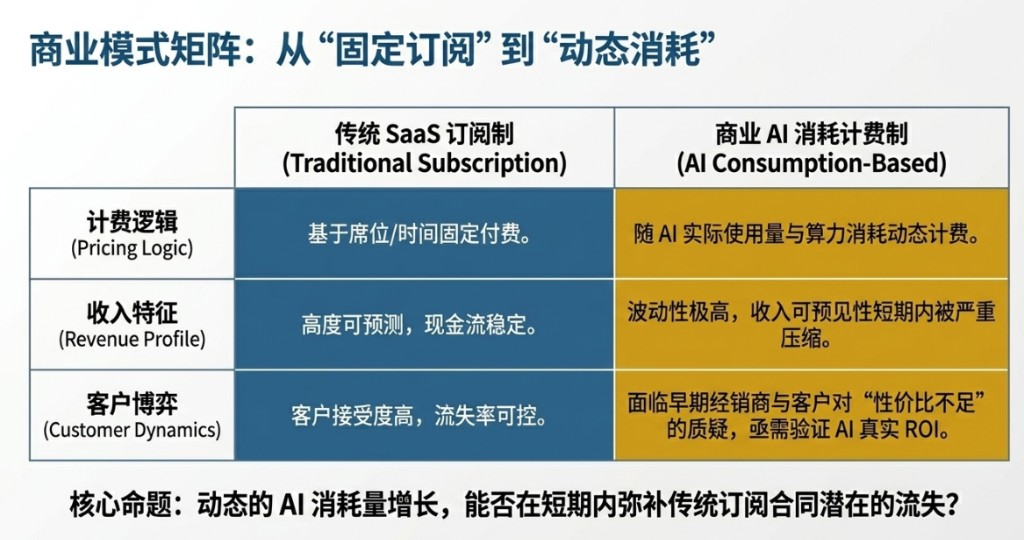
The potential risk of this model shift lies in the fact that: predictability of usage-based revenue is far less stable than subscription revenue, and it remains uncertain whether growth in usage can offset potential subscription losses.
JPMorgan analysts have referred to this as an "unknown territory," noting that "competition today is far more intense than at any time we have seen before."
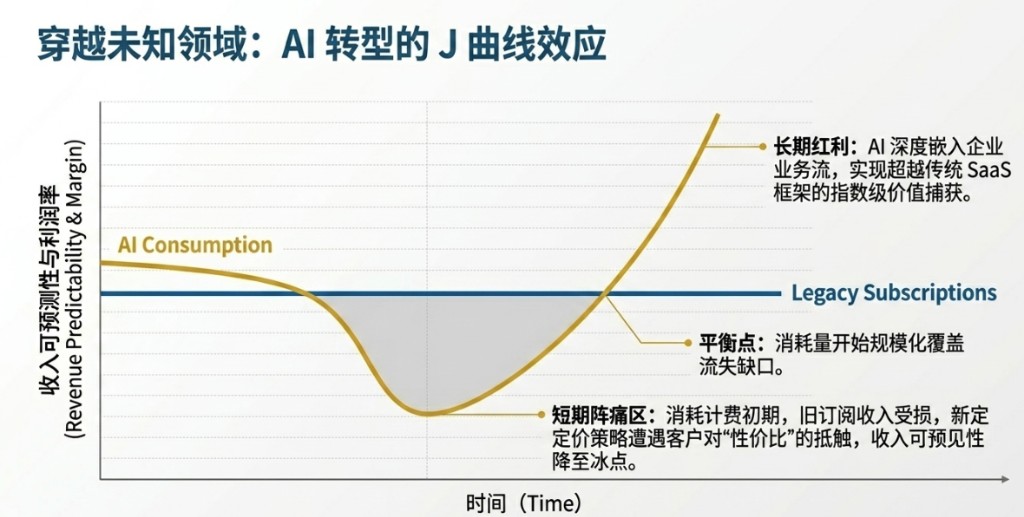
Meanwhile, some SAP AG-Sponsored distributors and customers have publicly criticized the cost-effectiveness of early AI tools, creating a contradiction with the AI value narrative Christian Klein aims to convey to the market.
Analysts believe that finding the right balance between pricing strategy and customer retention will be the core challenge for the coming quarters.
Historical Lessons: Can the "Two-Year Recovery" from Cloud Transformation Be Repeated?
This is not the first time SAP SE has faced the pain of a large-scale business model switch.
In 2020, Christian Klein led the transition of SAP SE from a local deployment software licensing model to a cloud subscription model. At that time, the stock price also experienced a significant correction, taking about two years to fully recover.
Today, SAP AG-Sponsored's market capitalization has fallen from being the number one in Europe last year to dropping out of the top ten, with the stock price down 32% year-to-date.
Market concerns focus on two points:
- Whether emerging AI-native enterprise software companies can bypass traditional giants like SAP SE and directly replace a large volume of software subscription needs with automation;
- Whether the shift to a usage-based billing model will compress revenue predictability in the short term.
Christian Klein is restructuring SAP SE's board architecture to cope with this new round of deep transformation.
Full-Year Outlook: Guidance Maintained, Confidence Solid
Despite rising external uncertainties, SAP SE has maintained its full-year guidance unchanged.
The company's full-year cloud revenue expectation range is €25.8 to €26.2 billion (approximately $30.1 to $30.6 billion), representing year-over-year growth of 23% to 25%; cloud and software revenue expectation ranges from $42.2 to $43.0 billion, up 12% to 13% year-over-year.
Regarding employee headcount, as of the end of March 2026, SAP SE's global employee total reached 111,038, an increase from 108,187 at the same time last year. R&D personnel increased to 37,947, reflecting the company's continued investment in technology.
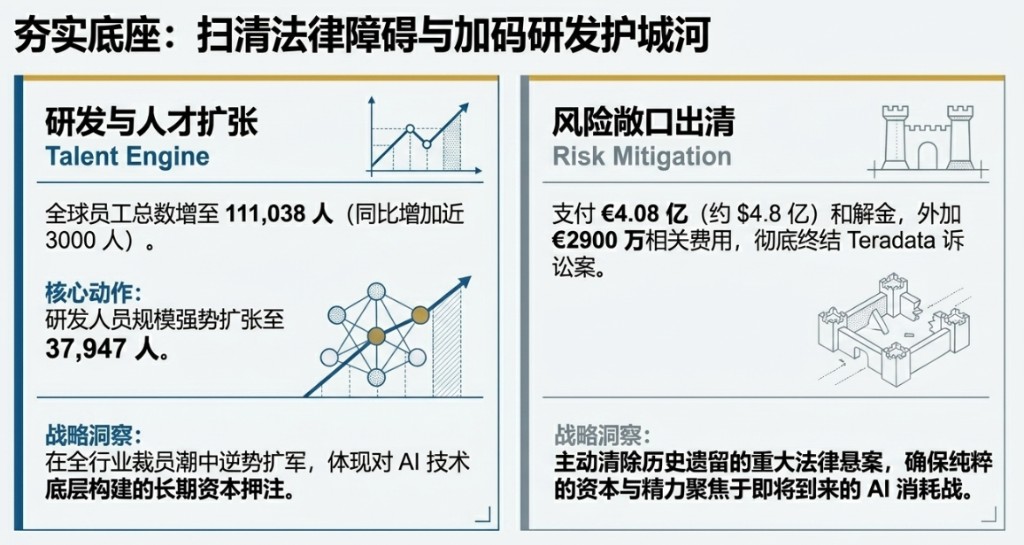
Of note, SAP SE paid €408 million (approximately $480 million) in the first quarter to settle the Teradata lawsuit and accrued an additional €29 million in expenses. The resolution of this litigation case has eliminated a potential risk exposure.
Overall, SAP SE's first-quarter earnings report provided sufficient evidence to support the narrative that "cloud growth remains healthy." However, the deep waters of AI transformation have only just begun to be explored. It remains to be tested over the coming quarters how the business model shift from subscription to usage will manifest on the revenue curve.
