


Cathie Wood supports Musk again: SpaceX IPO subscription demand is "insatiable," Tesla will win the autonomous driving race
Cathie Wood is optimistic about SpaceX's upcoming IPO, stating that the market's demand for its stock is "insatiable." She believes that SpaceX's orbital data center will present a huge opportunity and points out that Tesla will have an advantage in the autonomous driving market due to vertical integration. Although SpaceX plans to raise $75 billion with a valuation of $1.75 trillion, supply and demand may be imbalanced, leading to stock price fluctuations. Wood emphasizes that SpaceX has inspired people's dreams of space exploration
According to Zhitong Finance APP, on May 7th, Eastern Time, Cathie Wood, founder and chief investment officer of Ark Invest, expressed strong optimism in an interview regarding SpaceX's upcoming largest IPO in history and Tesla's competitive position in the autonomous taxi market. This star investor, known in the market as "Wood the Bull" for her unwavering bullish stance on disruptive innovation, described SpaceX's orbital data center business as a massive opportunity that makes Starlink "look small" and systematically argued that Tesla (TSLA.US), through vertical integration, will crush all competitors in terms of cost structure.
Wood's remarks come at a time when Tesla's stock price has been mired in difficulties since the beginning of the year, and the impending SpaceX IPO has sparked valuation controversies. Her clear stance and sharp arguments quickly ignited a debate on Wall Street about "how much disruptive innovation is really worth."
SpaceX IPO: "Investor demand is insatiable, but supply is far from enough"
Wood described the current market demand for SpaceX stock subscriptions as "insatiable." She pointed out that although SpaceX plans to raise about $75 billion through the IPO, boosting its valuation to $1.75 trillion—this scale exceeds the nearly $30 billion fundraising record set by Saudi Aramco in 2019 by more than double—it may still fall short of meeting the enthusiasm of institutional and high-net-worth investors.
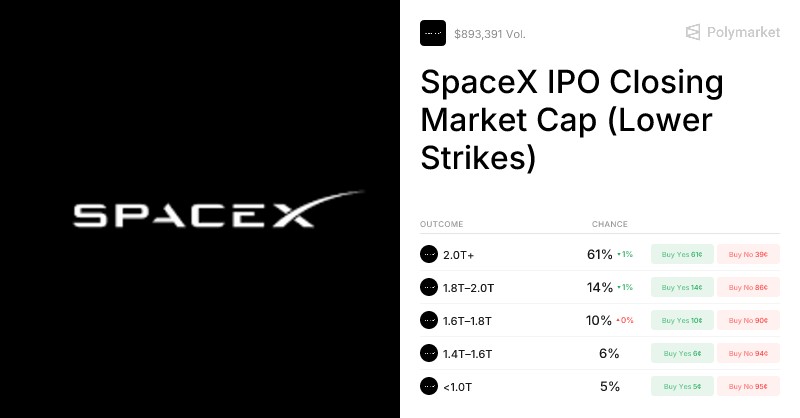
She predicted that there would be a "supply-demand imbalance" in the early stages of the IPO, leading to significant stock price fluctuations, but investors' long-term enthusiasm for SpaceX would withstand short-term shocks. Wood emphasized: "Think about how SpaceX has rekindled people's dreams of space exploration. This not only inspires investors' imagination but also ignites everyone's imagination."
The venture capital fund ARKVX under Ark Invest has currently exceeded $850 million in size, with SpaceX being the largest holding in the fund. As of the end of the first quarter of 2026, SpaceX accounted for 17.02% of the net assets of the ARKVX fund.
Wood explained that since ARKVX is a "hybrid public-private" fund, even if SpaceX goes public, the fund is not required to sell its SpaceX shares, but she hinted that there might be a suitable reduction after the IPO to meet the fund's target allocation requirement of 80% for private companies.
Orbital Data Center: A "trillion-dollar imagination" beyond Starlink In the endorsement for SpaceX's IPO, the Starship is a core strategic asset. The latest documents show that the total investment in the Starship project has exceeded $15 billion, while the development cost of the Falcon 9 is only about $400 million. On May 7, the U.S. Coast Guard confirmed that the 12th integrated flight test of the Starship (the first flight of the V3 configuration) is scheduled for launch at 5:16 PM Beijing time on May 16. This mission will first verify three core technologies: a 15% increased capacity alloy fuel storage system, an upgraded thermal protection shield that can withstand temperatures over 2000°C during re-entry, and orbital refueling—this is a core prerequisite for missions to the Moon and Mars.
In this interview, Wood's most impactful core argument is positioning the space-based data center as the most important catalyst for SpaceX's growth. Research from ARK Invest shows that the Starlink satellite internet business alone has a revenue potential of up to $160 billion. However, in Wood's view, the business opportunity of the space-based data center will "make Starlink look small" and could potentially increase the company's revenue "by several orders of magnitude—tenfold, twentyfold."
She provided a specific figure: if SpaceX successfully deploys the orbital data center, its revenue could leap from the estimated $160 billion of Starlink to a range of $3 trillion to $5 trillion.
Ark Invest has released a valuation model for SpaceX on its official website. Wood specifically pointed out that this model has not yet accounted for the revenue potential of the orbital data center, meaning that the current valuation framework does not fully reflect the company's most disruptive growth engine. As early as January 2026, Wood clearly stated: "If SpaceX becomes the first company to reach a trillion-dollar market value, we would not be surprised, especially with the emergence of a brand new opportunity—the space data center."
Elon Musk himself responded to Wood's analysis. Below the interview video released by Ark, the SpaceX founder left a brief and meaningful comment: "Interesting."
Criticism of SpaceX's IPO
Severe warnings from economists and unions. While Wall Street eagerly embraces SpaceX, the valuation is under unprecedented scrutiny. Jay Ritter, a scholar from the University of Florida known as "Mr. IPO," publicly warned that the market's optimistic assumptions about SpaceX are "too naive," with the core question being: even if launch costs continue to decline, can Starlink maintain high profit margins while lowering prices? The key data he cited is that new stocks with a price-to-sales ratio exceeding 40 times often significantly underperform the market in the three years following their IPO. Ritter bluntly stated: "Even great companies are not necessarily good investment targets. If the valuation really reaches $2 trillion after going public, I would consider shorting it."
More notably, the American Federation of Teachers has recently formally written to the SEC, requesting a "special review" of SpaceX's IPO This union organization, which has 1.8 million members and manages large-scale pension funds, pointed out that under current rules, large companies can be included in the S&P or Nasdaq index through a "fast track" process within just 15 trading days, forcing passive funds that track the index—including countless retirement accounts of American citizens—to automatically buy into the overvalued stocks of SpaceX as soon as it goes public. Randy Weingarten, the president of the federation, stated in an open letter: "Retail investors, including teachers, nurses, and civil servants, are being directed to a company with unclear financial disclosures, and the rules may force Americans to engage in overvalued, high-risk gambling just days after its listing."
Absolute Control: Governance Controversy of Dual-Class Share Structure. According to the listing documents disclosed on May 6, SpaceX will grant Musk nearly absolute control over the company through a dual-class share structure of Class A and Class B shares. Musk will hold Class B shares with 10 votes per share, allowing him to control 83.8% of the voting rights with only 42.5% of the equity. Even more shocking to governance experts is the provision in the articles that Musk can only be removed "by a vote of Class B shareholders"—the only person who can dismiss Elon Musk is Musk himself. Lucian Bebchuk, a corporate governance authority at Harvard Law School, commented that this clause is "extremely unusual" and sets a precedent that may be emulated by founder-controlled tech companies. Meanwhile, SpaceX is registered in Texas and requires all shareholder disputes to be resolved through arbitration, eliminating investors' rights to jury trials and class action lawsuits.
Cathie Wood is Bullish on Tesla: The Logic of Vertical Integration
In the competitive landscape of the autonomous taxi market, Wood systematically demonstrated the underlying logic that Tesla will ultimately prevail using a precise cost structure analysis framework.
She established a core analytical framework for this emerging market: currently, shared mobility services like Uber have a cost of about $3 per mile, while according to Ark's analysis, as autonomous driving technology scales, Robotaxi costs could drop to 25 cents per mile, compressing travel costs by over 90% and unlocking a new demand market. In this cost competition, the degree of vertical integration determines the final profit landscape.
In Wood's calculations, by 2030, Waymo's cost structure will be at least 50% higher than Tesla's. "Because they rely on other automakers and other parts of the supply chain that Tesla does not depend on," she explained.
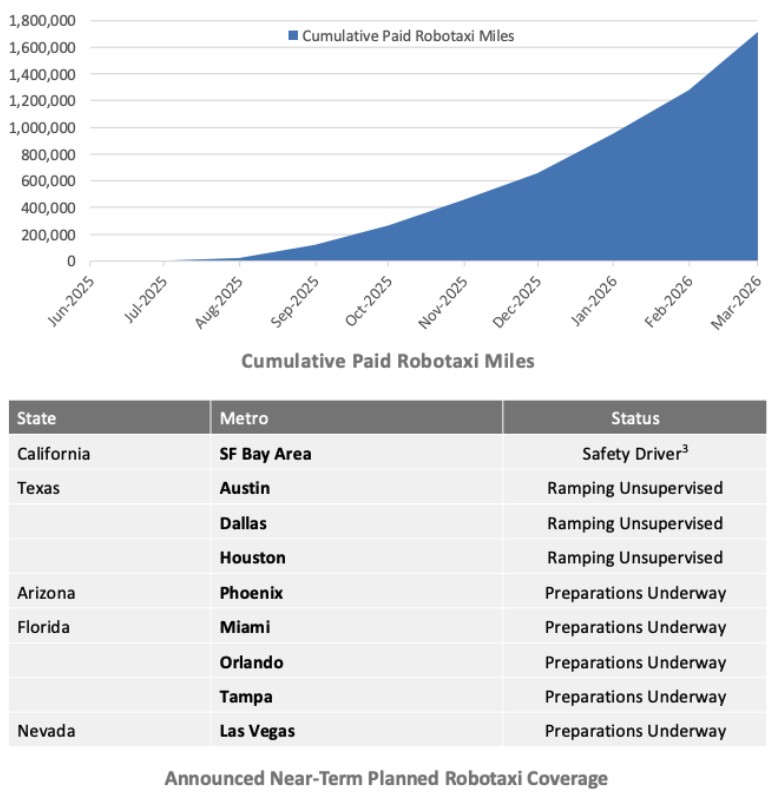
This conclusion is based on the following key differences: Tesla's Robotaxi plan is based on its own platform Cybercab and existing models like the Model Y, and its integrated software and hardware self-research model allows it to expand its fleet at zero marginal cost; whereas Waymo, although technically mature, needs to purchase each operational vehicle from third-party automakers and retrofit them with sensors and computing systems, making its cost structure fundamentally constrained by the supply chain. Recently, Ark's model also significantly raised Tesla's target price for 2026 to $4,600 per share, with the core driver being the expectations for Robotaxi—estimated to contribute about 60% of Tesla's expected value and over half of its EBITDA by 2026
If Tesla successfully transforms into a high-profit technology platform driven by software and autonomous driving services, Wood believes its gross margin will reach 70% to 80%, a level unimaginable for any traditional automaker.
Wood's statement comes at a time when Tesla is fully committed to transitioning towards physical AI. On April 24, Musk officially announced that the Cybercab has begun mass production, marking the transition of this model, seen as a "key piece" in Tesla's physical AI super blueprint, from concept to engineering ramp-up. In late April, Tesla expanded its Robotaxi service from the initial Austin and San Francisco Bay Area to the two major metropolitan areas of Dallas and Houston in Texas, officially engaging in direct competition in markets where Waymo is already operating. However, the pace of initial mass production remains quite cautious—Musk clearly indicated that the initial output of new supply chain products like the Cybercab and Semi will be "extremely slow," and the goal of covering about a dozen states by the end of the year still needs to overcome multiple hurdles such as traffic regulation approvals and safety data validation.
On the other hand, the SpaceX orbital data center is not a direct functional module for Tesla's autonomous driving, but it is a key computational foundation and data engine supporting the latter's realization of a scalable commercial closed loop. This hidden yet crucial connection is becoming the core hub supporting Musk's business empire's "trillion-dollar valuation" logic chain.
Computational Foundation Loop: From Ground Bottlenecks to Space Breakthroughs
The demand for computational power in autonomous driving is growing exponentially, while ground computational infrastructure is approaching physical limits. The training of Tesla's FSD neural network requires massive GPU clusters—currently, Tesla's AI4 chip is manufactured by Samsung, and xAI is a major customer of Nvidia. However, ground data centers face three rigid constraints: GPU shortages, high electricity costs, and soaring cooling costs.
The disruptive nature of the orbital data center fundamentally breaks through these three constraints:
Unlimited energy: Space solar synchronous orbit can provide 24/7 uninterrupted solar power, unaffected by ground power grids and land limitations, with power usage efficiency approaching 1.0 (far superior to the 1.4–1.8 levels of ground data centers);
Zero cooling costs: The vacuum environment naturally achieves passive cooling, allowing chips to operate safely at temperatures far exceeding those on the ground;
Layered computational power: The "orbital data center system" planned by SpaceX consists of up to 1 million satellites, forming a three-layer computational network for edge computing (500km orbit), large model training (1000km orbit), and global scheduling (2000km orbit) In April 2026, Tesla officially unveiled the D3 chip at the Terafab launch event—an AI training chip specifically designed for the vacuum environment of space, featuring strong radiation resistance and not reliant on fragile ground power grids, which will be integrated into hundred-kilowatt-level orbital server cabinets. Musk's judgment at the press conference was very clear: "In just a few years, the cost of launching chips into space will be lower than building traditional ground data centers." This means that orbital data centers will not only provide computing power for model training but can also directly support the real-time inference needs of future autonomous vehicle fleets—satellites can complete data cleaning and intelligent extraction in orbit, avoiding the loss of 90% of raw data due to bandwidth limitations.
$55 Billion Terafab Project Enters Implementation Phase
The key lever to turn the above blueprint into reality is the two joint "Terafab" chip manufacturing projects officially announced by Musk in March 2026. According to the latest documents submitted by SpaceX to the Texas government on May 6, the initial investment for the project is approximately $55 billion, and if fully phased construction is realized, the total investment scale could rise to $119 billion. The facility will use Intel's 14A process technology, specifically producing chips for Tesla's autonomous driving systems, Optimus humanoid robots, and SpaceX's space data centers.
The long-term goal of Terafab is to achieve an annual computing power capacity of 1 terawatt, equivalent to about 50 times the current global annual total computing power of AI chips. Musk stated that 80% of the capacity will be directed towards space-based AI infrastructure, with only 20% for ground applications—this allocation ratio itself is the strongest interpretation of "the focus of computing power is shifting to space."
Summary
For SpaceX, Wood's investment logic is built on three progressively layered pillars: Starlink provides a commercial foundation with $160 billion in revenue; orbital data centers open up trillion-dollar "space-based AI computing power" options; and the first flight of Starship V3 will be the critical technological touchstone to validate the entire strategy. However, the $75 billion financing scale, $1.75 trillion valuation, and the nearly zero constraint governance structure on the founder are forcing investors to make trade-offs between "unprecedented opportunities" and "unprecedented control relinquishment"—while the public challenges from labor organizations and economists have pushed this contradiction to the SEC's review table.
For Tesla, Wood's arguments are equally fundamental: Robotaxi will fundamentally change the economics of transportation— the difference between 25 cents per mile and $3 is enough to create a new market in the highly price-elastic transportation demand. In this market, vertically integrated players will enjoy structural cost advantages. However, the mass production of Cybercab has just begun, and the goal of covering about a dozen states with Robotaxi by the end of the year still faces multiple validations of regulation and safety, while Waymo's weekly 500,000 paid orders' intensive expansion poses real competitive pressure History will ultimately judge these bets. But at this moment, this star investor who called a "$4,600 target price for Tesla" as early as the beginning of 2026 is once again clearly stating: what she sees is not a bubble, but two super opportunities that have not yet been fully priced, which are "reshaping human civilization."
