


Wall Street sends a clear signal to Google
Alphabet's stock price plummeted 7% due to the disclosure of a massive AI capital expenditure plan, nearly erasing its gains for the year. The company expects total capital expenditures to reach up to $205 billion this year, potentially exceeding $300 billion next year, which could lead to a net cash burn. Investors are questioning the return on investment and the management's vague statements, with the market demanding a clearer explanation of the AI investment plan
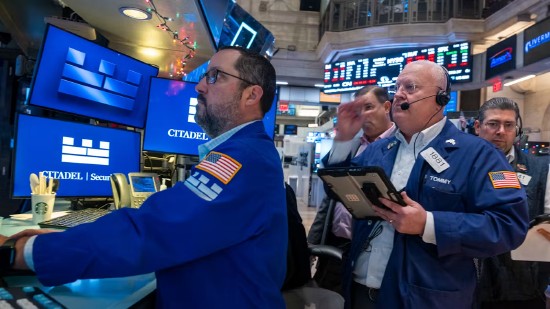
Large technology companies may need to explain their artificial intelligence investment plans more clearly to the market. Alphabet, Google's parent company, saw its stock price plummet 7% on Thursday, triggered by the company's disclosure that its capital expenditures for this year are once again on the rise, with a significant amount of funds allocated for purchasing AI chips, servers, and building data centers. This drop nearly wiped out all the gains the stock had made this year.
Indeed, the overall market faced a sell-off, generally attributed to rising oil prices and escalating conflicts in Iran. However, Alphabet's decline was among the largest, and Tesla also faced pressure: Tesla announced a significant increase in capital expenditures on Wednesday, leading to a 15% drop in its stock price on Thursday. Tesla's stock price is more tied to Elon Musk's personal popularity rather than its actual operational fundamentals, making it difficult to assess its valuation with rational logic; however, Alphabet's logic is entirely different.
Google holds chips, self-developed AI models, and consumer software capable of supporting AI upgrades, giving it a significant advantage in the AI sector among tech giants, which is beyond doubt. But even for Alphabet, investors cannot help but wonder: how much more money will the company need to invest to realize the AI dividends?
Alphabet's latest estimate for total capital expenditures this year could reach $205 billion, more than double the spending in 2025; and the capital expenditures for 2025 itself are nearly three times the scale from two years ago. Chief Financial Officer Ruth Porat stated on Wednesday that capital expenditures will "continue to rise significantly" next year. Dan Flacks, an analyst at Neuberger Berman, predicted today on The Information's financial program TITV that Alphabet's capital expenditures next year will likely exceed $300 billion. According to S&P Global Market Intelligence, institutions generally predict that Alphabet's operating cash flow next year will be $259 billion.
Calculations show that Alphabet may experience a net cash consumption of $40 billion next year. Before the massive expansion, this company consistently generated $60 billion to $70 billion in free cash flow annually, but the situation has now reversed. When will the massive cash burn come to an end? Alphabet's management has been vague in their statements. CEO Sundar Pichai repeatedly emphasized that the entire industry's AI transformation is still in the "early stages," indicating that the high investment cycle will continue for a long time. Porat stated on Wednesday, "As long as the investment returns are attractive, we will continue to increase our investments." In other words, it is up to the market to choose to trust. However, this rhetoric is becoming increasingly difficult to convince capital.
Meta's AI promotional logic is perplexing.
Google should not simply replicate Meta's AI marketing approach, as seen in Meta's latest advertising slogan "We bet on people," which is a typical example. This advertisement aims to counter the pessimistic views on the doomsday of AI in the market, showcasing the positive aspects of artificial intelligence for society, but ordinary investors find it hard to understand what value this promotion brings to Meta's own business Meta downplays the risks of AI disrupting the world. Why can this make the capital market more confident in this company? The logic is difficult to reconcile.
Coinbase undergoes a large-scale personnel adjustment at the executive level.
Cryptocurrency platform Coinbase is experiencing the largest management reshuffle in recent years. The company announced today that Chief Human Resources Officer Laurence Brock has stepped down to become a company advisor. Additionally, sources revealed that Greg Tusar, co-head of Coinbase's institutional business, has been reassigned to a new role focusing on policy affairs.
Earlier this month, there were reports that Chief Legal Officer Paul Grewal is set to leave to join a startup. Last week, executive Jesse Pollak admitted that the previous focus on creator tokens had failed, and he will no longer oversee the Base public chain project.
This round of personnel changes is occurring during a downturn in the cryptocurrency industry, as Coinbase is transforming from a single cryptocurrency trading platform to a "full-category comprehensive exchange," offering one-stop trading that includes stocks, prediction markets, and crypto assets. The company is also simultaneously pushing for cost reductions: in May, it completed layoffs, cutting 14% of its workforce. At the same time, the company is promoting internal personnel to replace a number of old management members
