


Crude Oil's "War Premium" Evaporates Rapidly! WTI Drops Over 8% and Brent Falls 9.5% Intraday
Analysts believe this correction is more akin to a rapid adjustment of previous extreme risk expectations, rather than the market betting on the complete end of Middle East risks. Societe Generale analysts estimate that if the conflict persists long-term without a clear solution, each additional month could add approximately $10 per barrel to oil prices
International crude oil futures plummeted across the board on Monday, as signs emerged that the geopolitical risks in the Middle East, which had previously driven oil prices higher, were cooling significantly. U.S. President Trump confirmed a pause on new strikes against Iran, leaving room for diplomatic negotiations, and the market quickly trimmed the "war premium" previously priced into oil.
On Monday, both WTI and Brent crude hit their lowest intraday levels since the previous Monday, July 20. U.S. WTI crude fell to $81.99, down about 8.2% for the day, while Brent crude dropped to $87.55, falling 9.5% intraday.
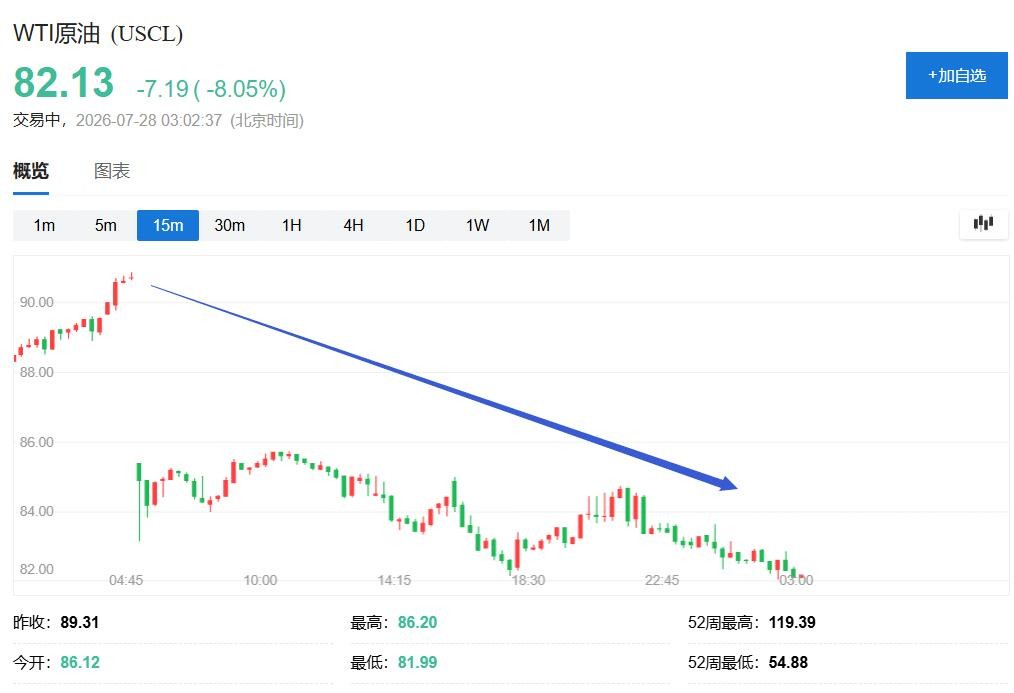
Market analysis suggests that this sharp decline was not driven by a sudden deterioration in demand, but rather by the concentrated release of risk premiums that had rapidly accumulated due to transportation risks in the Strait of Hormuz and escalating military conflicts between the U.S. and Iran. However, several institutions warned that the current situation is still far from truly easing. If military actions escalate again, oil prices could rebound sharply.
Market Rapidly Strips Away "Geopolitical Premium" as Crude Records Largest Intraday Drop in At Least Two Months
The direct trigger for this sharp drop in oil prices was the U.S. pause on new military actions against Iran.
According to reports cited by CCTV, Trump ordered the U.S. military not to launch new air strikes against Iran on the 25th, ending nearly two weeks of daily strikes that had lasted for 13 consecutive days. Insiders stated that Trump's move was intended to leave more room for diplomatic negotiations on one hand, and on the other, reflected his belief that the current air strikes had largely reached their effectiveness ceiling without the need to restart large-scale military operations.
In the preceding weeks, the market continued to bet on further escalation of the conflict and worried about more severe impacts on transportation through the Strait of Hormuz, causing international oil prices to climb steadily.
As expectations of military escalation temporarily cooled, traders quickly unwound the risk positions they had previously established.
Bloomberg reported that the market is currently reassessing the probability of supply disruptions in the Middle East. With the U.S. pausing military actions, "part of the geopolitical risk premium previously included in crude oil prices is rapidly fading."
MarketWatch pointed out that, judging by the intraday performance of international crude, Monday saw the largest drop in at least two months.
The report stated that three days after the U.S. paused air strikes on Iran, hope for a diplomatic resolution to the crisis rekindled in the market, leading to sharp declines in both WTI and Brent crude. However, the media also emphasized that the market is far from calm.
Citing analysts, the report noted that oil prices could fall further if positive diplomatic progress continues; however, if the conflict escalates again, volatility in the energy market will remain extremely high.
Wall Street: Market Is Repricing the "Worst-Case Scenario"
Several Wall Street energy analysts believe that this correction is more like a rapid adjustment of previous extreme risk expectations, rather than the market beginning to bet on the complete end of Middle East risks.
Analysts at Societe Generale stated in their latest report:
If the conflict persists long-term without a clear solution, each additional month could add approximately $10 per barrel to oil prices.
Analysts believe this means the market still needs to retain a certain risk premium for potential future escalations, and oil price volatility is expected to remain high.
Many traders also pointed out that this decline mainly reflects the fact that previous market pricing was too aggressive.
Wall Street figures believe that before Trump announced the pause in military actions, the market had begun trading on more extreme scenarios, including further obstruction of transportation in the Strait of Hormuz and wider attacks on regional energy facilities. As the diplomatic window reopened, these most pessimistic expectations were quickly removed, causing oil prices to fall significantly more than other risk assets.
Risks Not Lifted, Strait of Hormuz Remains the Biggest Variable
Although market sentiment has improved significantly, analysts generally agree that it cannot yet be declared that Middle East risks have ended.
The Wall Street Journal pointed out that the U.S. pause in military actions has increased the likelihood of a diplomatic resolution to the crisis and strengthened market expectations that shipping in the Strait of Hormuz will eventually return to normal.
However, key variables such as shipping security in the Red Sea, Houthi attacks in Yemen, the Iran nuclear issue, and future navigation conditions in the Strait of Hormuz remain unresolved. This means that international oil prices will continue to be highly dependent on geopolitical developments.
Reuters also noted that the market's focus this week will remain on whether substantive progress can be made in U.S.-Iran contacts. If negotiations fail and military actions escalate again, the risk premium just released from the energy market could quickly return to oil prices.
