Concerns Over AI Cash Burn Reignite: Korean Stocks Plunge 6%, Japanese Stocks Drop 4%, Kioxia Tumbles 18%, Chip Stocks Under Broad Pressure
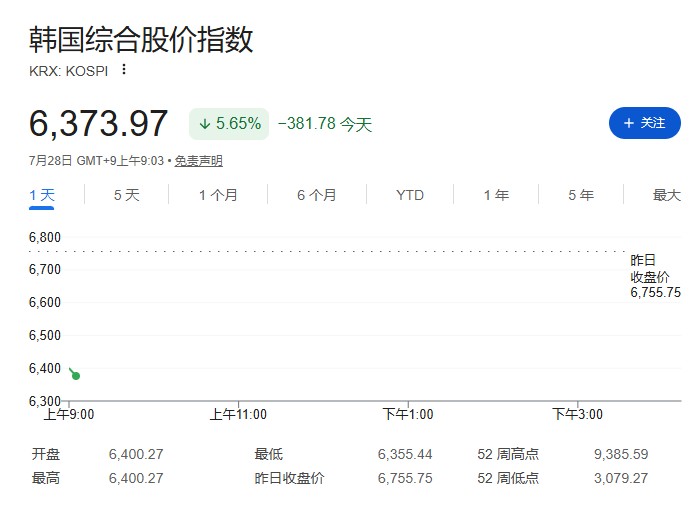
Concerns over AI capital expenditure continue to fester. The South Korean Kospi index fell 6% on Monday, with chip stocks such as Samsung Electronics and SK Hynix leading the decline, forcing the Korea Exchange to activate the SIDECAR circuit-breaker mechanism. This marks the Asian market's reaction following three consecutive days of declines in the Philadelphia Semiconductor Index. This week, markets face a dense schedule of interest rate decisions from the Federal Reserve and the Bank of Japan, along with earnings reports from tech giants. Whether AI investments can yield real returns will be the core narrative driving the market this week
Asia-Pacific stock markets followed overnight U.S. stocks lower. During Asian trading hours on Monday, the South Korean Kospi index extended its losses to 6%, becoming the major stock index with the deepest decline in the Asia-Pacific region.
Samsung Electronics fell nearly 6%, SK Hynix dropped more than 8%, and SK Square also declined by over 6%. These three companies exerted the greatest drag on the index. The South Korean small-cap Kosdaq index also fell by more than 4%. The heavy selling pressure triggered market protection mechanisms. The Korea Exchange activated the SIDECAR mechanism on the day, halting programmatic selling in the KOSPI. Meanwhile, both domestic and foreign funds were net sellers, while retail investors bucked the trend with net buying.
Notably, SK Hynix's share price has fallen below its U.S. IPO issue price.
At the same time, the Nikkei 225 Index extended its intraday losses to nearly 4%, with Kioxia's stock plunging 18%.
Trigger: AI Cash Burn and Doubts Over Returns
Last week, Alphabet's earnings report sparked concerns in the market regarding AI capital expenditure, leading to three consecutive days of declines in the Philadelphia Semiconductor Index. At the U.S. market close on Monday, the index fell further, with SanDisk, AMD, and NVIDIA among the top decliners in the S&P 500.
Tech giants are betting hundreds of billions of dollars on AI infrastructure, but investors are finding it increasingly difficult to see when and how these investments will translate into profits.
Kyle Rodda, a senior analyst at Capital.com, wrote in a report to clients: "These companies embody the core pressure in current market sentiment—excessive capital expenditure by AI companies, with investors worried that this will erode returns."
Chris Larkin from E*Trade from Morgan Stanley also stated: "This is a week full of potential surprises, both good and bad. Geopolitics and oil prices could be the biggest variables, but even if the Magnificent Seven deliver strong earnings, the market may not buy it, especially as questions persist about the level of AI spending."
Dense Risks This Week, Earnings Are Key
The market is facing a week compounded by multiple tests.
The Federal Reserve, the Bank of Japan, and the Bank of England will all announce their interest rate decisions this week. Meanwhile, Microsoft, Meta, Apple, and Amazon will release their earnings reports sequentially, with more than 170 companies in the S&P 500 reporting results this week. In Asia, SK Hynix and Samsung will also announce their quarterly results.
There is only one core focus for these earnings reports: whether AI investments can be validated.
Citadel: Fed May Unexpectedly Raise Rates
In terms of monetary policy, a noteworthy forecast has emerged in the market.
According to Bloomberg, Citadel Securities expects the Federal Reserve to raise interest rates this week—a move that would surprise market expectations. Frank Flight, head of macro strategy at the firm, wrote in a report that a 25 basis point rate hike on Wednesday would strengthen Chair Kevin Warsh's credibility in fighting inflation, while signaling that policymakers are no longer relying on providing ample advance notice for every policy action.
Currently, traders are pricing in approximately a one-in-three probability of a Fed rate hike this week.
U.S.-Iran Talks, Oil Prices Continue Decline
On the geopolitical front, tensions have shown signs of phased easing.
Trump stated on Monday that the United States and Iran are engaged in diplomatic negotiations to end their conflict, but warned that if negotiations fail, both sides will resume hostilities. He told reporters: "They want to negotiate, and the only reason is that we have been hitting them hard. There is a high possibility of a result. If not, we go back to doing what we were doing before."
Citing informed sources, Bloomberg reported that Iran and Oman are attempting to reach an agreement to restart shipping through the Strait of Hormuz.
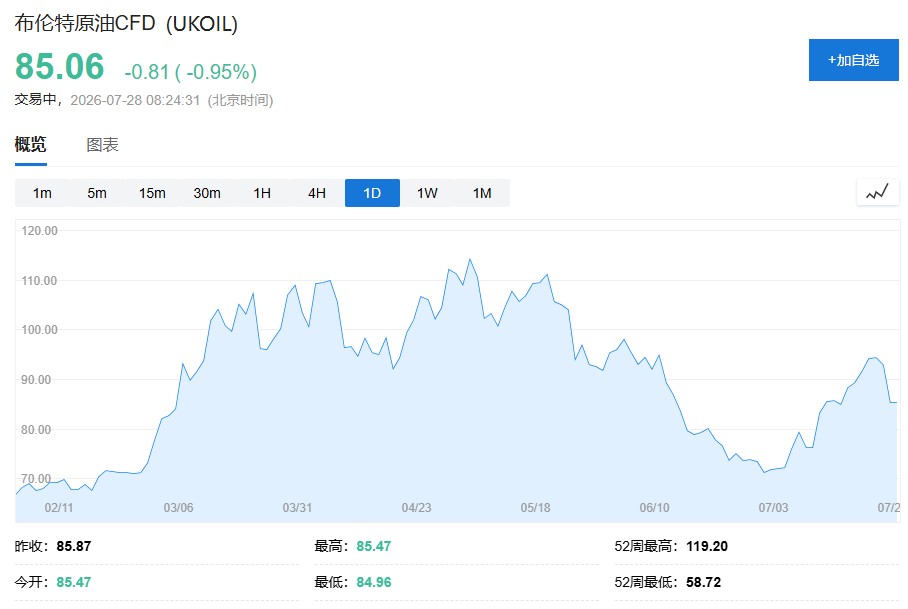
Affected by this, oil prices continued their downward trend. U.S. WTI crude oil fell 0.9% to $81.89 per barrel, after global benchmark Brent crude recorded its largest single-day drop in over three months on Monday.
Other Market Dynamics
Regarding U.S. Treasury yields, the 10-year yield remained largely flat at 4.64%. The U.S. Dollar Index saw little change, with the euro at $1.1367 and the yen at 163.83 per dollar.
Cryptocurrencies were under pressure, with Bitcoin falling 1.9% to $63,703 and Ethereum dropping 2.8% to $1,890.
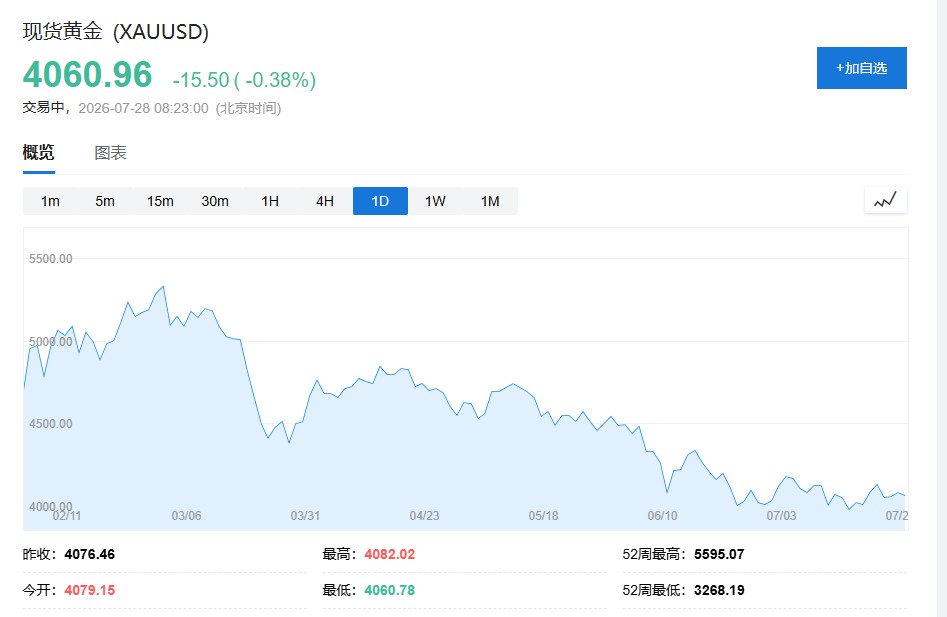
Spot gold fell 0.38% to $4,060 per ounce.