


Escalating Tensions in the Middle East End Oil's Three-Day Decline with a Surge; Asia-Pacific Markets Rebound as South Korean Index Jumps Over 3%
Tensions in the Middle East escalated sharply as Iran launched ballistic missiles at U.S. forces stationed in the region, causing Brent crude to surge more than 3% in a single day and ending a three-day losing streak, while the risk of supply disruptions in the Strait of Hormuz returned to market focus. SK Hynix's net profit soared by 557%, driving the Seoul Composite Index up by more than 3% at one point. However, the cloud over tech stocks has not dissipated; the Philadelphia Semiconductor Index is on track for its worst monthly performance since 2002, and the Nasdaq has fallen for five consecutive days
Renewed tensions in the Middle East drove a sharp rebound in oil prices, and Asia-Pacific markets strengthened overall led by the semiconductor sector, but market sentiment remains constrained by the Federal Reserve's interest rate decision and pressure from rotation in tech stocks.
On Wednesday, according to CCTV News, the U.S. Central Command announced it had successfully intercepted ballistic missile attacks launched by Iran against U.S. troops stationed in the Middle East. Brent crude subsequently gapped up more than 3%, ending its previous three-day decline.
Meanwhile, the gain in the Seoul Composite Index in South Korea expanded to over 3% at one point, with SK Hynix rising on a 557% year-on-year surge in quarterly profit, becoming one of the brightest spots in the Asia-Pacific market.
This Iranian attack has refocused market attention on the Strait of Hormuz. The risk of energy supply disruptions is making the inflation outlook more complex, coinciding with the Fed's interest rate decision scheduled for Wednesday, further raising uncertainty. In the tech sector, the Nasdaq 100 Index has fallen for five consecutive trading days, marking the longest losing streak since January this year. The Philadelphia Semiconductor Index fell 4.5% on the day, and its monthly performance is expected to be the worst since 2002.
Oil Prices Surge, Hormuz Risk Returns to Focus
Brent crude rose 3.4% to around $87 per barrel, while WTI crude futures also rose about 4% to around $82 per barrel, ending the previous three-day decline—during the brief period of easing tensions earlier, Brent crude had recorded its largest three-day drop since April 2020.
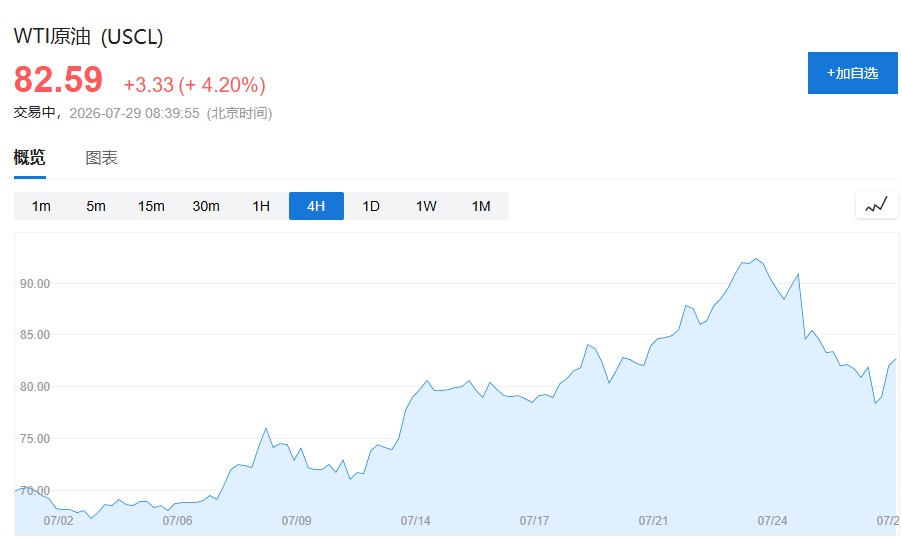
The direct trigger for this oil price rebound was the statement issued by the U.S. Central Command. According to CCTV News, at 5:45 p.m. Eastern Time on the 28th (local time), the Islamic Revolutionary Guard Corps of Iran fired multiple ballistic missiles from within Iran, "attempting to launch a surprise attack on U.S. forces stationed in the Middle East."
Ryan McKay, Senior Commodities Strategist at TD Securities, stated, "We remain cautious about any potential agreement that does not specifically address the Hormuz issue, as disagreements over the management of the strait have previously led Iran to take aggressive actions and caused earlier memorandums of understanding to collapse prematurely."
Bank of America had already downgraded ExxonMobil to a "Neutral" rating before this escalation of tensions, citing that if a ceasefire between the U.S. and Iran is reached, oil prices face further downside risk. At the same time, upside potential is limited as approximately 20% of Exxon's global production is vulnerable to disruptions in the Strait of Hormuz.
Asia-Pacific Markets Strengthen Overall, South Korea Leads Gains
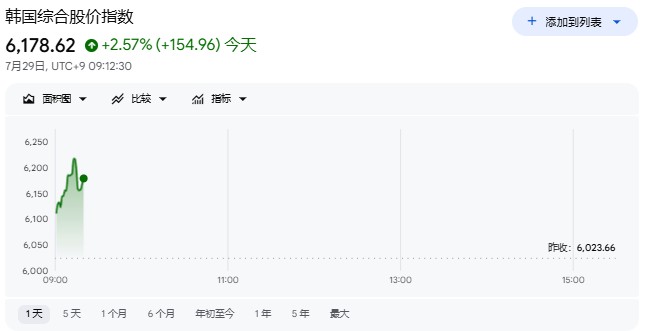
Asia-Pacific markets rebounded overall against this backdrop. The gain in the Seoul Composite Index in South Korea expanded to over 3%, with SK Hynix being the biggest contributor thanks to its explosive 557% growth in quarterly profit, while Samsung Electronics rose nearly 3%.
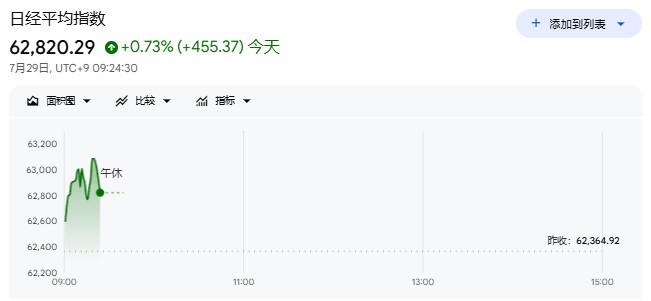
The Nikkei 225 Index rose about 1%, and the Australian S&P/ASX 200 Index gained about 0.8%. The MSCI Asia Pacific Index rose 0.7% overall.
Meanwhile, Nasdaq 100 futures initially fell 0.6% after the attack incident before turning positive; S&P 500 futures rose about 0.4%.
Tech Stock Rotation Continues, Semiconductors Under Pressure
The local highlights in the Asia-Pacific market could not mask the broader adjustment pressure on the tech sector. After plunging 4.5% on Tuesday, the Philadelphia Semiconductor Index is on track for its worst monthly performance since 2002, having just experienced its strongest single-quarter gain in history. Micron Technology and Sandisk were among the components with the largest declines in the S&P 500 on Tuesday.
Vikram Rai, Fund Manager at First New York, pointed out that the divergence between the S&P 500 and the Nasdaq 100 Index "reflects capital rotating out of chip stocks," and stated that the Nasdaq 100 Index "cannot rise on its own if semiconductor and memory stocks do not rise."
Joseph Brusuelas, Chief Economist at RSM, characterized the current market as experiencing "mild risk-off sentiment spreading through financial markets ahead of the Fed's policy decision and a slew of heavy-weight earnings reports." He noted that if not for growing concerns about AI competition and the financial prospects of the tech ecosystem, investors might have been "more willing to deploy capital."
Fed Decision Imminent, Dispute Over Hike Probability
The market is currently pricing in approximately a 70% probability that the Federal Reserve will keep interest rates unchanged this Wednesday, with the current target range at 3.5% to 3.75%.
JPMorgan analysts believe the probability of a rate hike is "likely lower than the roughly 30% currently priced in by the market," reasoning that "although inflation is elevated, there is no risk of further outbreaks." The bank assigns a 50% probability to a "hawkish hold," believing that while remaining vigilant, the Fed will note the disinflationary signals conveyed by recent energy price trends.
Julia Hermann, Global Market Strategist at New York Life Investment Management, warned, "We believe the market is assigning too much weight to inflation risks and insufficient attention to the economic costs of further tightening," and stated that if the Fed sends more hawkish signals, "the sectors currently leading the market, which are already very fragile, will be hit hardest, rather than the broader market."
Corporate Earnings Season in Full Swing
Earnings season enters a key window this week. Microsoft and Meta will report results after the bell on Wednesday, followed by Apple and Amazon on Thursday.
At the same time, positive signals have emerged. Ford Motor Company's quarterly results exceeded Wall Street expectations, and it raised its full-year guidance for the second time, benefiting from strong sales of high-margin SUVs and higher selling prices. Its stock rose about 4% in after-hours trading.
In addition, according to Bloomberg, NVIDIA CEO Jensen Huang publicly defended open-weight AI systems, stating they are crucial for driving the development of the AI industry. Meta and BlackRock plan to jointly build a data center complex in Texas with a cost of approximately $14 billion and a capacity of 1 gigawatt.
Continuously updating
