


Oil Prices Fuel Inflation, Weak Employment Undermines Rate Hikes—Gold Benefits from Both Sides
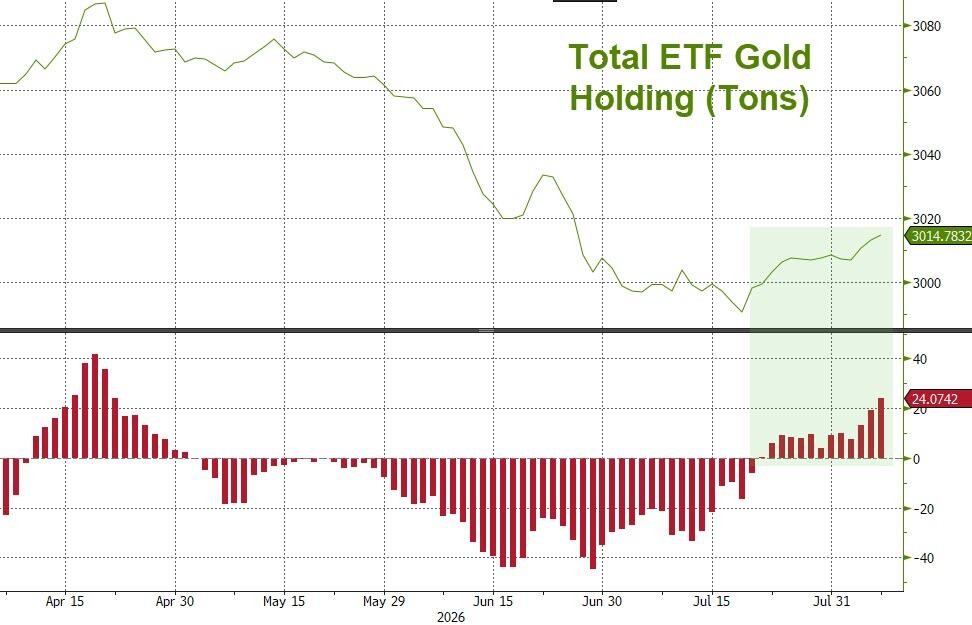
Geopolitical tensions have caused oil price volatility, boosting inflation expectations and activating gold's demand as a hedge and safe haven. Unexpectedly weak U.S. non-farm payroll data for July severely damaged rate hike expectations, leading to a dual decline in U.S. Treasury yields and the U.S. dollar. The combination of these two forces drove gold to its best weekly performance in seven months. Additionally, ETF buying has simultaneously rebounded—since July 20, total holdings in gold ETFs have increased by approximately 24 tons
This week, gold benefited in a rare way from two opposing macroeconomic forces: oil prices fluctuated violently around developments involving Iran, continuously stirring inflation expectations and providing demand for gold as a store of value; meanwhile, a shocking weakness in employment data severely damaged market expectations for Federal Reserve rate hikes, further pressing down the U.S. dollar and Treasury yields, thereby opening up upside potential for gold prices. The superposition of these two forces drove gold to record its best weekly performance in seven months.

On Friday, data released by the U.S. Bureau of Labor Statistics showed that U.S. non-farm payrolls unexpectedly decreased by 23,000 in July, far below the market expectation of an increase of 80,000, with previous months' data also significantly revised downward. Upon the news, the market's probability expectation for a Federal Reserve rate hike in September plummeted from about 55% to around 40%, Treasury yields dropped sharply, the U.S. dollar softened, and gold immediately surged to a two-month high.
Meanwhile, geopolitical tensions surrounding the Strait of Hormuz caused crude oil prices to fluctuate significantly this week, with Brent crude briefly returning above $83 per barrel. Every $10 fluctuation in oil prices is directly transmitted to market inflation expectations, thereby influencing judgments on the Federal Reserve's policy path, Treasury yields, and asset valuations. This logic allows gold to act as a safe-haven asset when inflation heats up, while benefiting from easing expectations when employment weakens, creating a "benefit from both sides" scenario.
Notably, ETF buying has simultaneously rebounded—since July 20, total holdings in gold ETFs have increased by approximately 24 tons, indicating that institutional funds are reintegrating gold into their allocations.
Employment Data Severely Damages Rate Hike Expectations, Gold Supported by Easing Logic
The major macroeconomic shock this week came from Friday's non-farm payroll report. Non-farm payrolls in July unexpectedly decreased by 23,000, a stark contrast to the market expectation of an 80,000 increase, and previous data was also revised downward, catching the market off guard.
The market reaction was swift and intense. Treasury yields fell significantly, the U.S. dollar weakened, stocks rose, and traders quickly withdrew their bets on a Federal Reserve rate hike in September. Before the report's release, the market's probability expectation for a September rate hike was around 55%; after the release, this figure rapidly fell toward 40%.
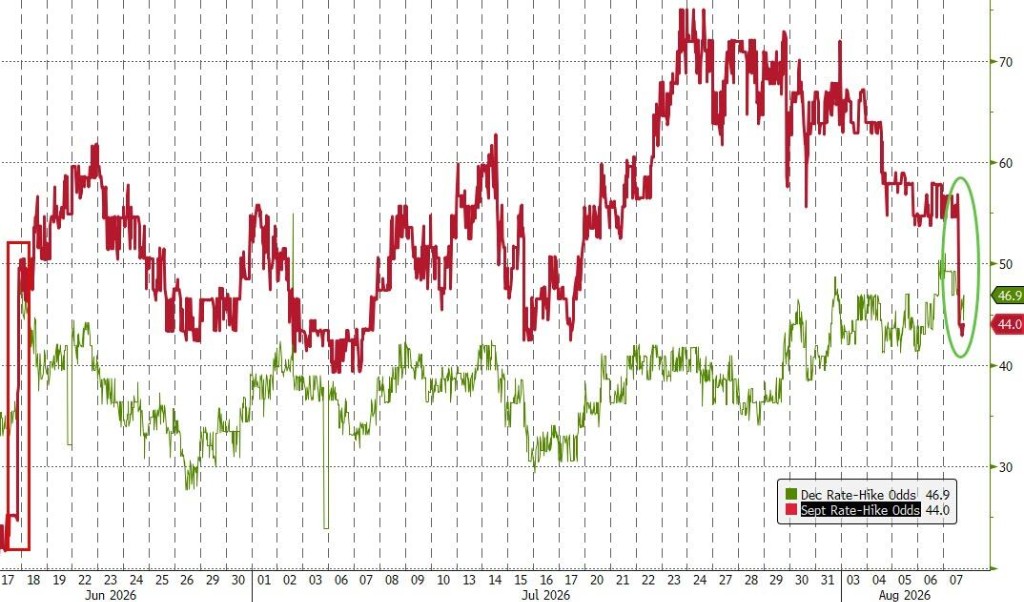
Furthermore, expectations for rate hikes in 2026 have narrowed to just one.
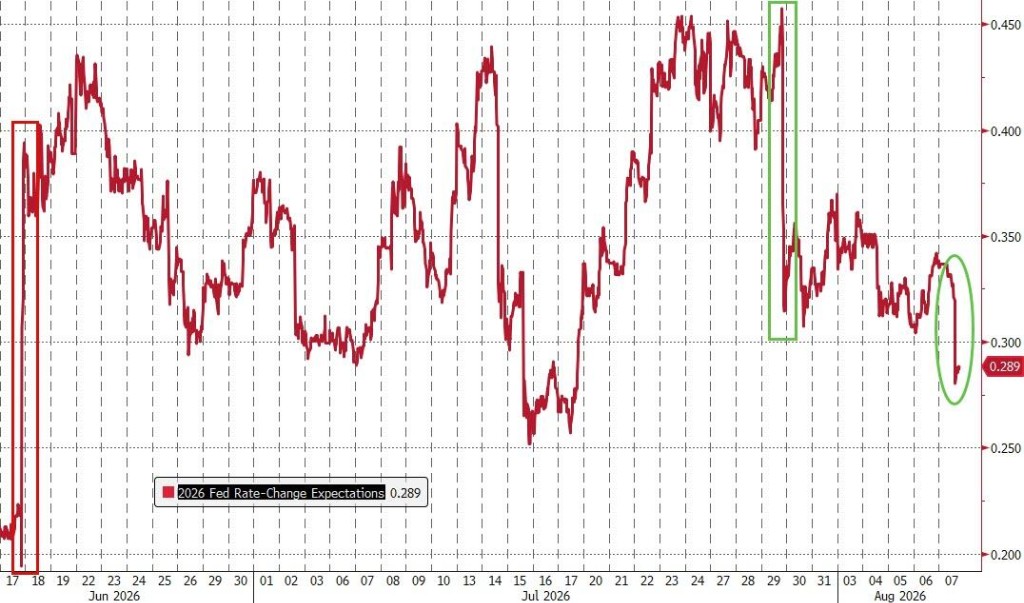
The core question for the market has subsequently shifted—no longer whether Federal Reserve Chair Kevin Warsh will tighten policy again next month, but rather whether the current labor market can withstand further rate hikes.
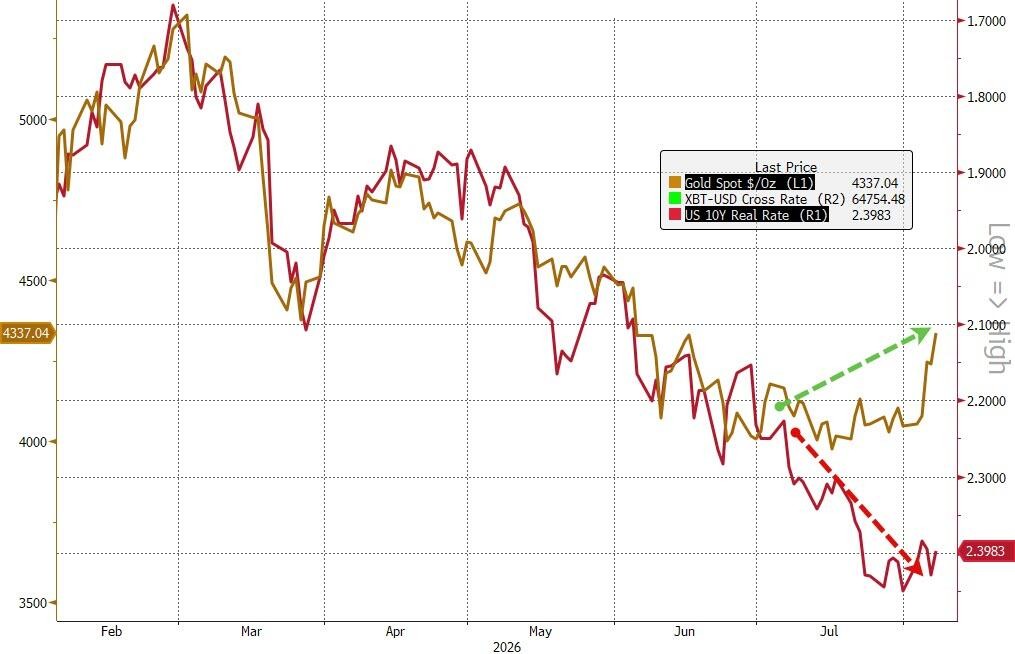
For gold, this logical chain is direct and clear: Lower rate hike expectations → Decline in real Treasury yields → Reduced opportunity cost of holding gold → Rise in gold prices.
On Wednesday, gold rose by more than 4% in a single day, marking its largest single-day gain since February of this year, and showed a significant divergence from the concurrently rising real yields, indicating that buying power has surpassed traditional pricing frameworks.
Violent Oil Price Fluctuations, Inflation Narrative Provides Another Layer of Support for Gold
If employment data provided gold with an "easing logic," then turmoil in the crude oil market has injected an "inflation logic" into gold.
Crude oil prices this week fluctuated violently with every piece of news regarding the situation in the Strait of Hormuz. On Monday, renewed hope for U.S.-Iran diplomatic contacts caused oil prices to fall sharply; subsequently, Iranian officials discussed legislation to restrict ships from the United States, Israel, and other "hostile" countries from passing through the Strait of Hormuz. Coupled with reports of Houthi activities and potential attacks on Saudi Arabia, oil prices quickly rebounded, with Brent crude briefly returning above $83 per barrel and WTI hovering near $78.
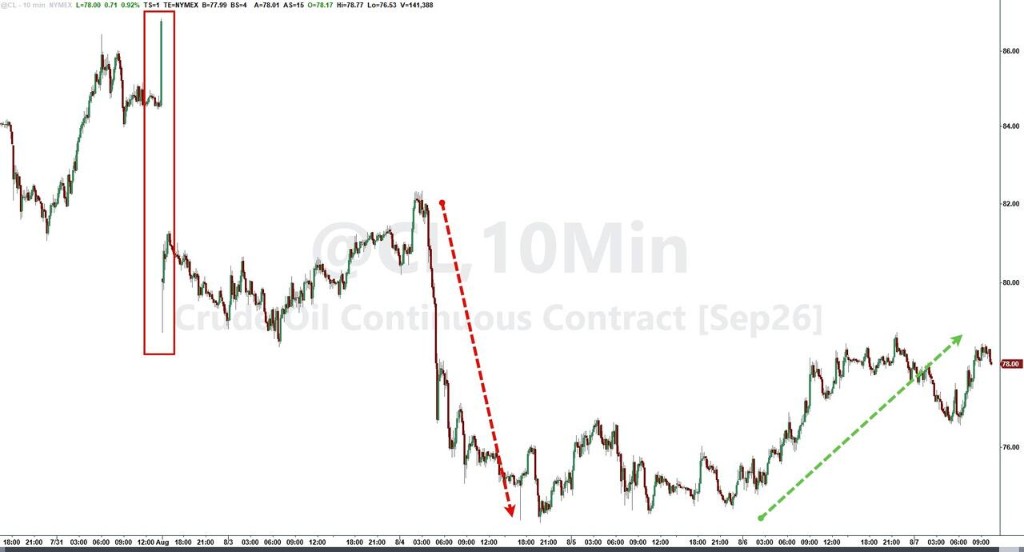
The impact of oil price fluctuations on the macro market far exceeds the energy sector itself. The market generally believes that every $10 change in crude oil prices is directly transmitted to inflation expectations, thereby influencing the Federal Reserve's policy path, Treasury yields, and stock valuation multiples. This means that the Strait of Hormuz has effectively become one of the largest macro option trades in the world.
In this context, gold's inflation-hedging properties have been fully activated. When rising oil prices trigger inflation concerns, demand for gold as a physical asset for preserving value increases; when oil prices fall due to diplomatic progress, inflation pressures ease temporarily, but gold has already accumulated sufficient buying momentum during the earlier rally.
