


AI Application Companies' Gross Margin Narrative Faces First "Health Check": Canva Voluntarily Slows Down, Figma Absorbs Inference Costs
The experiences of Canva and Figma reveal a common dilemma for AI application companies: high inference costs are severely eroding gross margins and disrupting unit economics. To control costs, Canva voluntarily paused its AI rollout, leading to slower revenue growth; Figma suffered a sharp stock price decline after bearing the costs of free beta testing. Both companies are pinning their hopes on proprietary models to break the deadlock, but the path to AI profitability still awaits validation over time
Two leading companies in the design software sector are using real financial data to reveal the most hidden costs of AI transformation.
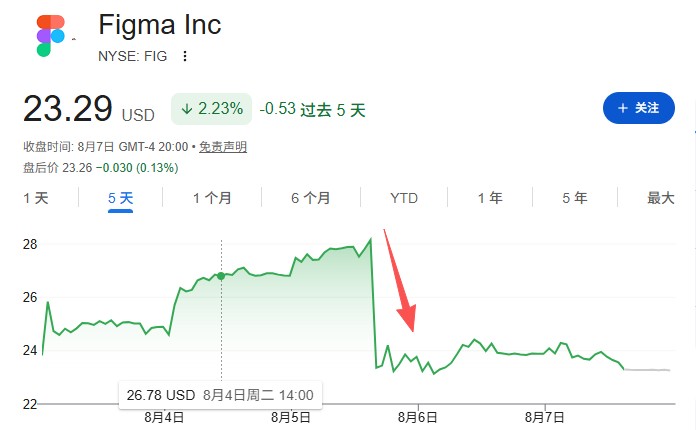
Canva issued a warning to investors this week that annual revenue growth will slow to 20%, as the company voluntarily halted an AI feature rollout plan originally intended to drive paid subscription growth—demand far exceeded expectations, and so did service costs. Figma's earnings report released on Thursday showed that third-quarter revenue growth is expected to drop from 48% in the June quarter to 36%, and it admitted that several of its AI tools are still in the testing phase and have not yet formed an effective commercialization path. Following the announcement, Figma's stock price plummeted by approximately 15% in a single day.
According to tech media outlet The Information, the experiences of both companies point to the same structural issue: the popularity of AI products does not automatically equate to a healthy unit economic model. Under the narrative framework where investors previously had high hopes for AI application companies, this is a real stress test from the front lines.
Canva: Excessive Demand Becomes a Burden, Voluntary Braking Applied
Canva's predicament is quite dramatic—not because no one is using its product, but precisely because too many people are.
Reportedly, Canva Chief Operating Officer Cliff Obrecht told colleagues that before introducing AI, the cost of serving a large number of free users was "very low." However, after the launch of AI features, "these costs surged significantly, fundamentally changing the unit economic model, which makes reducing AI costs far more important than before".
Based on this judgment, Canva chose to voluntarily slow down the originally planned pace of AI feature launches, rather than continuing to exchange high costs for user growth. This decision directly lowered the company's expectation for full-year revenue growth, dropping from the higher level previously expected by the market to 20%.
To fundamentally solve the cost problem, Canva is vigorously promoting the development of its own AI models. The company stated that its internal models are faster and cheaper than those from top AI labs in image and video generation. However, the problem is that these models failed to catch the time window for this round of AI feature rollouts, forcing the company to rely on more expensive external models at critical junctures.
Figma: Free Beta Products, Full Absorption of Inference Costs
Unlike Canva's voluntary braking, Figma is facing another form of cost pressure—paying for products that have not yet been commercialized.
Figma Chief Financial Officer Praveer Melwani directly clarified this logic during an investor conference call:
"We currently do not charge customers for using products in the testing phase; we bear the inference costs ourselves, with no consumption revenue to offset them."
This means that Figma is subsidizing users' use of its AI features with its own funds while waiting for these tools to move from the testing phase to formal commercialization. The company expects that this cost structure will suppress gross margins.
Figma is also increasing investment in its own AI models and has begun combining internal models with frontier models to support its newly launched Figma AI agent. However, training proprietary models requires time and capital investment, and the patience of the capital market is clearly limited—after the release of performance guidance, Figma's stock price fell by approximately 15% in a single day.
Common Dilemma: The Cost Structure of AI Transformation Has Not Yet Been Streamlined
The report states that the cases of Canva and Figma reveal a phased contradiction commonly faced by current AI application companies: attractiveness at the product level has been verified, but the path to converting it into a sustainable profit model remains unclear.
Both companies view proprietary models as the key to breaking the deadlock—by reducing reliance on high-cost external models, they aim to fundamentally improve their unit economic models. However, there is an unavoidable time lag between the construction cycle of proprietary models and the market's immediate demands for performance growth.
Analysts believe that these two financial reports provide an important reference point: the cost of AI transformation is not only reflected in R&D investment but is also more deeply embedded in the inference fees behind every user invocation. Before the commercialization model matures, this part of the cost will continue to erode gross margin space.
The AI story of software companies is undergoing the first truly meaningful financial health check.
