


Google's new AI head takes over to catch up with the competition against OpenAI and Anthropic
Google has appointed Koray Kavukcuoglu as the new head of DeepMind, reporting directly to CEO Sundar Pichai. He will oversee the development of the Gemini large model and cutting-edge AI research, aiming to close the technological gap with OpenAI and Anthropic. This move marks Google's increased investment in the field of artificial intelligence to respond to the pressure from powerful models recently launched by competitors
Key Points
- Koray Kavukcuoglu has been appointed as the head of Google's artificial intelligence division DeepMind, reporting directly to Google CEO Sundar Pichai.
- He will oversee the development of the Gemini large model, cutting-edge AI research, as well as the Gemini applications and developer teams.
- In the field of cutting-edge AI, coding capabilities are increasingly becoming a key battleground, and Google is striving to keep pace with OpenAI and Anthropic.
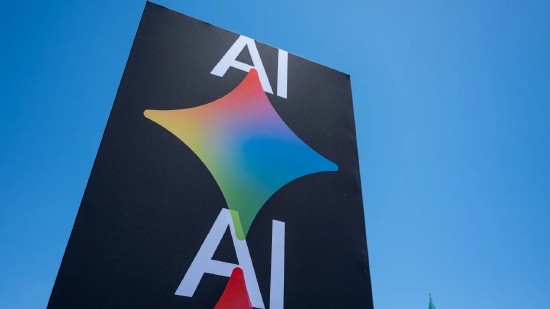 On May 19, 2026, at the Google Developer Conference in Mountain View, California, the Gemini AI logo was displayed. Google's parent company Alphabet released a new version of its classic search box and a brand new AI coding tool, marking its latest effort to invest hundreds of billions of dollars to expand its influence in the era of artificial intelligence.
The new head of DeepMind faces immense pressure to close the performance gap with OpenAI and Anthropic in AI capabilities.
In recent months, OpenAI and Anthropic have successively launched new models, which have received praise for their powerful capabilities while also raising concerns from various parties. In contrast, Google, which acquired DeepMind in 2014, has not released a new generation of cutting-edge large models since early 2026.
Koray Kavukcuoglu previously served as the Chief Technology Officer of the AI division and Google's Chief AI Architect, and he now officially takes on the heavy responsibility of competing in the cutting-edge race — aiming to create industry-leading large models. He has been promoted to Senior Vice President, succeeding DeepMind co-founder and CEO Demis Hassabis, who has transitioned to the role of Chairman of the organization.
Ben Wood, Chief Analyst at CCS Insight, stated in an interview: "There is no doubt that the goal is to narrow the gap with Anthropic and OpenAI in certain areas."
Wood added that Kavukcuoglu's promotion "sends a clear signal: Google plans to adjust its R&D focus, reduce academically oriented projects, and concentrate more on enhancing the performance of cutting-edge models and improving the developer tool ecosystem."
Competitive Landscape of the Cutting-Edge Race
After OpenAI publicly launched ChatGPT in 2022, it led the industry, while Google found itself in a lagging position. The situation changed in November 2025 when Google released Gemini 3.
Analysts described this model as "pushing the industry frontier to a new level," with capabilities "far exceeding the general expectations for this generation of cutting-edge large models."
However, entering 2026, OpenAI and Anthropic, which developed Claude, once again surpassed the competition with new models. Anthropic's Mythos model achieved significant breakthroughs, and OpenAI's GPT-5.6 also received widespread acclaim
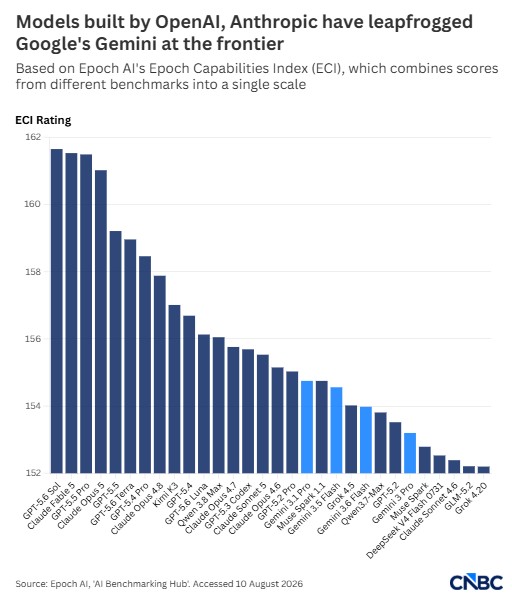
After Google released Gemini 3.1 Pro in February this year, subsequent products failed to form strong competition in the cutting-edge track. To address this, Google has formed an internal special team called "Code Strike" to enhance coding capabilities, which are crucial for the development of Artificial General Intelligence (AGI).
Morningstar senior stock analyst Malik Ahmad Khan analyzed that Google is lagging behind Anthropic and OpenAI because "Google previously focused more on monetizable businesses such as search and multimodal capabilities, missing the first phenomenal landing scenario—code development. The two competitors have already far surpassed Google in coding capabilities."
A Google spokesperson responded, stating that the claim that Google has set aside its core goals and is reversing priorities is inaccurate. The path to Artificial General Intelligence requires simultaneous advancement across multiple fronts, including agents, coding, robotics, and world models. The spokesperson also listed several achievements of DeepMind in areas such as robotics, video, computer intelligence, public policy, and fundamental research.
DeepMind under the leadership of Karmel Koulou
Karmel Koulou is a veteran of DeepMind, having joined the team back in 2012 before Google's acquisition. With several core talents having left, he needs to reassemble the team and fully compete with Anthropic and OpenAI in cutting-edge fields.
Pichai stated in an official announcement that Karmel Koulou reports directly to him and is fully responsible for the development of the Gemini model, cutting-edge AI research, Gemini applications, and the developer team.
Morningstar analyst Khan believes that this personnel appointment will allow GDM (DeepMind) to focus its goals more clearly, with optimizing large language models being a clear direction forward. "After this adjustment, Google's position in the large language model competition is likely to be better than before the adjustment."
"Kahneman is more inclined to explore the route of Artificial General Intelligence beyond the realm of large language models," Khan said.
During Hassabis's tenure at DeepMind, the focus has covered multimodal, world models, while also laying out in the life sciences field, such as its subsidiary Isomorphic Labs.
Sources close to the DeepMind team revealed last week that over the past year, Karmel Koulou has gradually taken on more work from Hassabis, leading model development and frequently taking the stage to release important versions of Gemini Constellation Research Chief Analyst Ray Wang commented: The promotion of Karthik Kolu means that Google will prioritize practical execution over pure fundamental research. "The subsequent model iteration pace is expected to accelerate, with more innovative experiments landing, all advancing around the product roadmap."
Bloomberg reported in July that Google postponed the release of Gemini 3.5 Pro, hoping to focus on optimizing performance dimensions such as code. Following the news, Alphabet's stock price fell sharply.
Nick Patience, head of AI business at Futurum Group, stated that Karthik Kolu's primary task is to ensure the smooth launch of Gemini 3.5 Pro; secondly, he needs to stabilize the iteration pace and prove that this is not a one-time breakthrough. In addition to delivering competitive cutting-edge models, he "also needs to rebuild the code development and pre-training talent team to fill the gap caused by the loss of core personnel."
Before its acquisition, DeepMind was headquartered in London, and during the tenure of CEO Demis Hassabis, it was long based in London. DeepMind's continued presence there has also boosted the UK's AI industry ecosystem.
Karthik Kolu has already moved from London to Google's headquarters in Mountain View, California, during his previous position.
Patience stated: "Google is quietly shifting its core AI leadership from London elsewhere." A Google spokesperson, however, expressed that Google still insists on maintaining its presence in London.
Google's AI Layout Prospects
On the day the senior personnel adjustment news was announced, Alphabet's stock price briefly declined, but over the past 12 months, the stock has risen approximately 76%.
Sundar Pichai mentioned in last month's earnings call that nearly 90 of the Fortune 100 companies are using the Gemini enterprise version, highlighting Google's strength in selling AI services to cloud customers.
Sebastian Malaby, author of "The Infinite Machine" (a biography of Hassabis), stated on the program: "Although Google's models are temporarily lagging and there is a strong desire to catch up, its progress in AI commercialization is quite impressive." He pointed out that Google's AI technology is already integrated into Android phones and also supports Siri on Apple iPhones and Apple's smart systems.
Malaby believes that one cannot determine that Google is facing a comprehensive crisis solely based on the departure of several well-known talents. "The team is large, with thousands of people in the Gemini-related team alone, so there is no need to overly amplify the impact of a few core personnel leaving."
Brian Hopkins, Vice President and Chief Analyst at Forrester, proposed that model development, client applications, and developer teams be unified under Karthik Kolu's jurisdiction, directly reporting to Pichai, which is expected to further amplify Google's AI competitive advantage.
"Assigning large models, end applications, and developer ecosystems to be managed by the same executive is an organizational model of mature product departments, rather than a traditional lab structure. In this regard, Google is far more experienced than OpenAI and Anthropic."
