


If this AI debt bubble ever pops, it won’t be just the Silicon Valley taking the first hit, it’ll be your pension and retirement funds. Why? Because the AI buildout has gotten so capital intensive that companies are relying heavily on debt rather than equity.
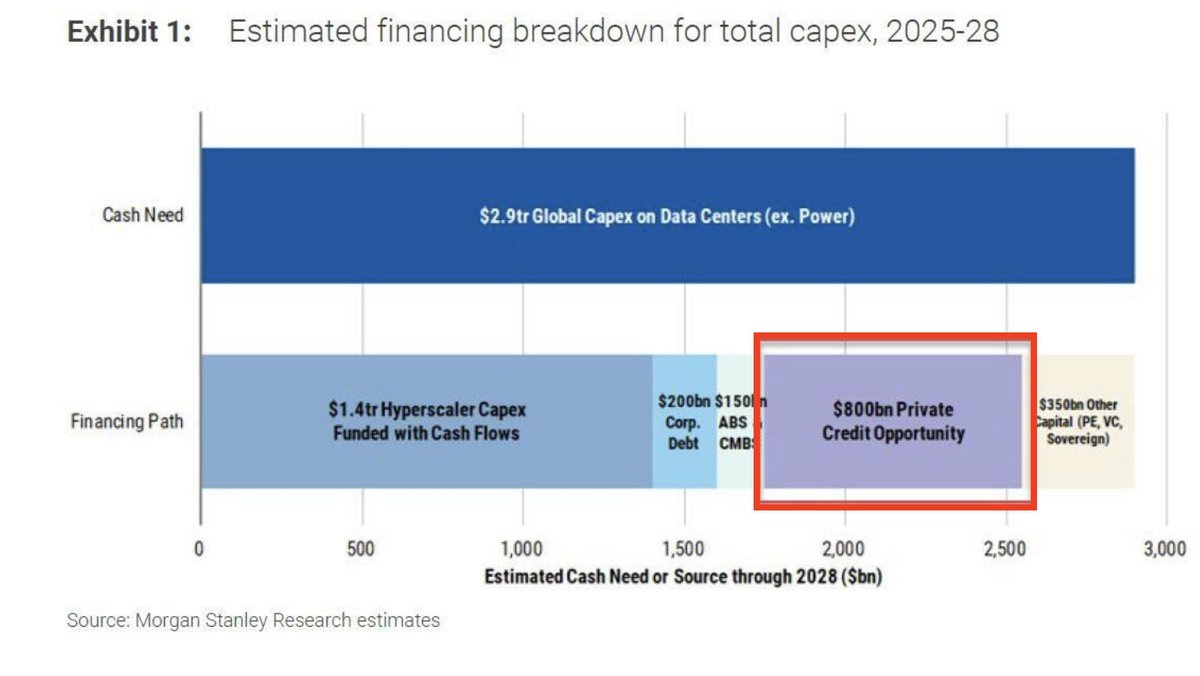
Around $800 billion in private credit is needed for these projects between 2025 and 2028, a third of all projected AI infrastructure spending. Tech giants like Amazon ramped up capex by 75% year over year and now run capex nearly as high as their operating cash flow so they've turned to bond markets and private credit. This is where pension funds, mutual funds and insurance companies get pulled in and theyre becoming the backbone of this financing waveAmazon’s recent bond sale is a textbook example. They issued $15 billion in bonds this week with $80 billion in demand, a massive oversubscription. This shows just how desperate institutional investors are for yield in a world of expensive equities, low rates and high competition. Deals like this are rushed to market and often re priced tighter overnight, handing managers instant (paper) profits even before the infrastructure exists. Meta and Oracle are structuring similar deals often using off balance sheet vehicles and securitized debt that’s sliced up and sold across the investment spectrum.Because this debt gets widely distributed (through pensions, mutual funds, insurance portfolios), a rapid repricing or a string of defaults could force selling and trigger broader losses. That’s a classic recipe for contagion, what starts as a decline in one sector can spill over and hit portfolios across the financial system.Much like what happened in the mortgage market in 2008, everyone’s chasing yield and assuming stability but the underlying structures are inherently risky due to leverage and concentrated bets. If the AI infrastructure thesis cracks, the consequences won’t just fall on tech companies or banks, they’ll hit retail investors, retirees, and anyone tied to institutional portfolios as well.Source: StockMarket.News
The copyright of this article belongs to the original author/organization.
The views expressed herein are solely those of the author and do not reflect the stance of the platform. The content is intended for investment reference purposes only and shall not be considered as investment advice. Please contact us if you have any questions or suggestions regarding the content services provided by the platform.
Post your comment

No Comments