


 Likes Received
 Posts
PostsGuangdong beverage giant breaks through 110 billion!

Dongpeng Beverage's market value has exceeded 110 billion yuan.
On October 17, Dongpeng Beverage's stock price continued to fluctuate at a high level. By the close of the day, the stock price was reported at 213.43 yuan per share, with a total market value of 110 billion yuan.
Over a longer period, Dongpeng Beverage's stock price has hit a new high, showing a "ferocious" performance. Since 2024, the stock price has risen by 56.3%, making it the best-performing stock among the 124 component stocks in the food and beverage sector this year—no contest.
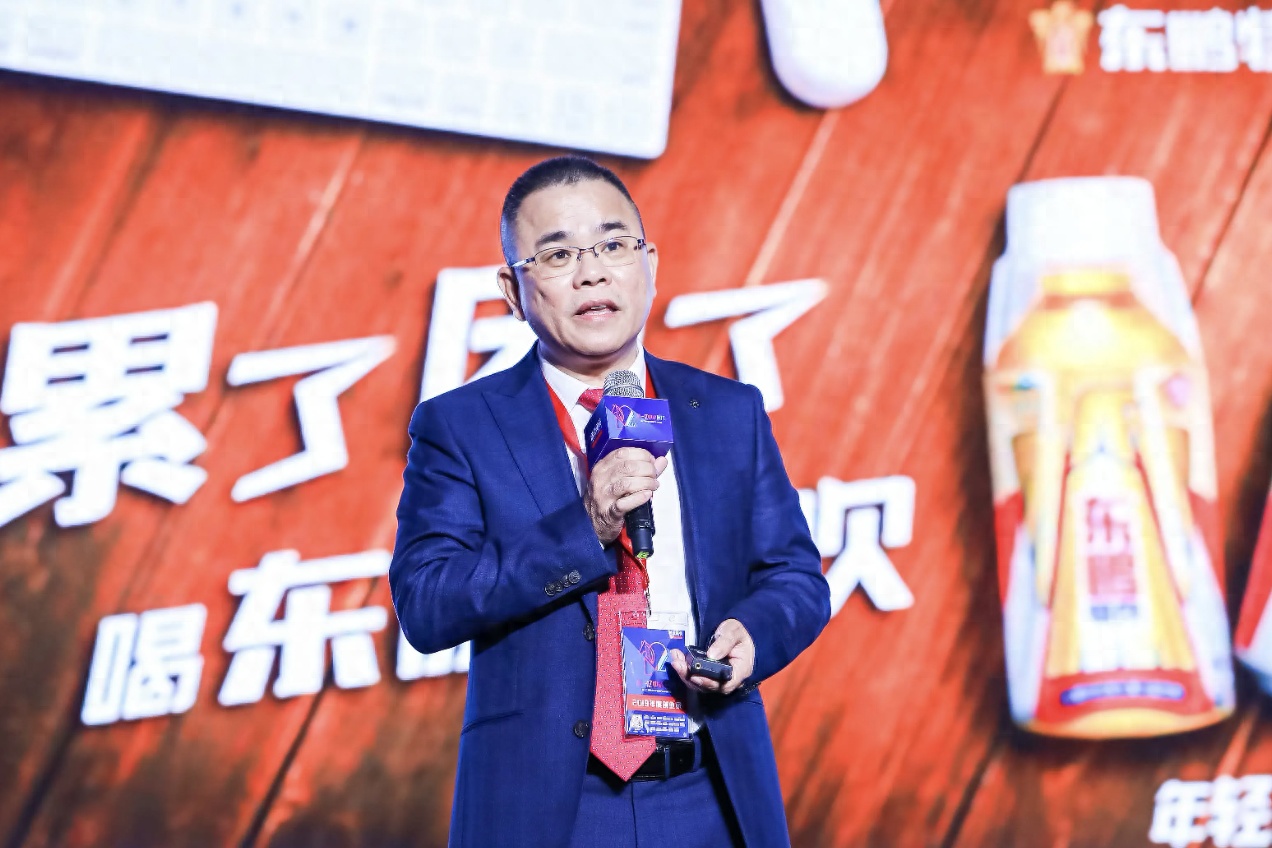
Admittedly, the sustained rise in Dongpeng Beverage's stock price is closely tied to market conditions. However, beyond external factors, the continuous upward trend is also strongly linked to the company's robust financial performance.
According to financial reports, Dongpeng Beverage achieved revenues of 7.873 billion yuan and net profits of 1.731 billion yuan in the first half of the year, with growth rates of 44.19% and 56.17%, respectively. Statistics show that from 2021 to 2023, the company's revenue growth rates were 40.72%, 21.89%, and 32.42%, while net profit growth rates were 46.9%, 20.75%, and 41.6%.
Recently, Dongpeng Beverage disclosed its Q3 earnings forecast, projecting revenues of 12.4 billion to 12.72 billion yuan for the first three quarters, a year-on-year increase of 43.50% to 47.21%, and net profits of 2.6 billion to 2.73 billion yuan, up 57.04% to 64.89% year-on-year.
One Trick to Rule Them All
From a small factory on the brink of bankruptcy to a beverage giant with a market value exceeding 100 billion yuan, Dongpeng Beverage's success boils down to two words—imitation.
In 2003, Shenzhen Dongpeng Beverage Industrial Company was facing bankruptcy due to years of losses. At a critical moment, Lin Muqin, then the company's deputy general manager, decided to take over Dongpeng Industrial.
Leveraging his experience in the beverage industry, Lin Muqin gradually turned the company around. However, the real turnaround came in 2009 when Dongpeng Industrial focused on its energy drink, Dongpeng Special Drink.
In fact, even before Lin Muqin took over, Dongpeng Industrial had already imitated Red Bull by launching Dongpeng Special Drink. However, due to its highly similar appearance to Red Bull, it was labeled a "knockoff Red Bull." Coupled with limited resources for large-scale promotion, production of Dongpeng Special Drink stagnated.
After Lin Muqin took over, he immediately revamped Dongpeng Special Drink—switching from cans to plastic bottles and adding a "dust-proof" cap design to differentiate it from Red Bull. Priced at just 3.5 yuan per bottle, half the price of Red Bull, and backed by a marketing campaign featuring Hong Kong star Nicholas Tse in 2013, the product gained traction.
In short, Dongpeng Special Drink's strategy was "imitation + micro-innovation": essentially copying Red Bull's energy drink formula but making small tweaks in packaging, pricing, and marketing.
This strategy allowed Dongpeng Special Drink to carve out a niche in the energy drink market and eventually surpass Red Bull.
According to Nielsen IQ data, Dongpeng Special Drink ranked first in sales in China's energy drink market in 2023, capturing a 43.02% market share, solidifying its position as the "top dog" in the functional beverage sector.
After achieving success in functional beverages, Dongpeng Beverage expanded into other products. The company introduced a "1+6" strategy—"1" referring to Dongpeng Special Drink, and "6" representing core categories for its second growth curve: "Dongpeng Rehydrate" (electrolyte water), "Dongpeng Latte" (coffee), "Peng You Tea" (sugar-free tea), "VIVI" (cocktail beverages), "Island Coconut" (coconut juice), and "Drink More, Feel Better" (tea/plant-based drinks). The strategy remained "imitation + micro-innovation."
So far, the strategy is still working. In the first half of this year, Dongpeng Beverage's "other beverages" generated revenues of 1.007 billion yuan, accounting for 12.79% of total revenue. In the same period last year, these products brought in 320 million yuan, or 5.86% of revenue, indicating rapid growth.
Breaking the Ceiling
Currently, Dongpeng Beverage is arguably the best-performing company among all A-listed food and beverage firms.
This is no exaggeration. Despite a sluggish consumer market in recent years, Dongpeng Beverage has maintained rapid growth. From 2021 to 2023, its revenue growth rates were 40.72%, 21.89%, and 32.42%, while net profit growth rates were 46.9%, 20.75%, and 41.6%, with both metrics consistently exceeding 20%.
More importantly, Dongpeng Beverage has broken through its growth "ceiling." Previously, the company faced criticism for over-reliance on a single product and slow national expansion. However, as mentioned earlier, its other products are growing rapidly, addressing the first issue.
Progress has also been made in national expansion. Financial reports show that in the first half of the year, national revenue accounted for 59.67% of total revenue, up from 54.79% in the same period last year.
Additionally, Dongpeng Beverage's reliance on Guangdong province has decreased. In the first half of 2022, Guangdong accounted for 38.4% of revenue, but this dropped to 26.85% in the first half of this year—an 11.55% decline.
Today, Dongpeng Beverage, which started by imitating Red Bull, has not only surpassed Red Bull but also expanded beyond functional beverages to become a beverage giant. This trend likely explains its rising stock price. As of September 30, the stock closed at 265.41 yuan per share, with a market value of 106.2 billion yuan. The stock is just shy of its all-time high of 278.2 yuan and has risen 48.88% since 2024, making it the best-performing stock among the 124 component stocks in East Money's food and beverage sector.
Institutional holdings also reflect this growth. In the first half of the year, 447 funds held Dongpeng Beverage shares, with a total value of 5.474 billion yuan—up significantly from 308 funds and 2.547 billion yuan in the same period last year.
The copyright of this article belongs to the original author/organization.
The views expressed herein are solely those of the author and do not reflect the stance of the platform. The content is intended for investment reference purposes only and shall not be considered as investment advice. Please contact us if you have any questions or suggestions regarding the content services provided by the platform.
