



MINISO plans to expand to 100,000 stores in three years. Can its flash warehouses break the curse of front warehouses?

Source | Dongge's E-commerce Insights
Author | Jin Shan
Just as SARS in 2003 was considered by many as the starting point of China's e-commerce, the pandemic a few years ago accelerated the development of instant retail.
Like e-commerce, instant retail was initially questioned as a product of emergency demand. But five years later, the industry's growth rate remains strong.
A recent report by the Chinese Academy of International Trade and Economic Cooperation under the Ministry of Commerce, titled "Instant Retail Industry Development Report," shows that China's instant retail market reached 650 billion yuan in 2023, a year-on-year increase of 29%, and is expected to exceed 2 trillion yuan by 2030.
Behind this massive scale is consumers' endless pursuit of faster and better services. Instant retail has created a brand-new incremental market.
During the National Day holiday, a friend's child suddenly wanted to play games at home. A game controller ordered online arrived in less than 40 minutes. Young people travel light, buying all the necessary goods online with a single click.
Driven by demand, instant retail has evolved from a wait-and-see option to a must-have for retailers. On the supply side, what is the solution for retailers to deeply engage in instant retail? The latest industry buzzword is "Flash Warehouse."
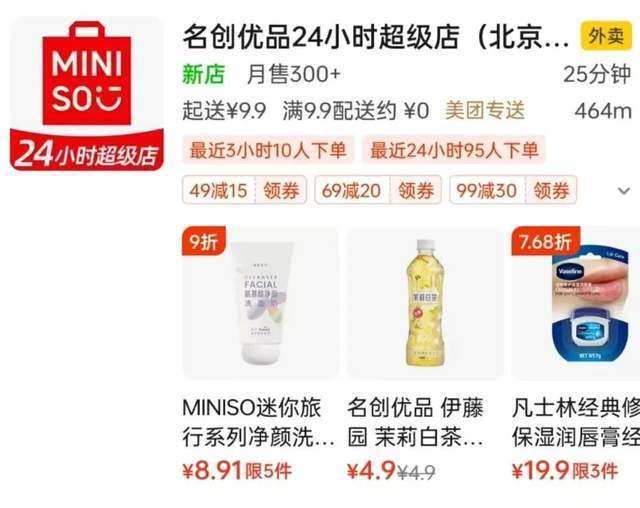
MINISO plans to launch 800 "24-Hour Super Stores" in the form of Flash Warehouses this year. Watsons is also deploying Flash Warehouses. Last week's 2024 Meituan Instant Retail Industry Conference revealed that Meituan Flash Warehouses have exceeded 30,000, covering all retail categories, and are expected to exceed 100,000 by 2027.
Why are Flash Warehouses expanding so rapidly in the industry? Can they become an opportunity for retailers?

Retailers Rush to "Open Warehouses"
What exactly are Flash Warehouses that have attracted so many retailers?
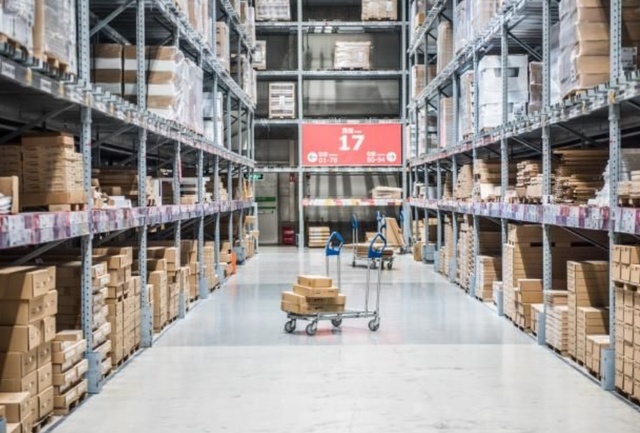
Flash Warehouses are a new supply format evolved from instant retail, essentially a type of forward warehouse. Through data analysis, they place products consumers want to buy in warehouses closer to them, saving delivery time and enabling "online orders, delivered in as fast as 30 minutes."
In the past, forward warehouses were the "standard" for many fresh e-commerce platforms, with fresh produce and emergency orders being the main consumption scenarios. The industry once widely believed forward warehouses were a "false proposition," plagued by high fulfillment costs, profitability challenges, and limited expansion beyond high-tier cities. Closing warehouses and withdrawing from cities were common actions, with many players going from pioneers to casualties.
The rise of Flash Warehouses may mark a turning point for forward warehouses. In 2020, Meituan first proposed the concept of Flash Warehouses. In less than four years, over 30,000 Flash Warehouses have opened nationwide, showing several positive trends.
First, the expansion into all categories.
Initially, Flash Warehouses were mainly for convenience stores. Now, almost all categories have Flash Warehouses, with over 10,000 convenience store Flash Warehouses and the remaining 20,000 for other categories. These cover digital appliances, maternal and child toys, daily necessities, apparel, beauty and personal care, pet supplies, fruits, ingredients, alcohol, flowers, medical equipment, and more.
Second, they have broken the skepticism of being limited to first- and second-tier cities and are rapidly expanding into lower-tier markets. In 2024, over 1,800 convenience store Flash Warehouses opened in lower-tier markets. For example, a life supermarket called Yougouduo in Xichang saw its daily orders rise to over 700 within seven weeks of opening, with profits continuing to grow.
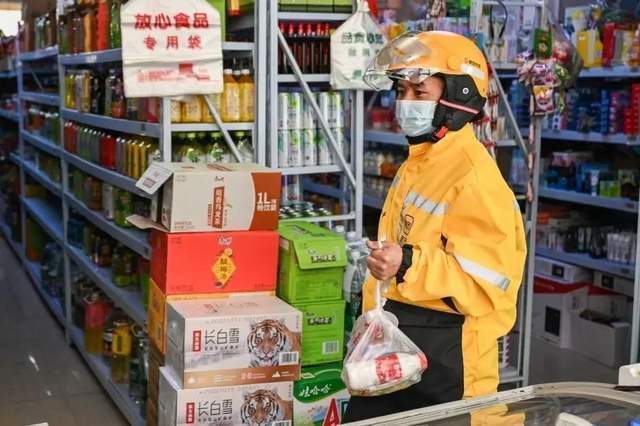
The infrastructure behind Flash Warehouses is also being upgraded. The number of Flash Warehouses with cold storage facilities has significantly increased, with many old warehouses being renovated or rebuilt to meet chilled product demands. In the first half of 2024, over 1,500 unmanned warehouses were added, solving the problem of opening warehouses in low-frequency, low-efficiency locations.
The trend of all-category development and the 红利 of 下沉 markets have also made retailers see opportunities.A clear signal is that previously, only platforms and a few entrepreneurs participated in Flash Warehouses, but now large brands are entering the game.
MINISO has opened 500 Flash Warehouses, with cumulative performance exceeding 100 million yuan, and plans to reach 800 by the end of the year. Watsons' Flash Warehouses on Meituan cover over 10 first- and second-tier cities.
At the same time, the performance of Flash Warehouses continues to grow.
It is reported that MINISO's first "24-Hour Super Store" in Chongqing's Jiangbei District achieved monthly sales of over 250,000 yuan within three months of opening, with disposable travel 用品 particularly popular. The "24-Hour Super Store" performs well in 超一线 cities and 西南 regions; Watsons' warehouse 单产 has increased 1.4 times; a service provider stated that the 50+ Flash Warehouses he opened this year are all profitable, with monthly net profits ranging from 30,000 to 80,000 yuan.
Why do Flash Warehouses have the potential to break the 生存魔咒 of forward warehouses and become a new opportunity for the retail industry? As the retail brand with the most self-operated Flash Warehouses in the industry, MINISO offers one perspective.

Why Is MINISO Building Meituan Flash Warehouses?
In the past, offline chain brands seeking growth would adopt a "density" strategy—opening more stores to 覆盖 more consumers. But as the number of stores 无序 increased, nearby stores would compete for 客流, leading to declines in average revenue and profit per store. The investment required to open a new offline store also increased.
Is there a better expansion strategy for retailers? The complementary development of offline stores and instant retail models like Flash Warehouses offers a new solution.
MINISO's "24-Hour Super Store" is a Flash Warehouse model, and instant retail is expected to become MINISO's second growth curve.
"We see 超级店 as a supplement to MINISO's 常规店 in areas they cannot cover. If user demand is like a bottle, opening warehouses is like pouring sand into it, covering more 人群 and more needs," said Chen Zhenjie, head of MINISO's instant retail business.
Flash Warehouses and physical stores are not mutually 替代的关系. MINISO's '24-Hour Super Store' is purely incremental, reaching locations where 常规店 cannot flexibly expand. At the same time, Flash Warehouses have higher 坪效. Data shows that, on average, stores and Flash Warehouses of the same size have 坪效 (yuan/square meter/day) of 59.2 and 83.3, respectively; store profit margins range from 1% to 5%, while Flash Warehouse profit margins range from 3% to 10%.
Flash Warehouses also extend operating hours and expand store coverage. Time-wise, traditional stores are limited by mall hours, leaving consumers unable to shop after closing. Location-wise, 90% of MINISO's 常规店 are in malls, while Flash Warehouses serve consumers outside mall coverage.
The "24-Hour Super Store" is the result of combining MINISO's supply chain strengths with Meituan's digital and fulfillment capabilities. Knowing the difficulty but acting decisively, the first "24-Hour Super Store" launched in January this year. It is reported that both sides tested the model for six months before 大规模扩张, and once decided, the expansion 速度 became rapid.
In terms of 选址, these Flash Warehouses complement MINISO's 常规店, focusing on communities, residential areas, and 热门出行 cities with high online demand. The platform uses data to 精准 predict where 开仓 opportunities exist, providing support.
In terms of 运营,货盘 organization is a major challenge.Consumers in mall 常规店 mainly 'browse,'偏向 impulse purchases, while instant retail leans toward 应急 and 刚需. This means the 4,000+ SKUs in 常规店 may not all suit online instant retail demand if directly copied to Flash Warehouses.
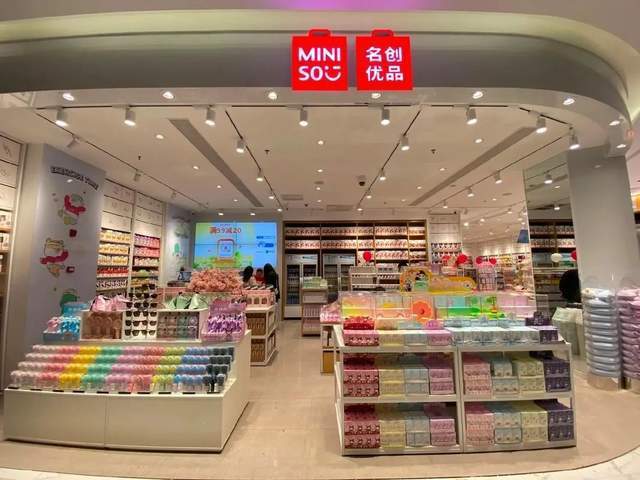
But MINISO's advantage lies in its 自产销一体 model, with rapid R&D and supply chain capabilities to meet front-end demand.
Tailored to instant retail user 特性, MINISO and Meituan 合作,差异化 developed 大单品 like disposable towels, underwear, bedsheets, and toilet seat covers, focusing on travel, cleaning 百货, beauty and personal care, digital accessories, and gifting scenarios. The product 差异率 between 24-Hour Super Stores and 常规线下门店 is said to reach 70%,再次 proving that Flash Warehouses bring 增量 without cannibalizing physical store sales.
Through "开仓," MINISO has found a better expansion method for 住宅, communities, and new markets.

Will Flash Warehouses Be the Biggest Opportunity in Instant Retail?
China's retail industry has covered in 30 years what took the U.S. 130 years. The development of e-commerce and instant retail is world-leading. Behind this 高速发展, many offline 长尾业态急需升级. Complex 分销 networks, hard-to-reach mom-and-pop stores, and wet markets also impact operational efficiency.
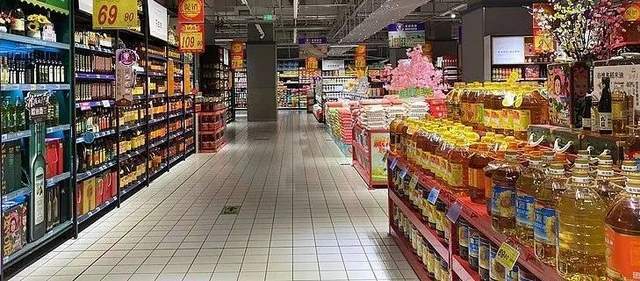
Especially for FMCG brands, competition is fiercer, and launching new products is key to maintaining competitiveness. But new products face a 九死一生 situation. Kantar data shows that FMCG launches 84,908 new products annually, with only a 13% survival rate.
A major reason is the slow speed of new product rollout.
After launch, new products enter offline 终端 channels, passing through each layer of 分销商 to 实体门店, which can take 3 to 6 months. Domestic F&B brands like Luckin and ChaPanda can 铺满全国终端门店 in as little as two weeks.
With the rise of Flash Warehouses and other new 业态, brand data is being 打通, and unnecessary 中间环节 optimized.Chain FMCG brands may soon be able to test new products as quickly as F&B brands.
The 2024 Meituan Instant Retail Industry Conference projected that by 2027, over 100,000 Meituan Flash Warehouses will form a 200 billion yuan market, covering all categories and regions.
The expansion of Flash Warehouses will enable retail brands to grow in more scenarios through data, driving upgrades in 选品, supply chains, and marketing.
By addressing retailers' pain points in products, channels, and more, Flash Warehouses could become the biggest opportunity in instant retail today.
The copyright of this article belongs to the original author/organization.
The views expressed herein are solely those of the author and do not reflect the stance of the platform. The content is intended for investment reference purposes only and shall not be considered as investment advice. Please contact us if you have any questions or suggestions regarding the content services provided by the platform.
