


Baidu's autonomous driving expert Li Zhenyu starts a business, another star team in embodied AI.

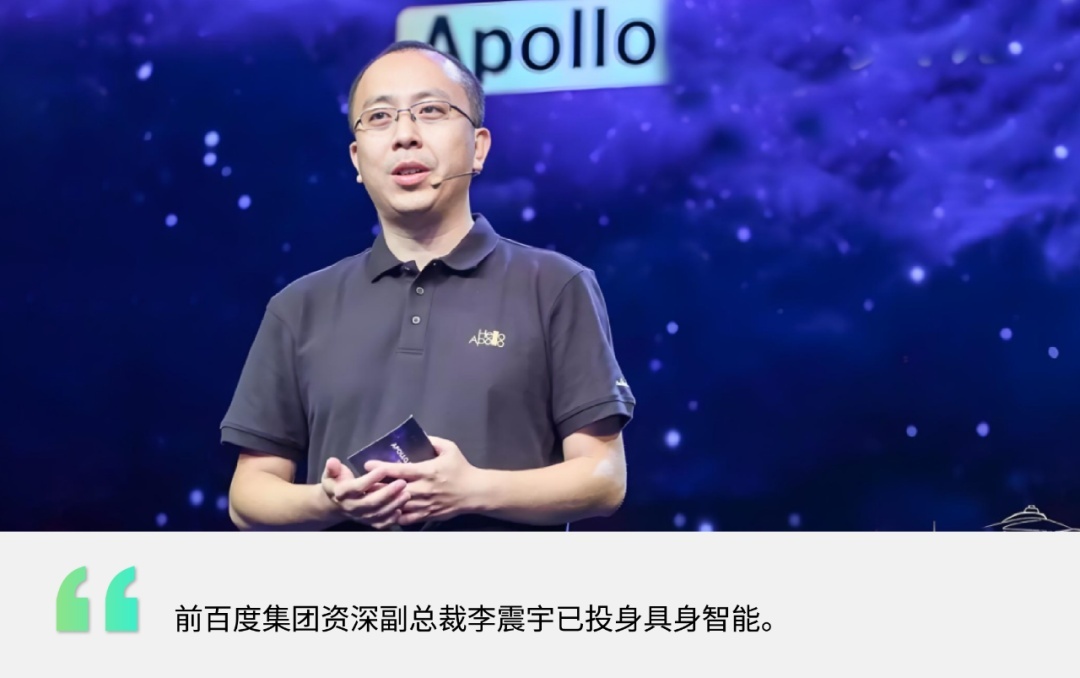
Another star team has emerged in the field of embodied intelligence.
Li Zhenyu, former Senior Vice President of Baidu Group and President of the Intelligent Driving Group (IDG), has embarked on a new journey, diving into embodied intelligence.
The company he joined is Tashi Zhihang, an embodied intelligent robotics company co-founded by Chen Yilun, former Chief Scientist of Huawei's Automotive BU, and Ding Wenchao, a former member of Huawei's "Genius Youth" program.
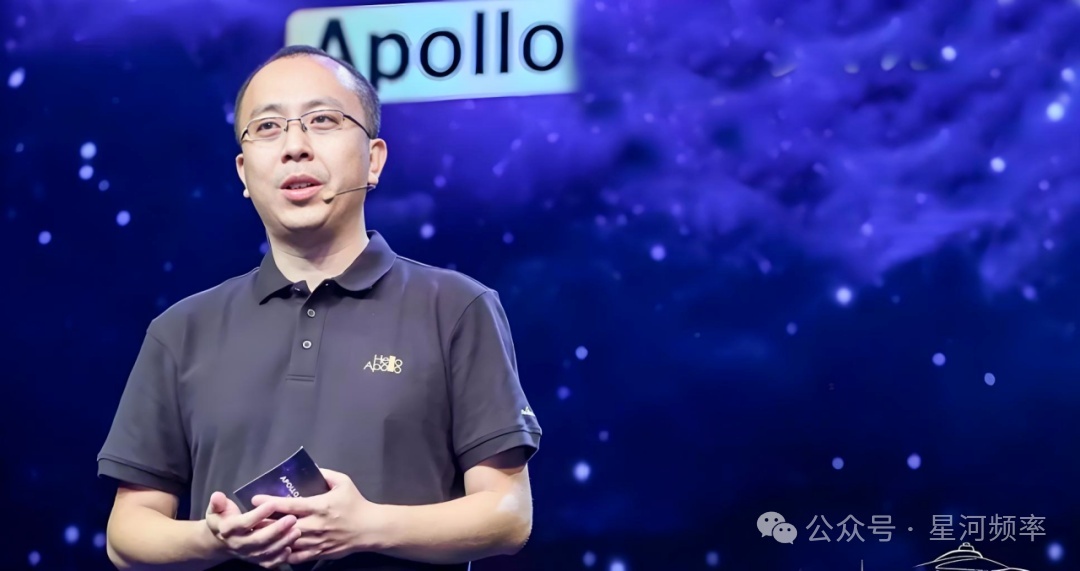
Li Zhenyu
With this, the three founders of Tashi Zhihang have now been revealed.
Tashi Zhihang is a typical startup in the embodied intelligence space, founded by "autonomous driving veterans + young scientists." Li Zhenyu, in particular, is a core technical expert who spent 17 years at Baidu, rising to the position of Baidu IDG's top leader and Group Senior Vice President.
With Li Zhenyu on board, another highly promising startup has emerged in the embodied intelligence field.
1. Li Zhenyu Joins Tashi Zhihang, Likely to Lead Team Building and Management
Li Zhenyu, the former top leader of Baidu IDG (Autonomous Driving Group).
He was a key figure in laying the foundation for Baidu's early autonomous driving efforts and a driving force behind Baidu's move toward open-source and ecosystem-building in autonomous driving.
At Baidu, Li Zhenyu led the autonomous driving business and won many battles. Two of the most significant were:
First: Revitalizing talent and building an ecosystem through the Apollo program, leveraging Baidu's core strengths in autonomous driving.
Autonomous driving has long been one of Baidu's strengths, but it wasn't until Li Zhenyu returned to the top leadership role and took over Baidu IDG that this strength was fully realized and deployed externally.
Li Zhenyu, who previously worked on network technology R&D at Huawei, joined Baidu in 2007 and was involved in the formation of the autonomous driving division and the operational management of Baidu Brain. However, before 2017, Baidu's autonomous driving direction was unclear, and internal technical talent turnover was high.
Li Zhenyu stabilized Baidu's autonomous driving team.
After becoming General Manager of Baidu IDG in 2017, he strongly promoted the Apollo program, winning orders and respect through ecosystem strategy.
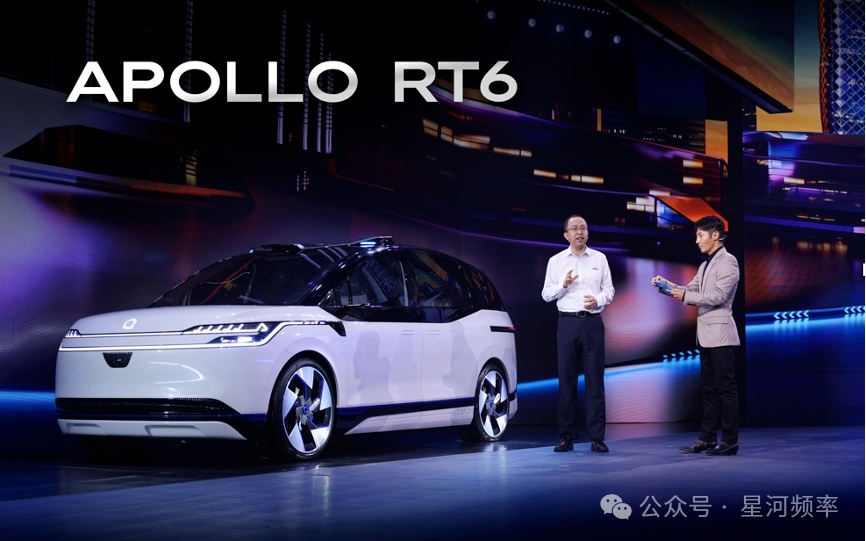
Li Zhenyu at the Apollo RT6 launch event
Robin Li once praised Li Zhenyu in an internal letter: "He can integrate resources, proactively drive change, and continuously upgrade organizational capabilities, making significant contributions to building Baidu's new growth engine."
This step showcased Li Zhenyu's leadership.
The second battle was Li Zhenyu leading Baidu's autonomous vehicle team to its peak.
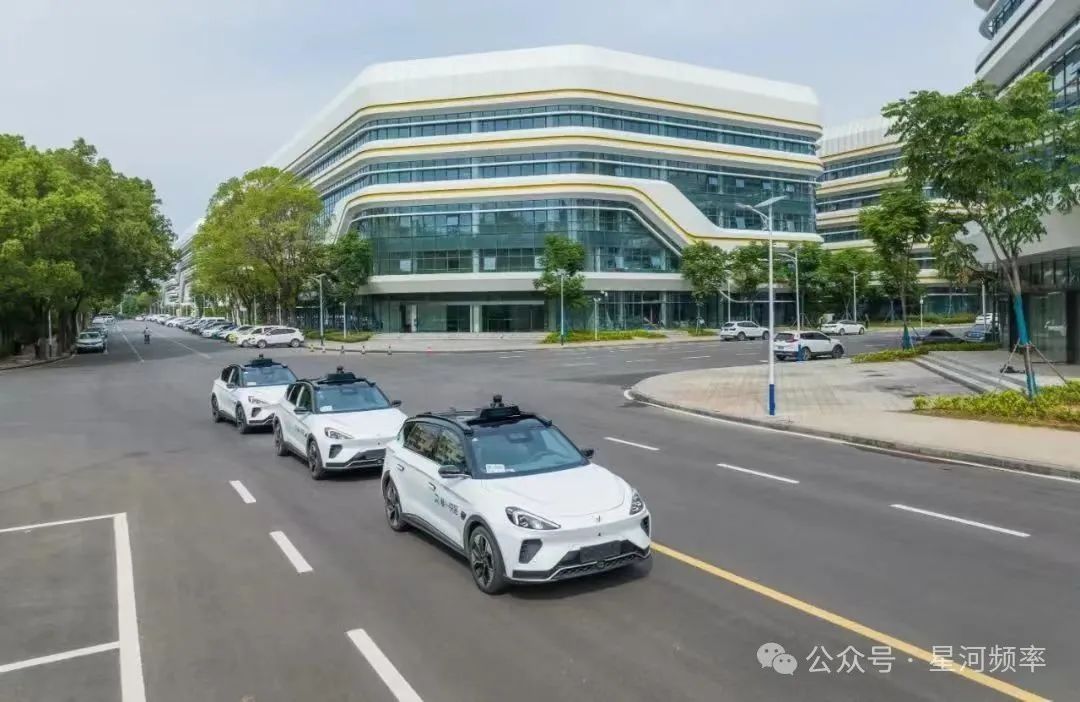
From 2020 to 2024, Baidu's autonomous vehicle team and its spin-off, Apollo Go, were the stars of China's Robotaxi scene. Li Zhenyu was a key figure, witnessing the project's journey from nothing to strength.
As early as 2016, Li Zhenyu participated in Baidu's first public trial of autonomous vehicles. Four years later, after Baidu officially received Beijing's autonomous driving passenger test license, Apollo Go began operating publicly in major cities across China.
From the lab to Baidu's first public passenger trial, to Apollo Go sparking nationwide discussions in Wuhan, Baidu's stock price once surged by 18%. Autonomous vehicles were no longer a distant dream—Baidu became China's only player on par with Waymo.
This time, the two younger co-founders joining him in this venture are also formidable.
Chen Yilun holds a Ph.D. in Electrical Engineering from the University of Michigan and bachelor's and master's degrees from Tsinghua University's Department of Electronic Engineering.
He worked at Huawei for four years, serving as CTO and Chief Scientist of the Automotive BU's autonomous driving system, before leaving in 2022. He is now the Chief Expert in Intelligent Robotics at Tsinghua University's Institute for AI Industry Research (AIR).
Ding Wenchao graduated with a bachelor's degree from Huazhong University of Science and Technology and a Ph.D. from the Hong Kong University of Science and Technology. He was selected for Huawei's "Genius Youth" program.
In 2020, Ding joined Huawei as a colleague of Chen Yilun, serving as a research scientist and technical lead for the Intelligent Driving Solution (ADS) team. He was a core technical expert behind Huawei's first-generation intelligent driving system.
In February 2023, Ding left Huawei to join Fudan University's Institute of Engineering and Applied Technology as a Young Researcher and head of the Swarm Robotics Systems Laboratory (Magic Lab).
Notably, Fudan's Magic Lab launched the elderly care humanoid robot "Guanghua No. 1" in July this year. "Guanghua No. 1" can not only walk but also read human micro-expressions and generate emotional responses.
Tashi Zhihang's current team consists mainly of Ph.D. candidates from Tsinghua and Fudan.
The three founders have been conducting intensive interviews recently, arranged directly by Li Zhenyu, focusing on AI algorithms and hardware.
It is reported that Tashi Zhihang has very high standards for talent, favoring young, innovative AI professionals and those with successful product experience. Sources say that, given the founders' appeal, many potential candidates have expressed interest in joining.
Moving forward, Li Zhenyu is expected to lead Tashi Zhihang's team building, management, and business expansion, while Chen Yilun and Ding Wenchao will likely focus on technical R&D.
For a startup, a founding team with strong academic backgrounds and practical experience is the most important ticket to attracting funding and talent.
With a seasoned expert like Li Zhenyu, Tashi Zhihang boasts a dream team in embodied intelligence, with a high starting point and promising investment prospects.
Sources reveal that Tashi Zhihang is currently in its first round of financing.
Public records show that Tashi Zhihang was established in July this year, with business operations covering AI software development, hardware sales, and R&D for intelligent robots, industrial robots, and service/consumer robots.
2. Autonomous Driving + Embodied Intelligence: Veteran Captains Charting a New Course
Autonomous driving veterans pivoting to embodied intelligence is no longer rare.
Since 2022, several technical and business leaders from autonomous driving have entered embodied intelligence to start their own ventures. These include Wang Gang, former Vice President of Alibaba and head of DAMO Academy's Autonomous Driving Lab; Zhang Li, former COO of WeRide; Liu Fang, former head of Xiaomi Auto's autonomous driving product and mass production; and Yu Yinan, former Vice President of Horizon Robotics.
Even industry giants like Bosch, Horizon Robotics, and RoboSense are doubling down.
According to incomplete statistics, at least 15 leading companies in the autonomous driving supply chain have entered embodied intelligence, primarily through three approaches: forming teams, collaborating with humanoid robot companies, or developing robotic technologies and components.
Beyond talent and supply chain companies, automakers have also joined the embodied intelligence race. Tesla, Xiaomi, XPeng, and Changan Auto are all developing humanoid robot products.
Embodied intelligence (Embodied AI) refers to integrating AI into physical entities like robots, enabling them to perceive, learn, and dynamically interact with their environment.
Simply put, embodied intelligence is an AI brain + a mechanical body.
Thus, embodied intelligence can take many forms, such as robotic arms, bipedal robots, humanoid robots, and more.
Their commonality is a smart brain capable of assisting or even replacing humans in various tasks.
After major breakthroughs in AI technologies like large language models in 2022, the possibility of robots having intelligent brains became real, and embodied intelligence began gaining traction.
Why are autonomous driving talents shifting to embodied intelligence? Two main reasons.
First, autonomous driving and embodied intelligence share the same underlying logic: perception, decision-making, and execution.
Due to technical overlap, autonomous driving software and hardware can be adapted for embodied intelligent robots.
Autonomous driving systems, large models, end-to-end neural networks, motion planning algorithms, and core automotive components like batteries, motors, steering systems, and brakes can all be repurposed.
Tesla's car battery components repurposed for the Optimus humanoid robot
The veterans pivoting to embodied intelligence bring rich experience in technical R&D, hardware manufacturing, or business operations.
Second, the embodied intelligence market is still immature and potentially even larger than autonomous vehicles.
After over eight years of development, the autonomous driving industry has established clear leaders, with mature companies dominating market share.
Embodied intelligence, however, remains in its early stages, with no company yet achieving a closed-loop business model, leaving the market wide open.
This vast untapped market corresponds to enormous future potential.
Take humanoid robots, the hottest segment in embodied intelligence:
Elon Musk once predicted that by 2030, Tesla's market cap would reach $30 trillion, with humanoid robots contributing $25 trillion—more than autonomous vehicles.
NVIDIA CEO Jensen Huang also called robotics one of the world's most important industries, stating that only two robotic systems can be easily deployed at scale: autonomous cars and humanoid robots.
Lured by this potential, capital is flooding into embodied intelligence.
According to incomplete statistics from the Gaogong Robot Industry Research Institute (GGII), from January to October 2024, global humanoid robotics saw 69 funding rounds totaling over RMB 11 billion, with 56 in China totaling over RMB 5 billion.
In the first half of 2024 alone, global humanoid robot funding exceeded RMB 7 billion, surpassing the total for all of 2023.
Beyond humanoid robots, embodied intelligence robots could take many forms, with limitless potential.
Embodied intelligence and autonomous driving are like two ships sailing the same sea.
Autonomous driving has entered a fiercely competitive, cutthroat red ocean.
Meanwhile, some of autonomous driving's most seasoned captains are now steering the new ship of embodied intelligence toward uncharted blue waters.
How much of an impact will these veterans make in this new frontier? What transformations will they bring to society?
The future of embodied intelligence is full of promise.
$Baidu(BIDU.US)
The copyright of this article belongs to the original author/organization.
The views expressed herein are solely those of the author and do not reflect the stance of the platform. The content is intended for investment reference purposes only and shall not be considered as investment advice. Please contact us if you have any questions or suggestions regarding the content services provided by the platform.
