


 Buffett's junior apprentice
2026, the eve of the AI bubble burst? Looking back at the 1847 railway crash, I see an astonishing coincidence

Hello everyone, welcome back to "US Stock Notes"! Today is Saturday, December 13th. Today, we won't talk about K-lines or earnings reports. Instead, let's discuss a soul-searching question that sends chills down the spines of all tech investors: Are we standing on the "volcanic crater" of AI investment?
If you think the current AI hype resembles the dot-com bubble, you might be looking at the wrong reference. The true historical mirror lies in the madness of 180 years ago. Amazon, Microsoft, Alphabet, Meta... These giants are set to invest over $300 billion in AI infrastructure this year, and this number is still skyrocketing. What does this mean? It's equivalent to a single industry directly consuming 1.3% of global GDP. Capital accumulation of this magnitude, in human history, typically only occurs during "wartime."
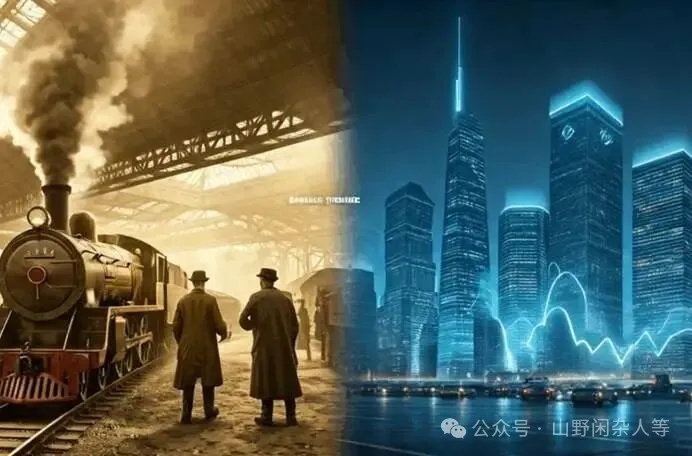
Many like to compare the present to the "dot-com bubble" or the "smartphone era," but in my view, the true historical mirror of this AI frenzy is the "Railway Mania" of the 1840s. Back then, railways were the earliest form of "computing power."
Steel replaced today's silicon, and steam replaced electrons. But the fervent belief was identical: Connectivity would completely redraw the economic map.
Will we repeat history? Or is this the "railroad" of the next industrial revolution? Don't rush—follow me as we uncover the truth step by step. After reading this, you'll have a fresh perspective on AI investment—subscribe to stay on track, opportunities always come after the bubble.

I. Echoes of History: 1847, Humanity's First "Infrastructure Bubble," Buying the Future!
Let's turn the clock back to 1845 in Britain. It was the first great infrastructure speculation cycle in human history. At the time, the British Parliament approved hundreds of new railway companies. How crazy was it? Even before the railway routes were surveyed, these companies' stock prices had already doubled. Money poured in like a flood, and engineers became the most sought-after profession. The entire UK was convinced it was "buying the future." Does this sound familiar? Yes, back then, people talked about trains the way we talk about data centers today.

However, by 1847, the gravity of reality returned. Interest rates soared, crops failed, gold reserves dried up, and most fatally—people realized the return on investment (ROI) of railways was nowhere near as high as the PPTs claimed. The bubble burst instantly. Hundreds of companies went bankrupt, and investors' wealth vanished into thin air.
But the story didn't end there.
The money was gone, but the tracks remained. Those steel skeletons stayed, becoming the physical veins that supported the Industrial Revolution for an entire century. The losses were temporary, but the infrastructure was eternal. The failed investors laid the foundation for future prosperity.
This is the law of history: Innovation drives speculation, speculation leads to excess, and excess often becomes the cornerstone of the next economy.
II. Build First, Profit Later: The Logical Flaw in Silicon Valley's Big Bet
Fast-forward two centuries, and the scale and speed of AI spending are a perfect replica of the 19th-century frenzy.
Today's compute clusters are the railways of yesteryear: massive, physical, energy-devouring. They no longer connect the world through coal and steel but through fiber optics and photons.
Silicon Valley's logic today is simple and brutal: Build first, profit later. Investors firmly believe these networks will become as indispensable as air, with power permeating every pore of the economy. If you don't join this infrastructure race, what you lose isn't money—it's the future. The scariest part? This anxiety is real and partially correct. Missing certain waves can indeed leave you behind, but that doesn't mean everyone on this train will reach the destination.
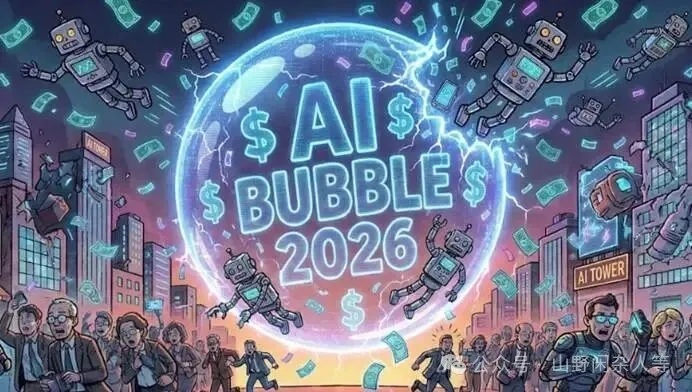
But we must face an awkward reality: There's a vast chasm between spending and returns. Consulting giant Bain calculated that to justify current investments, the industry must generate $2 trillion in AI-related revenue annually by 2030. Note: It's not about "improving efficiency a bit" but creating entirely new markets—completely rewritten logistics systems (AI-scheduled autonomous transport), redefined healthcare (AI diagnostics and R&D), new financial tools (AI-driven algorithmic trading and risk management), and even overhauls of education and governance.
Is this possible? Yes. But we're far from it now.
III. If the Bubble Bursts, What Would It Look Like?
Railways transport goods and people; AI transports cognition.
Its tentacles reach into defense, finance, education, even the very structure of labor. If it fails, the risk isn't just "overheating" but systemic shock. The danger now is: Technological evolution far outpaces institutional digestion. We've laid the world's neural network before agreeing on who controls the traffic lights.
Yet railways and AI share the same emotional core: Treating technology as a belief system. When Palantir's valuation soars, you know this faith has escaped gravity. Both face the same vulnerabilities: inflation, high rates, geopolitical friction. A few quarters of missed earnings or one policy misstep could evaporate the liquidity fueling this boom overnight. Retail investors, startups, and VCs are chasing "AI concept stocks," many with no positive operating cash flow.

These are the sounds before the bubble pops. But this time, there's one fundamental structural difference from the railway crisis. Railways were linear, local, their tracks nailed to national soil. AI infrastructure is distributed, global—data centers, cloud architectures, semiconductors, undersea cables—invisible yet interdependent, thus more fragile.
More crucially, the 1847 stars were shovel-wielding entrepreneurs; the 2025 leads are Earth's mightiest tech titans, richer than nations, some backed by sovereign wealth.
This isn't just a market tale traders love—it's a world-class industrial-geopolitical game.
IV. Upon the Rubble, the New World
Every tech revolution leaves humanity a dual legacy: ruins and foundations.
The railway crash left tracks; the dot-com bust left fiber; post-AI mania will leave millions of servers, gigawatts of power lines, and vast data centers. Will these be civilization's bedrock or tombstones of excess? It depends on how we navigate the next phase.
For now, we're still in the construction phase: an era of noise, blind optimism, and capital revelry. Enjoy it, leverage it.
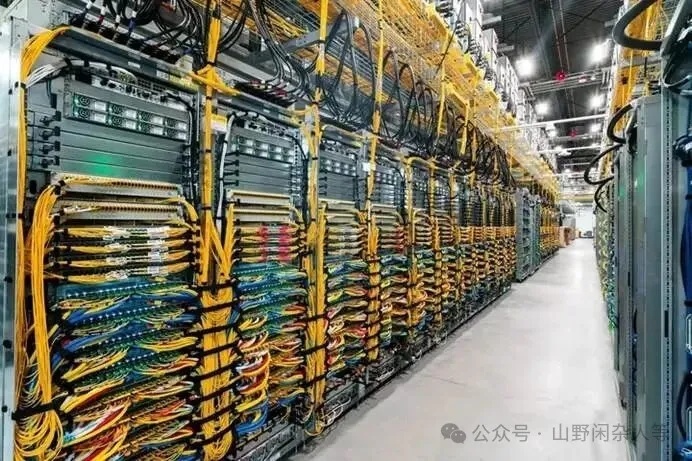
Because next comes the painful friction phase: power shortages, cooling crises, regulatory punches, aesthetic fatigue. Only then arrives the consolidation phase, where overbuilt infrastructure finds its destiny, and true application explosions begin.
As the saying goes: History doesn't repeat, but physics does. Too much energy, too few constraints—systems overheat. Eventually, they cool. What stands firm post-cooling becomes our "next normal."
V. Surviving the Cycle: A Guide for Investors, Workers, and Everyone Else
During the 1847 crisis, an author named David Evans published "The Commercial Crisis 1847-1848," documenting that pivotal era with facts and figures.
Today, we stand at the threshold of a more disruptive age. The AI bubble may burst, or not as we imagine. For investors, founders, workers, understanding this cycle isn't about predicting the pop but discerning what stays and what washes away before it happens.

Does a business have real cash flow? Does a tech have real use cases? What part of a company's valuation is built on? These questions, easiest to overlook at the bubble's peak, are the ones worth asking repeatedly.
AI era, are you ready? $Broadcom(AVGO.US)
The copyright of this article belongs to the original author/organization.
The views expressed herein are solely those of the author and do not reflect the stance of the platform. The content is intended for investment reference purposes only and shall not be considered as investment advice. Please contact us if you have any questions or suggestions regarding the content services provided by the platform.
