



The pilot has arrived, but the new forces in intelligent driving have decided 'not to wait for L3'

The last major news in the autonomous driving industry in 2025: L3 pilot programs have arrived.
Two L3-level autonomous driving models have taken the lead in pilot programs in Chongqing and Beijing. One is the pure vision solution Shenlan SL03, and the other is the BAIC Arcfox Alpha S6 triple-lidar version, equipped with Changan's self-developed NID and Huawei's ADS, respectively.
Compared to the previous "L3 local licenses," the biggest difference this time is that it is the first time that L3-level autonomous driving models have been approved by the Ministry of Industry and Information Technology.
For a while, L3 has become a hot topic again.
Jin Yuzhi, the head of Huawei's Qiankun autonomous driving division, excitedly posted a message: "L3 is coming." It is understood that Huawei has already started internal testing of L3 on the Shenzhen Expressway through employee-purchased Aito M9 and Zunjie S800 models, covering over 1,000 kilometers.

This internal testing differs from the public pilot models, as it is not limited to single lanes or lower test speeds. In a sense, compared to the two public pilot models, it is closer to the L3-level functionality that can be used by consumers.
L3 is making waves again, but this is not the first time L3 has had a close relationship with automakers.
The first period: In 2017, luxury brands represented by Audi, BMW, and Mercedes-Benz successively launched L3 autonomous driving features in Germany, causing quite a stir.
The second period: From 2018 to 2020, automakers such as GAC, Chery, SAIC, and Changan proposed mass production of L3 autonomous vehicles, with a batch of automakers introducing "L3-level cars," but a closer look revealed they could only achieve autonomous parking.
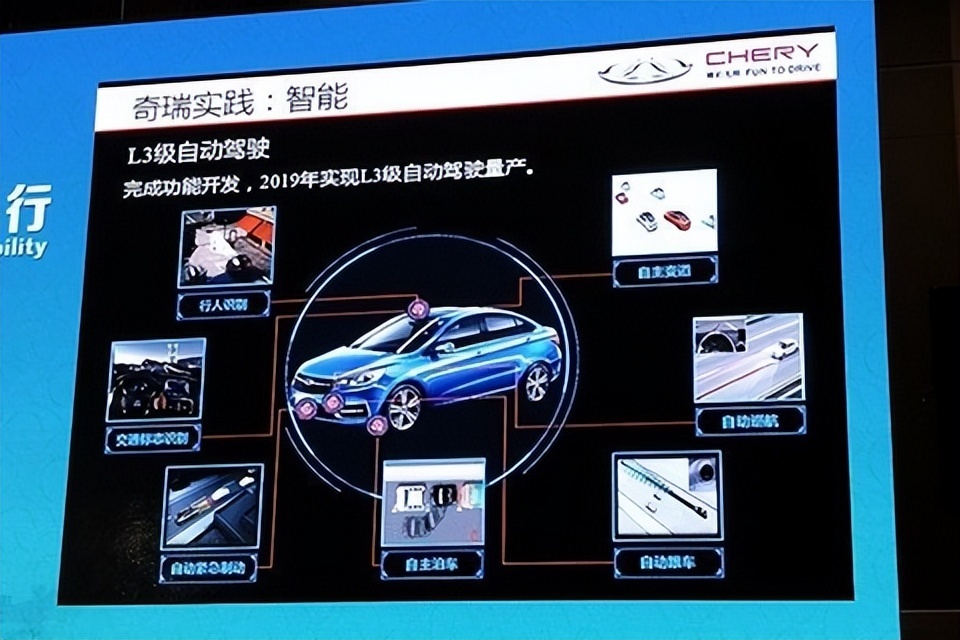
An old photo from 2019, also a realistic depiction of L3 by a batch of automakers at the time
The third period: 2025, which is also the year with the fastest changes in the L3 proposition.
Eight months ago, He Xiaopeng announced: "By the end of 2025, L3 autonomous driving capabilities will be mass-produced and implemented." Eight months later, the new XPeng P7 has a computing power configuration of 2250 TOPS, but He Xiaopeng stated, "There will only be L2 and L4; XPeng will not push L3 anymore."
From 2017 to the present, after eight years, L3-level autonomous driving has finally seen a divergence:
Some believe it is possible to skip L3 directly, moving from L2 to L4, while others believe L3 remains the most critical step before achieving L5, unshakable in the face of laws and regulations.
01. Three Paths to Achieving L3
There are more paths to achieving L3 than imagined.
According to the national standard "GB/T 40429-2021," L3 is defined as the system continuously executing all dynamic driving tasks under its designed operating conditions.
It can also be called "conditional autonomous driving." This classification standard does not define specific constraints, but for safety reasons, current policies impose restrictions on the speed and scope of L3-level autonomous driving pilot models.
The first way to achieve L3 is to narrow the scope.
If the rules cannot be met, then change the rules, reducing the ODD (Operational Design Domain) to an extremely small range. Automakers represented by German and Japanese companies have created a "conservative version of L3."
Starting in 2018, BBA (BMW, Benz, Audi) successively launched L3-level models. But the so-called world's first L3 model, the Audi A8, did not even have time to push the L3 system before the team was disbanded. As for the mass-produced L3 models from Mercedes-Benz and BMW, the operational scope of L3 was compressed to the extreme.

The Audi A8 never mass-produced L3 before its autonomous driving team was disbanded
First, the sensors are fully armed. For example, the Mercedes-Benz S-Class's L3 system, Drive Pilot, even includes a road humidity sensor, but it can only operate in areas with high-precision maps.
On top of that, the vehicle can only drive on highways, and the speed cannot exceed 60 km/h. At this point, L3 has no practical value.
The second method is brute-force miracles in all directions, represented by Huawei's Qiankun L3.
By the end of the year, Huawei will launch internal testing of L3 on highways for four models, including the Seres Aito M9, JAC Zunjie S800, Arcfox Alpha S, and GAC Haobo A800. All these models use Qiankun's ADS4 autonomous driving system.
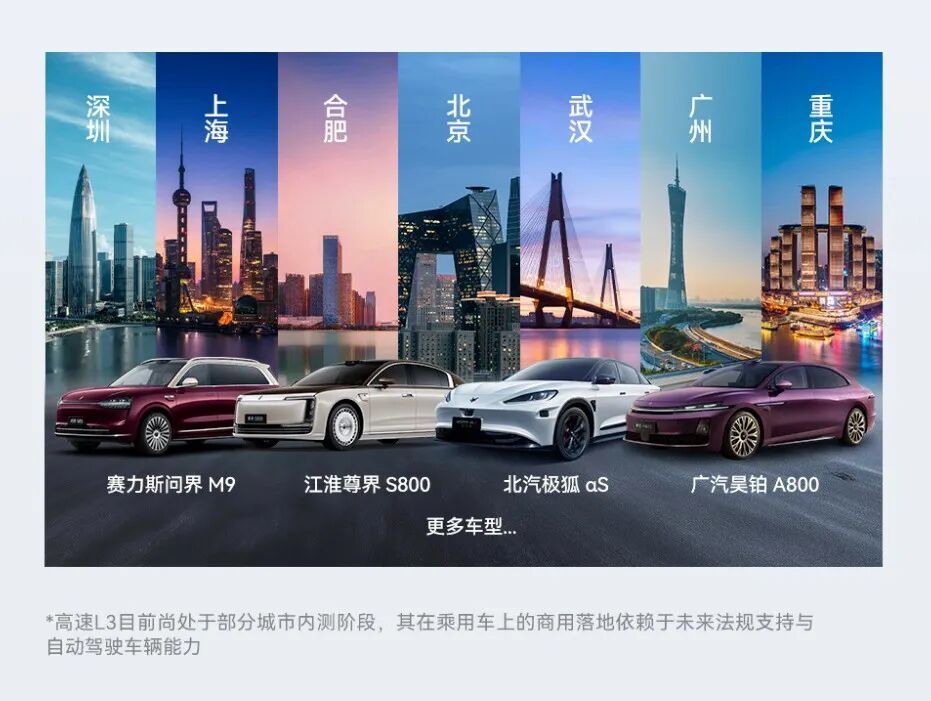
But Huawei's approach is essentially "brute-force miracles in all directions."
Yu Kai, founder of Horizon Robotics, believes there is one way to achieve L3: "It requires large-scale, massive deployment of L2++, accumulating statistical data, and only then might L3 become possible."
Huawei's path is similar to this.
The core lies in massive data loops and multiple layers of safety redundancy. For example, the four L3 models Huawei Qiankun announced for internal testing are all equipped with at least four lidars. Additionally, as a reference, ADS's autonomous driving data has accumulated 6.38 billion kilometers. No other company in the industry has reported more data than this so far.
In fact, in the first half of this year, Huawei's ambition to advance L3 was already hard to contain. The driver incapacitation assistance feature pushed by ADS 4, which allows the car to pull over to the roadside if the driver becomes incapacitated, is already essentially a quasi-L3-level function.
Such cases are hard to replicate and lack reference value.
Overall, Huawei's approach combines data, hardware, and algorithmic advantages, and with ADS now installed in many independent brands, Huawei Qiankun, which originally did not have L3 model licenses, has indirectly become a beneficiary in this L3 boom.
But another group of new forces, those emphasizing AI foundation models, are getting restless.
This has given rise to a third approach: road-level foundation models.
Zhou Guang, founder of Yuanrong Qixing, believes that the current L3 is based on existing technical frameworks, using various rules to limit the scope of L3. For example, it cannot be used in the rain or at night.
In Zhou Guang's view, L3 and L4 are contradictory—one is rule-driven, the other requires foundation models. The real path to L3 and L4 requires foundation models that can understand road common sense. "If the foundation model generated from tens of millions of data points is powerful enough and highly generalizable, L3 will be short-lived, and it might even be possible to skip L3."
However, L3 has clearer responsibility divisions, which helps promote mass production.
Zhou Guang's view actually highlights the current state of L3 development: commercial value outweighs technical value.
For most of the time, L3 has been more like an adjective.
For example, "L3-level computing power models" require local effective computing power to exceed 2000 TOPS. Another example is L3 helping automakers sell cars. Now, when selling the Zunjie S800 and Aito M9, salespeople will also add, "This is the first L3-level autonomous driving model."
The implementation of L3 is still up for debate, but some stocks have already hit their daily limit.
One day after BAIC Arcfox Alpha S was selected for the first batch of L3 autonomous driving, BAIC's stock rose by 10.01%.
02. L3 Implementation Is Slower Than Expected
Some industry insiders believe: From a technical perspective, L3 is a transitional stage, but from a policy and regulatory perspective, it is not.
In fact, the progress of L3 has always been slower than expected.
At the beginning of this year, XPeng, Huawei, Zeekr, and BYD all targeted the fourth quarter of 2025 for L3 mass production. Now, "mass-produced vehicles with L3-level capabilities" have been launched, but there is still some distance to actual L3 implementation.
At the same time, some players are no longer treating "L3" as a core goal.
Apart from XPeng announcing it would skip L3, Su Jing, Zhou Guang, and Yu Kai have also expressed that "L3 is very short-lived."
In his latest speech, Su Jing mentioned that Horizon's new paradigm breaks the fragmentation between L2 and L4, achieving affordable quasi-L4-level systems through unified development paradigms, low-cost replication, and full-domain generalization capabilities.
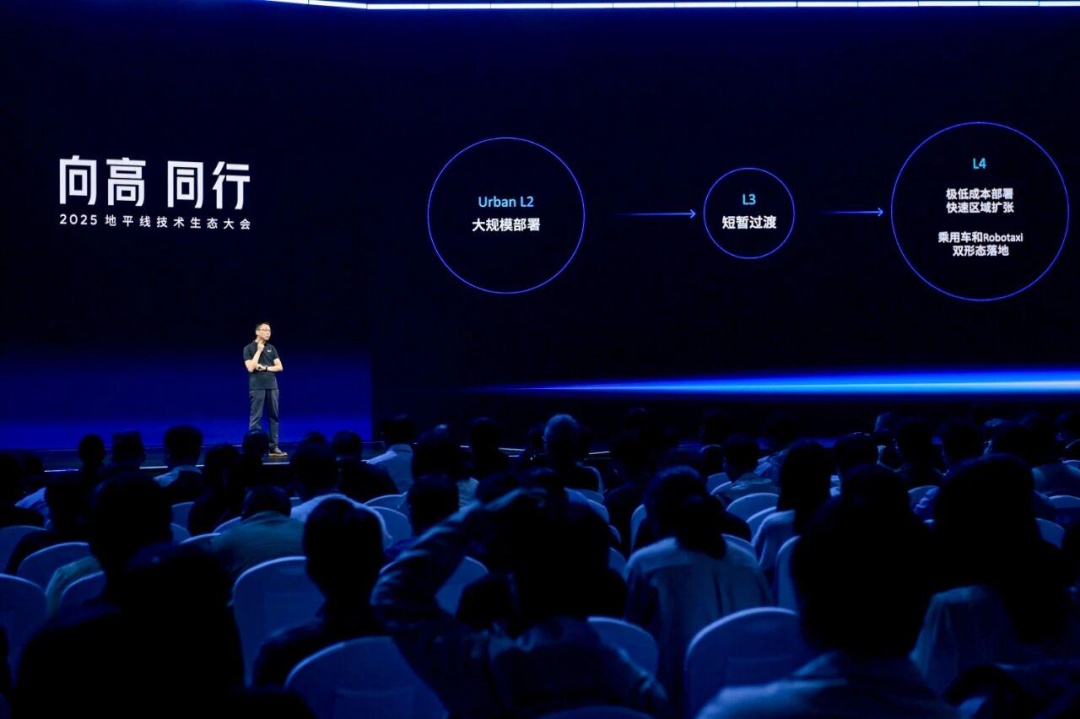
"The disappearance of L3" actually stems from two reasons: policy and experience.
First, L3 approval is an extremely rigorous and lengthy process.
For example, the two models currently being tested on the roads in Chongqing and Beijing were actually submitted for approval over a year ago, which is why the Arcfox version does not use ADS4.
Moreover, in terms of functionality, both cars can only drive within a single lane, meaning they cannot change lanes when L3 is activated—this is not the L3 that consumers can truly use.
Second, for safety reasons, policy approvals for L3 features are quite strict. According to industry insiders, obtaining an L3 license requires automakers to partner with an operating company as a joint application system to apply for access qualifications, with the company assuming legal responsibility for operational testing.
After certification, specific models must apply for test licenses. Currently, all test vehicles are to-B (business-to-business) in nature, and the state has not yet opened access certification for to-C (business-to-consumer) vehicles.
This is also one of the reasons why the Arcfox and Shenlan models are "non-mass-produced versions."
Some are confused: Didn't Li Auto and XPeng officially announce that they obtained local L3 autonomous driving licenses?
To understand automakers' progress in L3, they can be divided into two groups: one with local licenses and one on the MIIT list.
The former refers to the period from 2023 to 2025, when over 14 automakers partnered with local governments to successively obtain L3-level high-speed test licenses.
Local government L3 licenses are only valid within the jurisdiction of the issuing authority, while MIIT licenses are the most critical and have the highest thresholds.
The latter's full name is "Joint Pilot List for Access and Road Traffic Pilot Programs of Intelligent Connected Vehicles," led by the MIIT in 2024 and jointly approved by four departments. This list actually includes only nine joint entities.
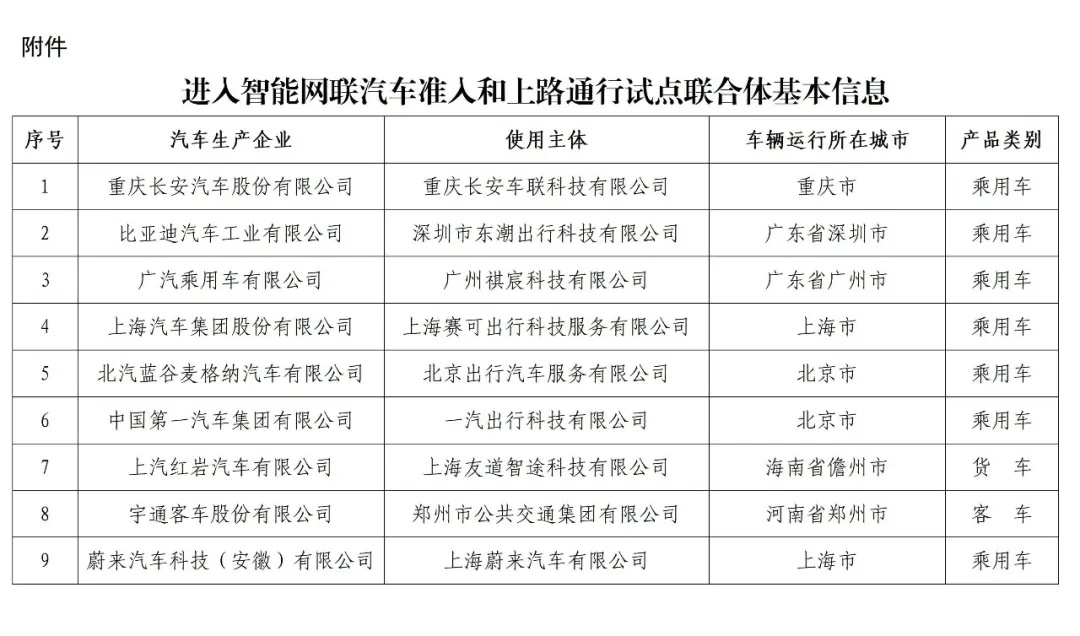
Even so, the relevant documents only mention that the pilot programs are intended to "accumulate management experience, support the formulation and revision of relevant laws, regulations, and technical standards, etc."
In other words, the current "pilot" programs are all about accumulating experience for automakers and regulatory authorities, but it is still uncertain who will be the first to successfully implement L3. This uncertainty, along with the strict and lengthy approval process, has also created some anxiety in the autonomous driving industry.
Second, from a consumer experience perspective, the upgrade brought by L3 is not very noticeable.
L3 means automakers take responsibility for users in limited areas, with responsibility divisions far outweighing technical divisions.
The responsibility shifts from the user to the driving system.
But the driver still needs to act as a "backup" in L3, as there is still a possibility of needing to take over the vehicle.
In other words, the driver can go "hands-off" but not "mind-off." This is the contradiction of L3—hand-eye coordination is basic common sense, but who can truly achieve hands-off without eyes-off or eyes-off without mind-off? Therefore, the new national standard requires L3 systems to give users 10 seconds of takeover and reaction time.
Clearly, L3 is the most chaotic and cautious stage in autonomous driving classification. This also shapes its characteristic: strong policy-driven, not technology-led.
This state does not match the highly competitive autonomous driving industry, which is why some companies are trying to skip L3.
03. Following Tesla's Lead: Skipping L3
The idea of skipping L3 starts with Tesla.
"Tesla also only has L2 and L4." This statement has become one of the reasons many new forces skip L3.
In 2014, the Society of Automotive Engineers (SAE) proposed the L1-L5 autonomous driving classification standard, but Musk, the local guy, has never mentioned it in public.
Tesla's current Autopilot is sold under three standards: AP, EAP, and FSD (supervised), representing basic intelligent driving, enhanced intelligent driving, and full self-driving (supervised), respectively.
In Tesla's language system, the L1-L5 classification is blurred, especially for high-level autonomous driving, where there are only two: FSD (supervised) or FSD (unsupervised).
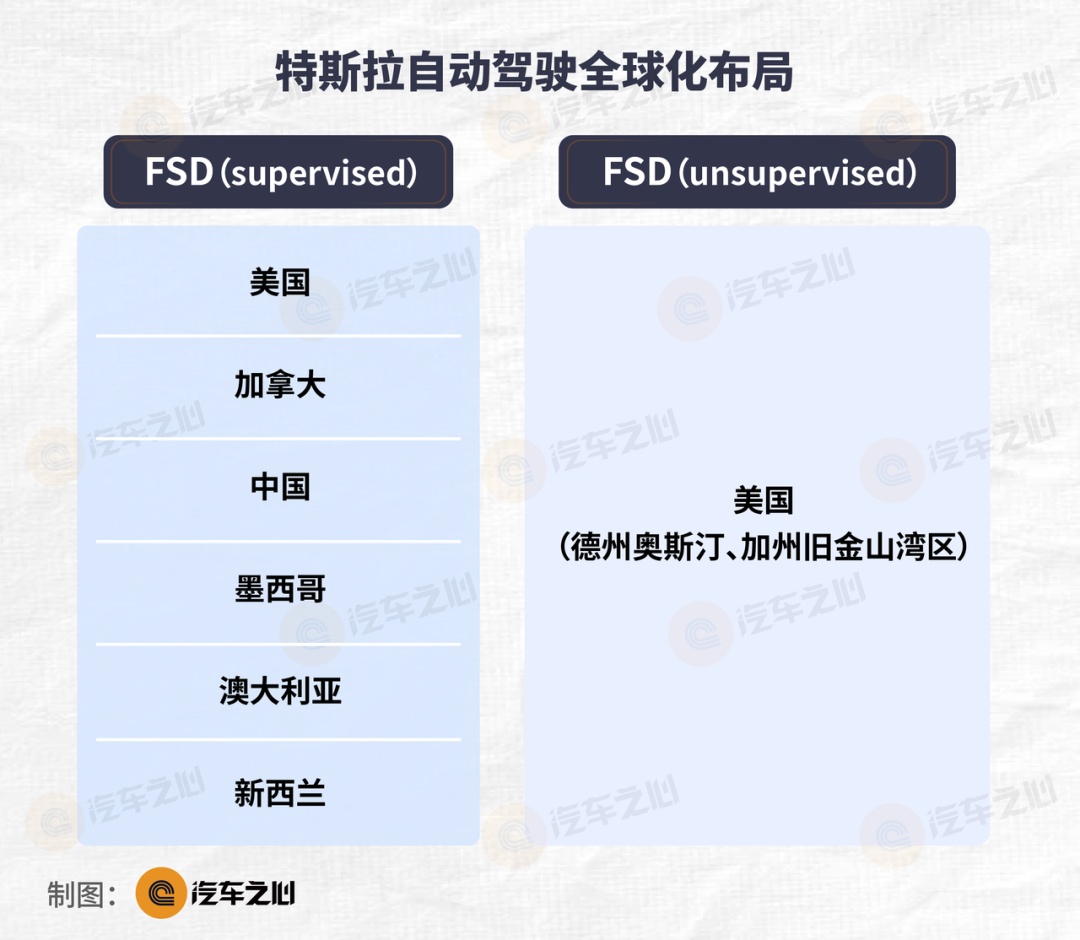
The difference lies in "whether user supervision is required."
Is the blurring of L1-L5 levels because Musk doesn't care? Quite the opposite—it's because he knows better.
Tesla adopted this "de-leveled" autonomous driving system for two purposes: first, to skip L3 and avoid policy regulations in different countries.
Many people mistakenly believe that overseas countries have looser regulations on L3. In fact, most countries have very strict regulations on autonomous driving.
Take the Czech Republic as an example. On January 1, 2026, the Czech Republic will also enable unsupervised L3 autonomous driving.
Local policies require the system to:
- The system should not require driver intervention but must still allow the driver 10 seconds to take over.
- It must start on highways and gradually expand to other areas.
Currently, Tesla's FSD (supervised) is classified as L2 in the Czech Republic. If Tesla wants to operate L3 there, it must also work closely with the local government and modify FSD to meet the new regulations.
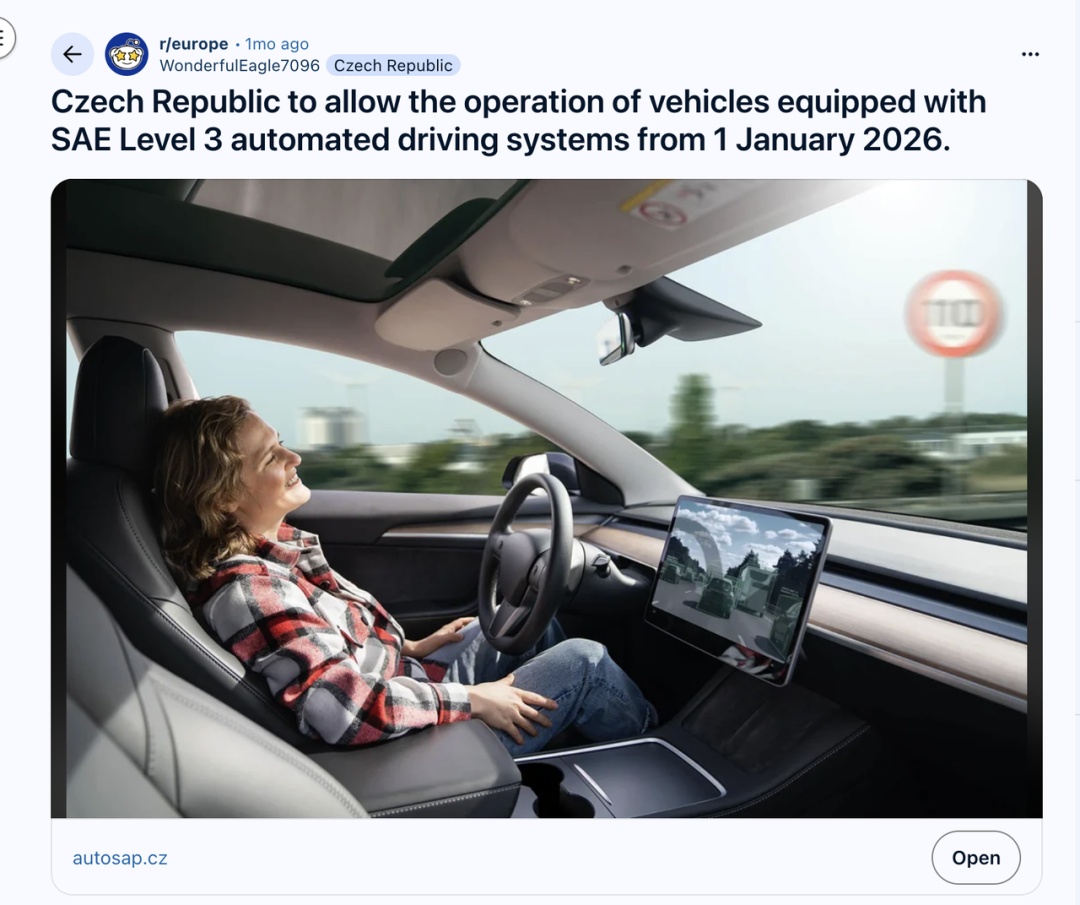
It can basically be understood that if it wants to upgrade to L3, Tesla must go through approvals in each country one by one, which is obviously too slow for a company with global ambitions.
After all, for L2 globalization, FSD has only entered six countries so far, and L3 will only be harder.
Second, Tesla has already verified through Robotaxi that L2 can leapfrog to L4.
Tesla's L4 autonomous driving system on its Robotaxi is "FSD (Unsupervised)," which shares the same architecture as the passenger car FSD.
On one hand, the hardware architecture is the same—both use the HW4.0 solution, relying on pure vision perception with eight cameras and Tesla's self-developed chips.
On the other hand, the experience is similar. Recently, He Xiaopeng experienced Tesla's FSD and Tesla Robotaxi in the U.S. (within half an hour of each other) and concluded: The experience is almost identical. After returning to China, He Xiaopeng reiterated, "Autonomous driving will directly reach quasi-L4 or full L4."
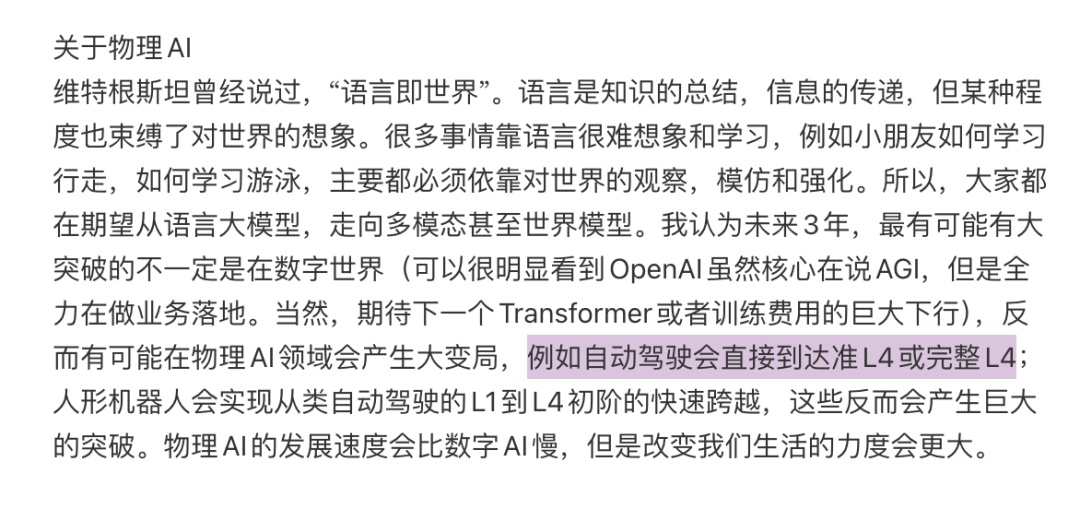
After his business trip to the U.S., He Xiaopeng believes autonomous driving will directly reach quasi-L4
He Xiaopeng is talking about an ultimate proposition. Just as Tesla's Robotaxi may demonstrate the upgrade potential of the FSD algorithm architecture, directly upgrading L2 passenger cars to L4 is something even he isn't sure about.
Returning to the question, the divergence over L3 actually reflects two paths: one is the Huawei school, which follows an incremental path by stacking data and full-stack capabilities, and the other is the Tesla school, which follows an AI leapfrogging path.
The birth of divergence is the first step toward the truth. Just like today, when the industry discusses L3 for the third time on a large scale, the topic has shifted from high-precision maps and traditional L3 to using end-to-end + large models to solve L3.
No matter which path becomes mainstream, this divergence will bring us closer to L4 itself.
$XPENG-W(09868.HK) $XPeng(XPEV.US)
The copyright of this article belongs to the original author/organization.
The views expressed herein are solely those of the author and do not reflect the stance of the platform. The content is intended for investment reference purposes only and shall not be considered as investment advice. Please contact us if you have any questions or suggestions regarding the content services provided by the platform.
