



The essence of recreating Pinduoduo: Exploring the upper limit of China's supply chain capabilities

Temu has completed in three years what Pinduoduo's domestic e-commerce business took a decade to achieve, a statement officially acknowledged at the shareholders' meeting, which surprised the market significantly. In terms of scale, the international business has already reached the same level as the domestic main site, breaking the stereotype of Pinduoduo—previously seen as conservative and calm—with this aggressive goal of "recreating another Pinduoduo in the next three years."
According to Pinduoduo, the path ahead is clear: focus resources—effort, capital, and materials—on upgrading and rebuilding China's supply chain, emphasizing high quality, branding, selling only Chinese goods to the world.
This is not surprising. The China Federation of Logistics & Purchasing stated in the "China Supply Chain Development Report (2024-2025)" that the former "world factory" is evolving into a "global supply chain hub." While supply chains may seem slow and heavy, expectations for Pinduoduo are entirely different. Pinduoduo has boldly tied itself to the long-term evolution of Chinese manufacturing, backed by practical experience. As it shifts focus from the flow of "goods" to shaping the "chain," we naturally wonder: What is the basis? What is the method?
This is essentially tracing the source of confidence and the real logic behind the goal of "recreating another Pinduoduo."
Temu's three-year achievement is a test of China's supply chain capabilities
Quantitatively, Temu's three-year business volume, nearly matching the domestic main site's decade-long growth, suggests the group could double its overall scale in three years—a reasonable estimate. Qualitatively, these three years have been a test of China's supply chain capabilities: whether it can support a global, direct-to-consumer e-commerce system across varying tariffs, regulations, and consumer cultures.
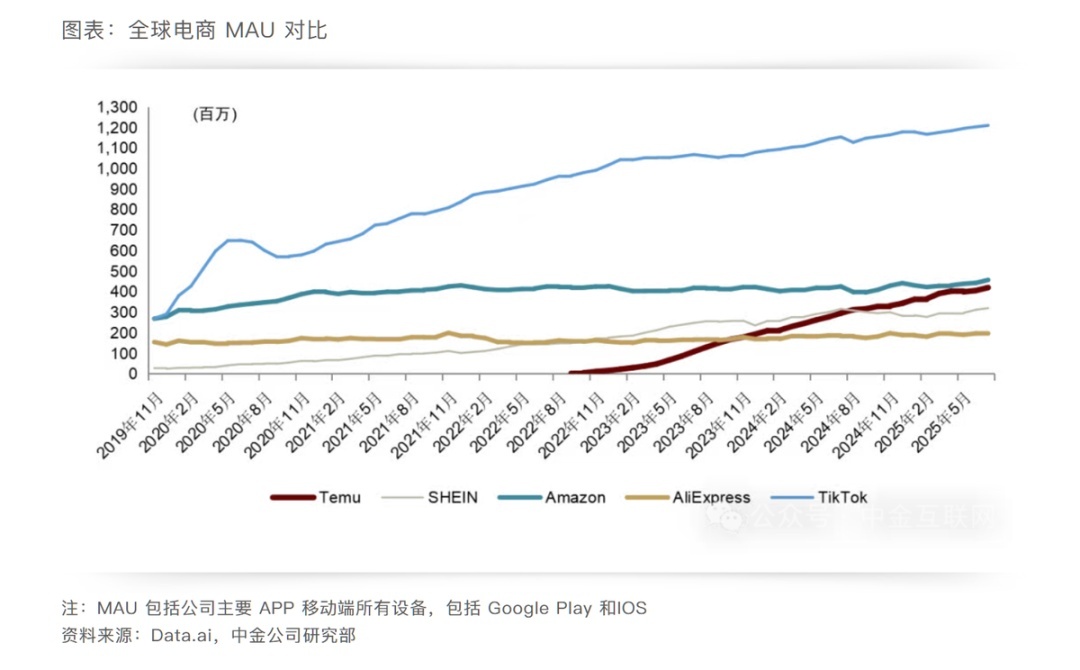
(Source: CICC)
Clearly, Pinduoduo's confidence in "recreating another Pinduoduo" stems from Temu proving three key points.
First, China's supply chain has industrial-level efficiency that can be "replicated globally."
Temu never had the luxury of "crossing the river by feeling the stones." It started directly on the supply chain flywheel refined by Pinduoduo's domestic main site over a decade. Through its fully managed model, it compressed the highly complex cross-border e-commerce process into what is almost a "domestic trade logic" shift for Chinese factories: deliver goods to domestic warehouses, provide reference prices, and no longer worry about common operational issues.
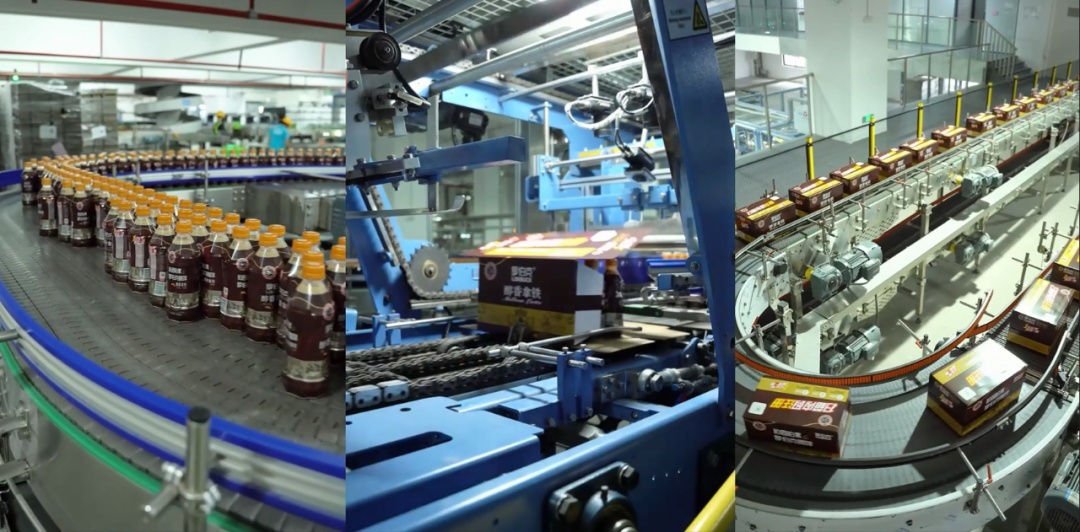
For factories, the difficulty was reduced from "studying global users + operating cross-border stores" to "making good products and cutting costs to the bone." This reflects the combined strengths of high-density industrial clusters, flexible production capabilities, rapid prototyping, and large-scale delivery. Temu's early prices were once 50-80% of similar Amazon products, not through simple subsidies but by reconfiguring China's supply chain cost structure: extracting the most efficient parts.
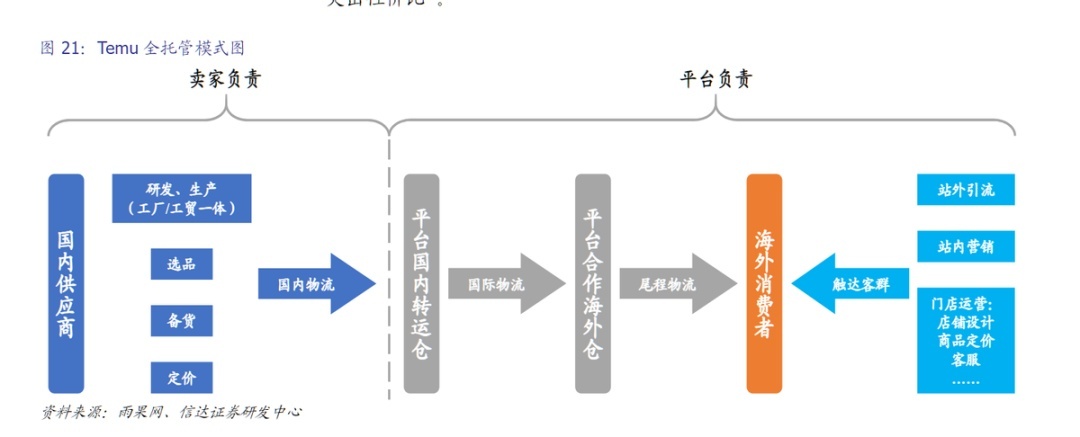
(Source: Cinda Securities)
Second, global consumers' real demand can be stably met by China's supply chain.
Over the past three years, Temu expanded from the U.S. to Latin America, Europe, the Middle East, and Africa. Nigerian media Business Halmark found that within three months of its November launch, Temu captured 45% of daily orders from Nigerian consumers. A News24 survey of 1,700 South African consumers showed one in three had used Temu.
Other markets like Morocco, Pakistan, and Argentina—not traditionally "high-tier" and operationally complex (e.g., Nigeria has over 250 ethnic groups and 500 dialects)—share striking similarities with China's mass market a decade ago in population, consumption potential, and hunger for value-for-money goods.

(Source: iMedia Consulting)
Temu's supply-chain-first approach is designed to serve global consumers, offering affordable, reliable, and well-designed Chinese products, driving impressive growth.
Third, "maturing an e-commerce platform in three years" is realistic with supply chain advantages.
While Pinduoduo took a decade domestically to cold-start users, establish price perception, and build a supply chain system—creating a flywheel of users, platform, and supply chain synergy—Temu's growth efficiency on this flywheel is far higher. Its rapid maturation of SKUs, fulfillment, and after-sales systems has exceeded overseas users' expectations, and with unmet e-commerce space abroad, Temu's repurchase rates and global market balance remain in a high-growth phase.
Per CICC citing BBG Second Measure's U.S. consumer survey, Temu's per capita transaction frequency doubled in two years, with minimal post-tariff volatility. Globally, Temu's growth radius is vast, with ample room for expansion.
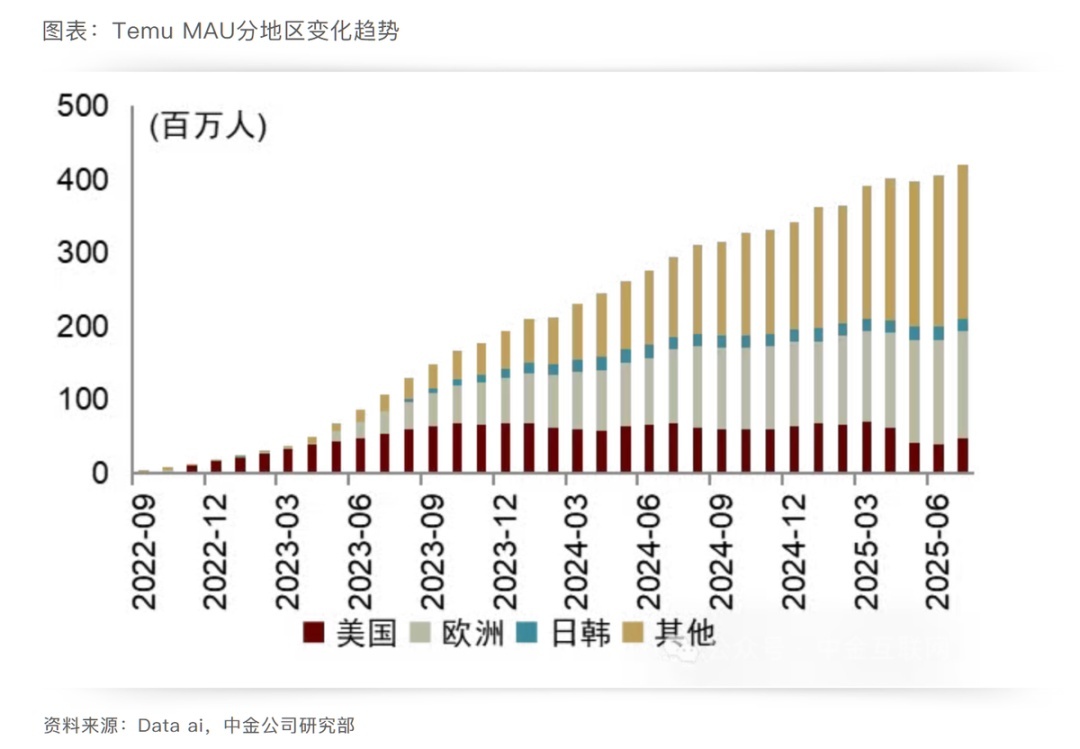
(Source: CICC)
A core reason is that no market can be monopolized by one platform. Temu's differentiated supply chain advantages attract diverse global users, and varied demand structures hedge against single risks, creating a "differentiated supply + differentiated demand" growth driver.
This explains why global e-commerce grows at ~8% on average, while Temu nears 40%. As long as capabilities exceed the average, growth will follow. For Temu and China's supply chain, the logic is similar. This isn't a "lucky break" but a validated supply chain experiment scaled up. Three years to mature an e-commerce system is China's supply chain replicating itself.
Heavy investment isn’t just platform expansion—it’s China’s supply chain leaping toward branding
Relying solely on traditional advantages to sell goods would soon hit a ceiling. Pinduoduo's emphasis on "heavy investment in China's supply chain" at the shareholders' meeting shows it understands this. While opening traffic channels is important, the "micro-level reforms" in China's supply chain over the past decade must evolve into a systemic "rebuilding project."
Reiterating the original statement: Focus resources—effort, capital, and materials—on upgrading and rebuilding China's supply chain, achieving an overall upgrade in supply chain operations, with high quality and branding as the direction. The approach is clear: supply itself must change.
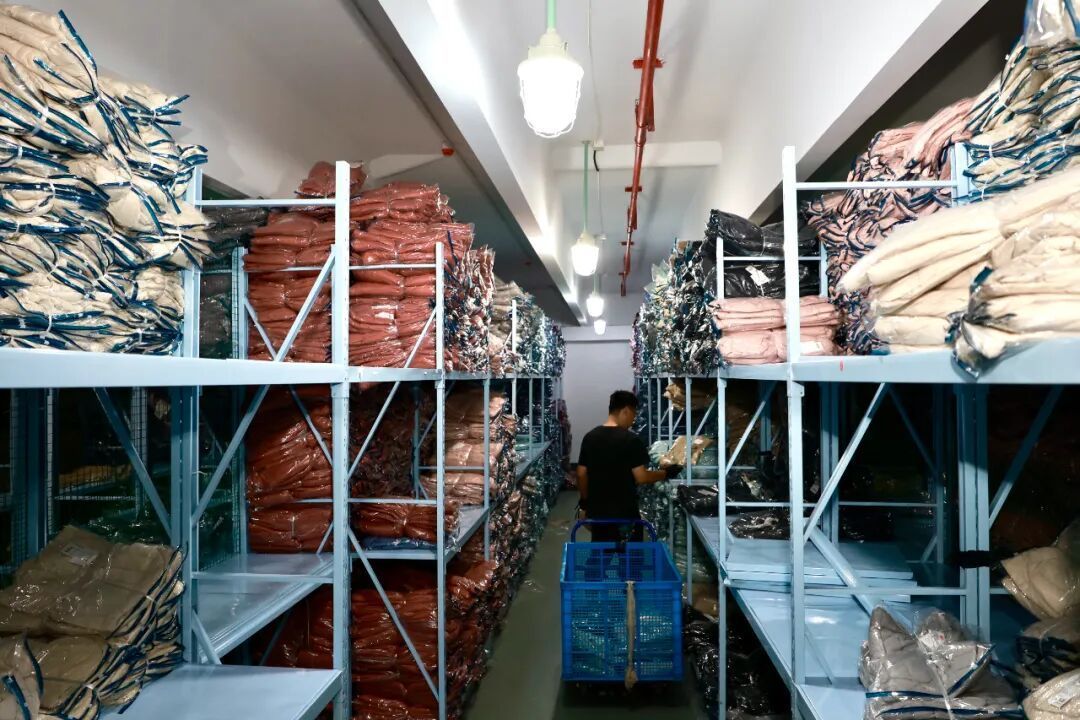
For years, China's cross-border e-commerce has shown extreme efficiency in "fast" and "cheap," but there’s still much room in "variety" and "quality."
Traditional cross-border e-commerce treated them as equals—Cinda Securities summarized this as the "premium model" and "general model," corresponding to brand sellers and volume sellers. But for Temu, which aims to elevate China's supply chain value, and players seeking greater growth, "moving up a tier" is inevitable.
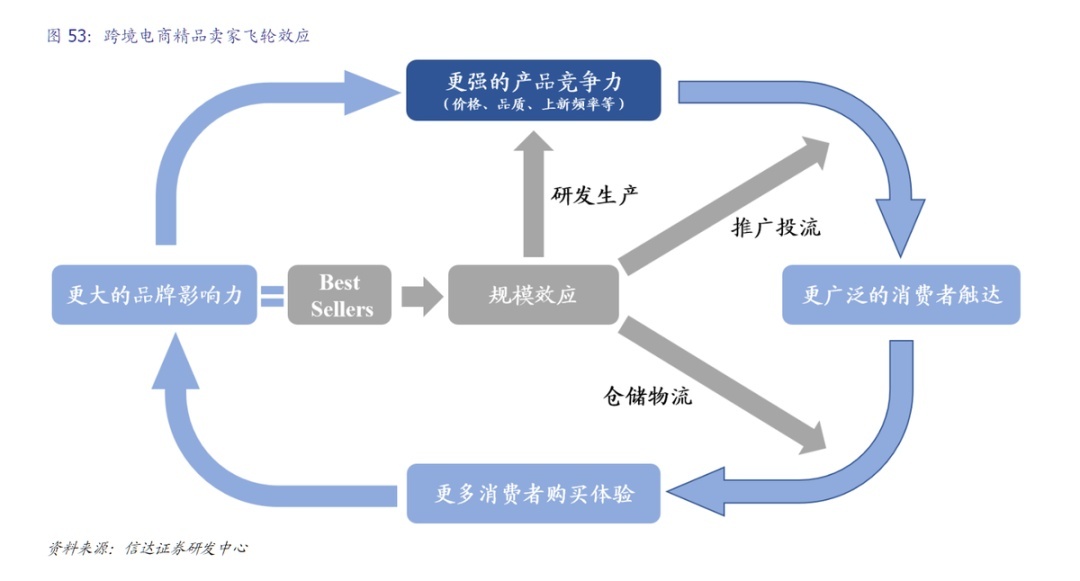
(Source: Cinda Securities)
Temu and Pinduoduo's domestic main site have a natural advantage in C2M: using data to directly read end-user demand, enabling factories to reverse-customize production. Pinduoduo's domestic initiatives—"100 billion subsidies," "e-commerce westward expansion," "new-quality supply," "100 billion support"—are essentially about subtraction then addition on the supply side:
On one hand, using traffic and subsidies to filter out high-value sellers; on the other, deploying specialized teams to agricultural and industrial zones to help factories with flexible production, SKU expansion, demand forecasting, inventory turnover, etc., shifting from OEM thinking to user-centric and brand thinking.
Per official disclosures, the "100 billion support" plan launched in April has driven a 47% YoY increase in agricultural product sales and a 35% rise in industrial supply diversity in H1. The growth isn’t just in scale but in quality supply.
Over the next three years, Pinduoduo will continue pouring over 100 billion resources into helping industrial belt sellers transform, ensuring factories don’t just "take orders" but truly own their brands. Applying this deep-reform mindset cross-border is key to selling "high-quality, branded Chinese goods" globally.
On globalization, the corresponding shift is clear: from focusing on "goods" to "chains," exporting not just products but capabilities.
In three years, Temu completed the basic task of "global goods flow": delivering massive Chinese products to global consumers via structural advantages like affordability. "Global chain flow" means not just organizing cross-border channels but upgrading China's supply chain quality.
Xinhua reported last year that many cross-border sellers have used Temu's feedback to upgrade operations—ceramic companies building brands, eyewear firms registering trademarks, factory owners becoming brand owners, deepening quality commitment. Temu continuously feeds data and market insights back to Chinese factories, turning passive OEMs into market players with pricing power and brand strength.
This is no longer about "exporting cost advantages" but delivering a full suite of capabilities honed by Chinese manufacturing: organizational, data, and collaborative prowess. From R&D and smart manufacturing to brand incubation, cross-border logistics, and localized services, the entire chain is tightly integrated to push "advanced supply" toward higher quality and branding.
Meanwhile, profits are redistributed to those at the "frontline of the chain," incentivizing upgrades.

Traditional platforms profit from commissions or ads on merchant revenue. Pinduoduo chose a harder path: through full/half hosting, it absorbs operational and traffic complexity, letting factories focus on production, leaving more profit and growth flexibility on the supply side.
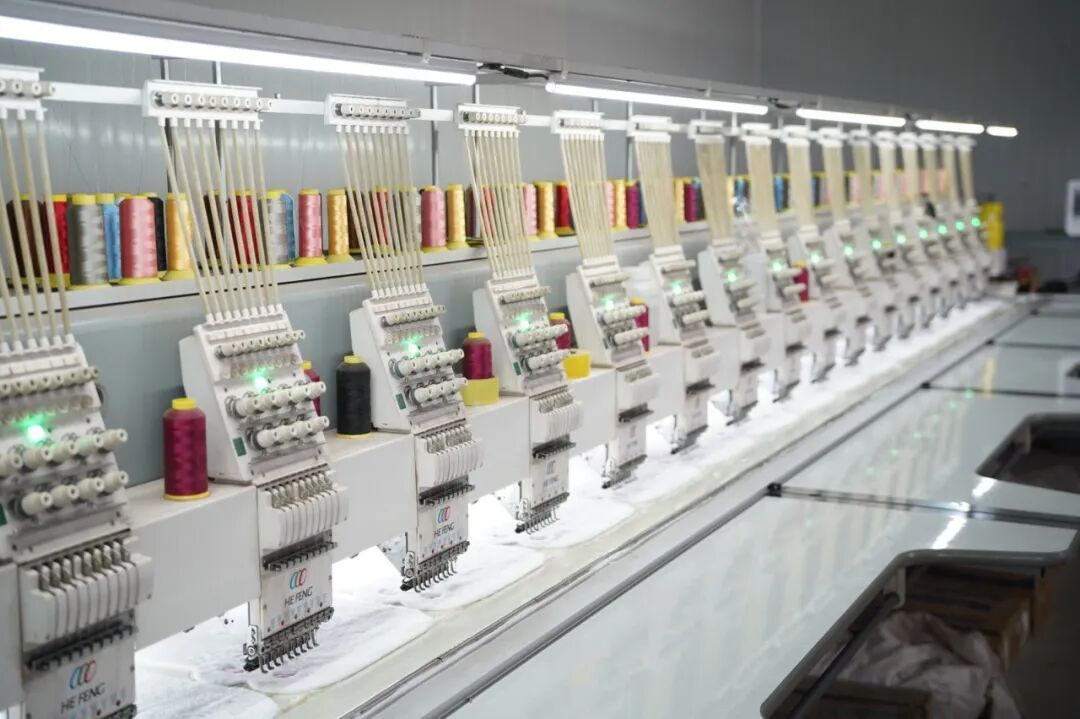
This is why more OEM factories are launching own brands on Temu, trying differentiation. Cleaning cloth, eyewear, and ceramic manufacturers use Temu's selection, pricing, and marketing to quickly create hits, earning higher margins than traditional exports, funding R&D and quality upgrades.
When platform growth logic prioritizes refining supply, China's supply chain can leap from "mass manufacturing" to "high-quality Chinese goods" to "Chinese brands." Pinduoduo’s heavy investment targets this long but high-potential mid-to-late stage.
Recreating Pinduoduo: Believing in rational power
"Recreating another Pinduoduo in three years" first suggests scale ambition: doubling GMV/revenue, equivalent to four domestic main sites today. But from a supply chain view, it also means:
Using Temu as a global engine to pull China’s tested supply chain into a larger demand pool, enabling self-upgrade at a higher level.
Global e-commerce’s structural window echoes this engine’s roar. With ~20% penetration and an $8T+ market still expanding steadily, it defies industry stereotypes. Developed markets shift offline to online; emerging markets unlock demand via population 红利 and infrastructure; traditional giants still under-serve many regions.
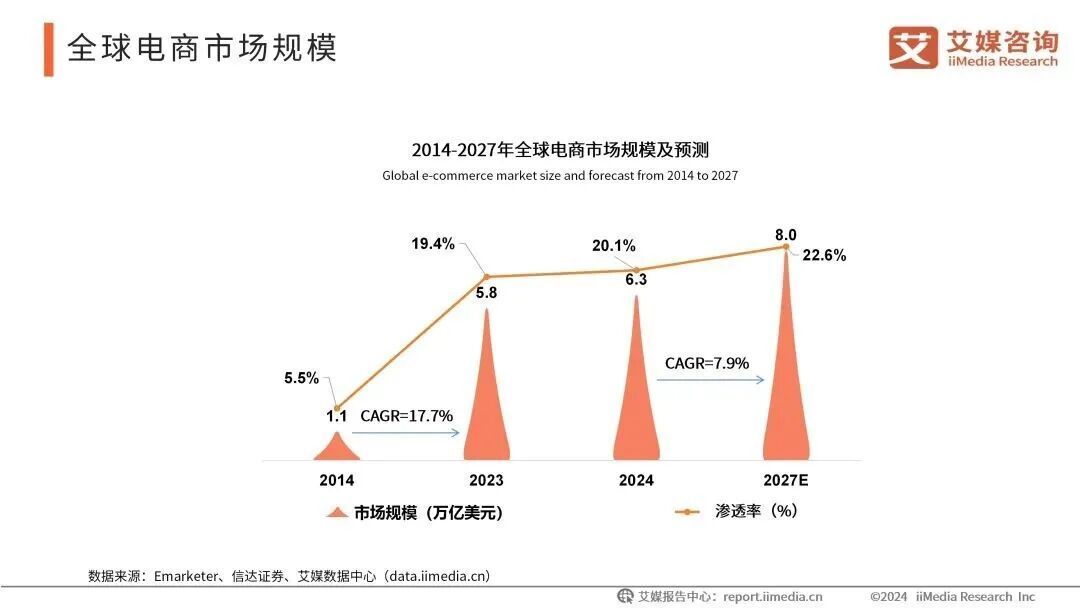
(Source: iMedia Consulting)
This parallels a past argument: consumption 升级 isn’t about Shanghaiers living like Parisians but Anhui’s Anqingers using kitchen paper and eating good fruit. Effective scaling lets more ordinary people access quality, affordable goods. Pinduoduo takes this global—selling Chinese goods worldwide is its All in.
This path is slow and heavy. In an era chasing quick answers, Pinduoduo’s indifference to trends and commitment to slow variables shows rare rationality. Moving from "supplying others" to "making Chinese goods global consumers’ first choice" takes time. This choice may not please markets short-term but aligns with long-term outcomes: growing in lockstep with China’s real economy.$PDD(PDD.US)
Source: US Stock Research
The copyright of this article belongs to the original author/organization.
The views expressed herein are solely those of the author and do not reflect the stance of the platform. The content is intended for investment reference purposes only and shall not be considered as investment advice. Please contact us if you have any questions or suggestions regarding the content services provided by the platform.
