



Vehicle-mounted light enters the era of 'having standards and benchmarks'

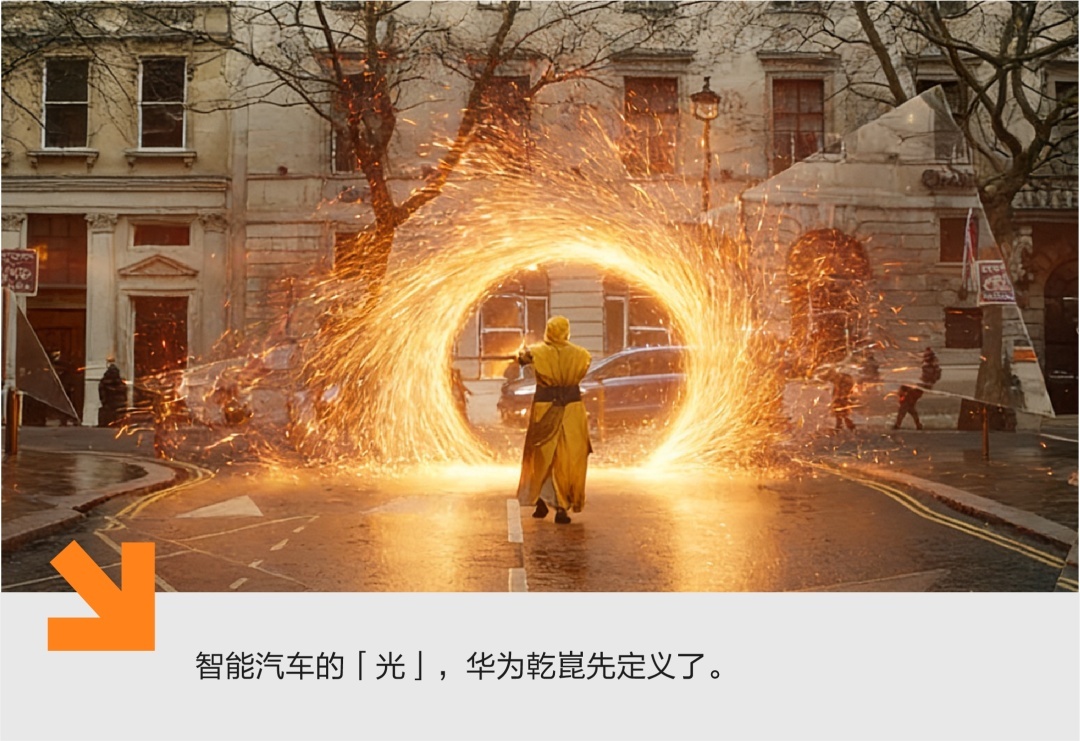
Today, when users choose smart cars, they are essentially paying for "perceivable smart configurations."
A typical case is the Aito M9—on top of already fully loaded capabilities like smart cockpits and assisted driving, it further elevates users' emotional value with features like "smart headlights that turn" and AR-HUD with cursor guidance.
Interestingly, what users repeatedly mention and actively share is often not computing power or algorithm metrics but these "visible, usable, and perceivable" details.
This is no coincidence. For a long time, headlights and HUDs were merely functional components: the former for lighting, the latter for displaying information.

Now, with the support of intelligence and computing power, these two capabilities have undergone a qualitative change: they are no longer just about "displaying" and "illuminating" but have added perception, computation, and interaction capabilities, beginning to participate in environmental understanding and driving decisions, ultimately evolving into core safety components in smart systems.
Supporting this transformation is a technology being redefined: vehicle optics.
From a technical perspective, whether it's smart headlights or AR-HUD, their common foundation lies in communication optics and computing technology (ICT).
And this is precisely Huawei's core domain, where it has been deeply involved for over 30 years. Leveraging this long-term accumulation, Huawei's Qiankun has entered the vehicle optics arena, systematically introducing mature optical, computing, and system capabilities into the automotive field, driving vehicle optics from "technology demonstrations" to mass production.
It is against this backdrop that Huawei Qiankun has done two things of profound significance for the industry:
First, setting standards. At the 3rd Vehicle Optics Summit, the "2025 Smart Headlight Industry White Paper," co-authored by China Automotive Intelligent Technology, Shenzhen Yinwang, Seres, FAW Group, and Xingyu, was officially released, systematically outlining industry development and core technologies to provide a unified framework for the sector.
Second, establishing benchmarks. The Aito M8 and the new XPeng P7 have both passed the AR-HUD real-world alignment accuracy challenge and received authoritative certification, setting a quantifiable and reproducible example for all AR-HUD products in the market.
If vehicle optics technology is pointing to the next key arena for automotive intelligence, then Huawei Qiankun, as the "key player" in this arena, has already taken the lead.
01. From Components to Subsystems: Headlights Become Safety Components
In the century-long history of the automotive industry, headlights have always been highly mature components oriented toward reliability and cost. Their technical path is clear, focusing more on engineering attributes than intelligence.
Even in the context of luxury brands, the evolution of headlights has long been confined to design—Mercedes' "double eyelids" and Volvo's "Thor's Hammer" are essentially visual branding exercises.
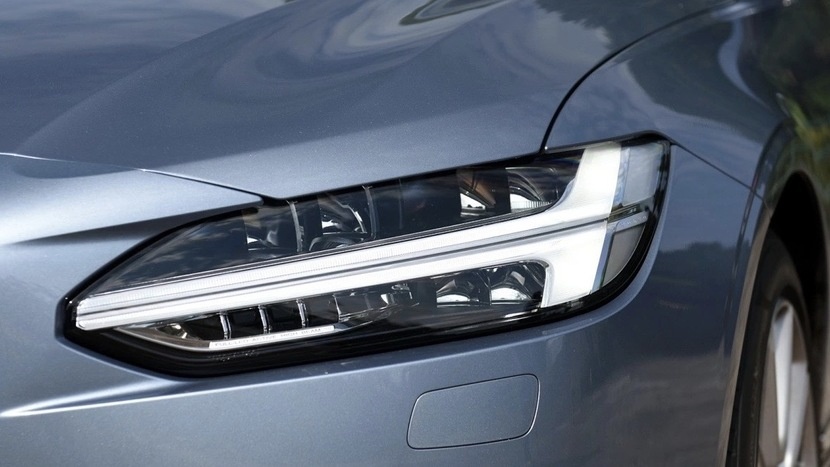
In the past, industry evaluations of headlights focused on shape, brightness, and lifespan.
Today, as intelligence enters deeper waters, these metrics are at best baseline requirements.
When headlights wear the "smart" hat, they are no longer just about illumination but also need to actively interact, understand the environment, and participate in the vehicle's intelligent system.
In other words, smart headlights are no longer controlled components but subsystems operating within the vehicle's computing architecture.
As a result, a qualified smart headlight must deliver at least three layers of value.
First: Emotional value. This is the layer users perceive first.
Through lighting language, abstract intelligence and tech are made tangible. Features like welcome ceremonies, light shows, and scenario-based lighting are becoming key experiences for premium models.
Second: Interactive value. Going further, smart headlights are taking on information exchange roles.
Traditional headlights' signal expression is highly constrained, mostly passive; smart headlights, however, significantly expand expression boundaries in dark, obstructed, or complex traffic scenarios.
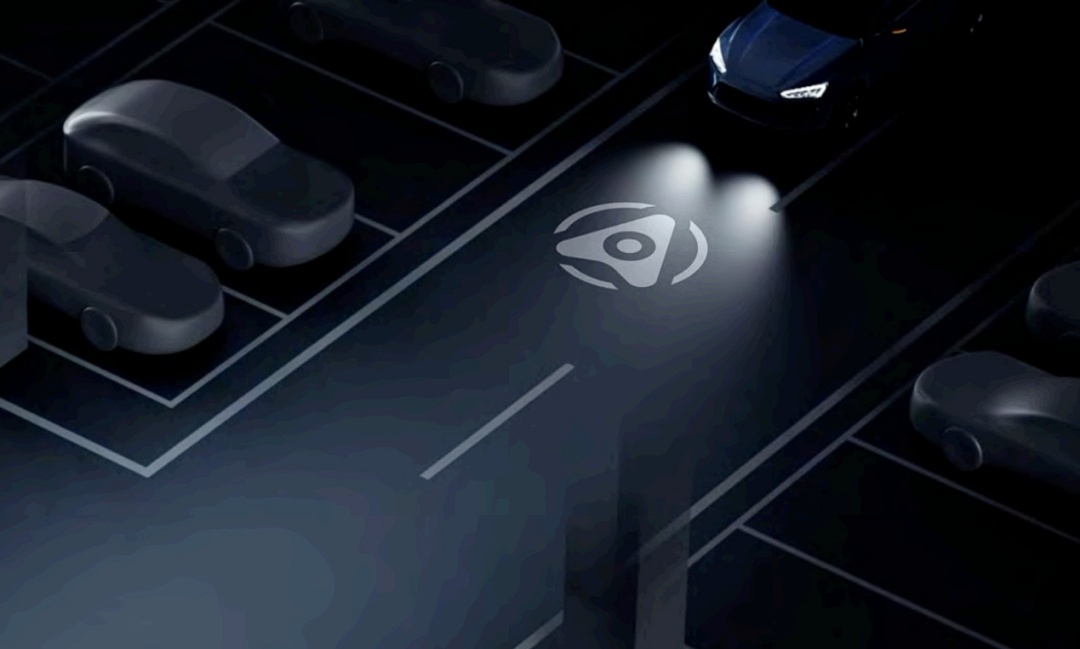
For example, by projecting light to signal yielding to pedestrians or providing path guidance in parking or low-speed scenarios, headlights are becoming a "silent language" between vehicles and pedestrians or other vehicles, improving intent recognition and reducing uncertainty.
Third: Safety value, the core value of smart headlights
Traditional headlights have inherent limits in illumination under rain, fog, night, or complex road conditions.
Smart headlights, with high-precision ADB (Adaptive Driving Beam) and light carpet technologies, are changing this. They can accurately identify pedestrians and non-motorized vehicles at night, dynamically adjusting for different targets.
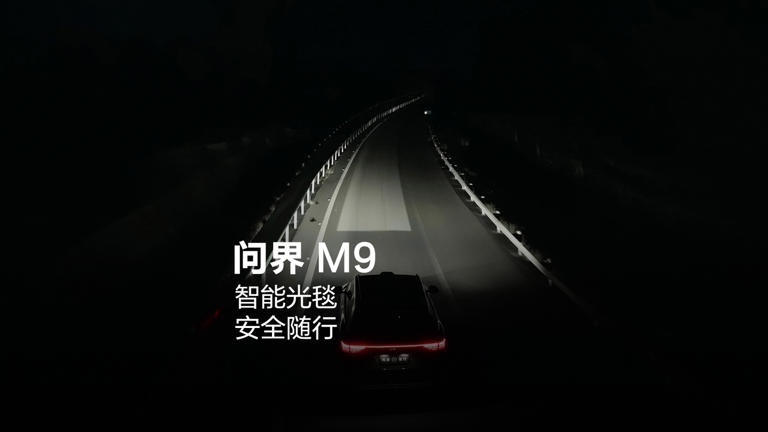
More importantly, combined with vehicle trajectory and environmental perception, headlights are gaining predictive lighting capabilities.
This means smart headlights are truly entering the active safety system, becoming core components in the intelligent loop.
From basic hardware to functional and safety parts, the value of smart headlights continues to evolve, forcing the sector to form new technical consensus.
This is the context for the White Paper's release—to systematically raise the technical bar for smart headlights already in deep waters. It focuses on three points:
- Having tens of thousands or even millions of pixel-level light sources, determining whether light can be finely controlled;
- Deep integration of perception sensors and lighting control systems, determining whether lights interact correctly with the world;
- High-precision ADB and adaptive algorithms, determining whether lights "understand the world and respond in real time."
Behind these three points is not a single technological breakthrough but the simultaneous maturity of three capabilities: optical technology, chip computing power, and electronic architecture.
Against this backdrop, Huawei Qiankun, starting with premium models like the Aito M9, has completed large-scale validation of smart headlights in real-world complex scenarios. On the industrial side, it collaborates with leading manufacturers like Xingyu to push smart headlights from concept to mass production.
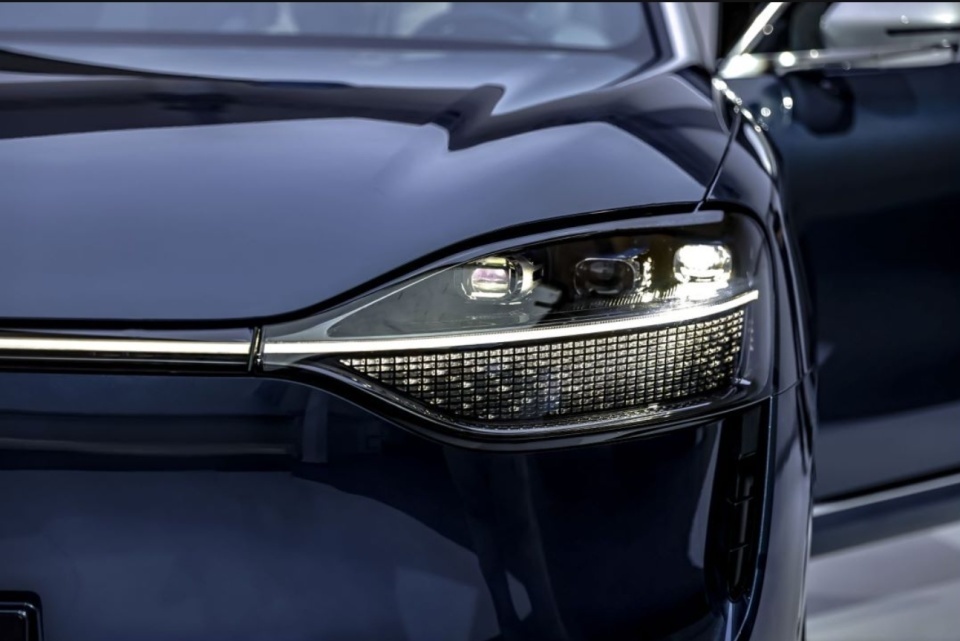
The joint release of the White Paper with upstream and downstream players signifies Huawei Qiankun's further step—not just defining a product but unifying technical language, raising entry barriers, and guiding smart headlights toward a phase of healthy, large-scale adoption.
From an industrial perspective, this is particularly critical.
In fact, mainstream Tier 1 suppliers like Bosch, Continental, and Valeo have been intensifying efforts in smart headlights and adaptive lighting, deepening layouts around pixelated light sources, ADB, and DLP technologies, with strong accumulations in hardware reliability, manufacturing, and engineering.
In contrast, Huawei Qiankun's differentiation lies not in singular optics or components but in integrating vehicle optics into the broader smart vehicle architecture, enabling light to align with perception, decision-making, and display through software-hardware synergy and cross-domain fusion—a boundary traditional component-focused Tier 1s struggle to cross.
02. AR-HUD: From Gimmick to Reliable Safety Component
Similar to smart headlights, HUD (Head-Up Display) is not new.
As early as the 1980s, after acquiring Hughes Aerospace, General Motors launched the first mass-produced automotive HUD, but limited by resolution and brightness, it could only show basic info like speed and fuel, nearly failing in strong light.
Later, HUDs saw sporadic "trials" in Japanese and European/American brands, gradually splitting into C-HUD and W-HUD forms. W-HUD moved the display medium from standalone screens to windshields, essentially an engineering optimization to "bring info closer to sight" rather than a qualitative leap.
The real turning point came post-2020.
With augmented reality maturing, AR-HUDs began large-scale adoption, quickly becoming "tech name cards" for luxury and mid-to-high-end models. They no longer just display info but attempt to spatially overlay navigation cues, ADAS warnings, etc., with real roads, with virtual images projected over 10 meters ahead, significantly bridging the cognitive gap between "info—road—driver."
AR-HUD aligns more with HUD's essence—it's not for entertainment or decoration but a safety component. Its core value lies in reducing how often drivers glance down at dashboards, keeping eyes on the road.
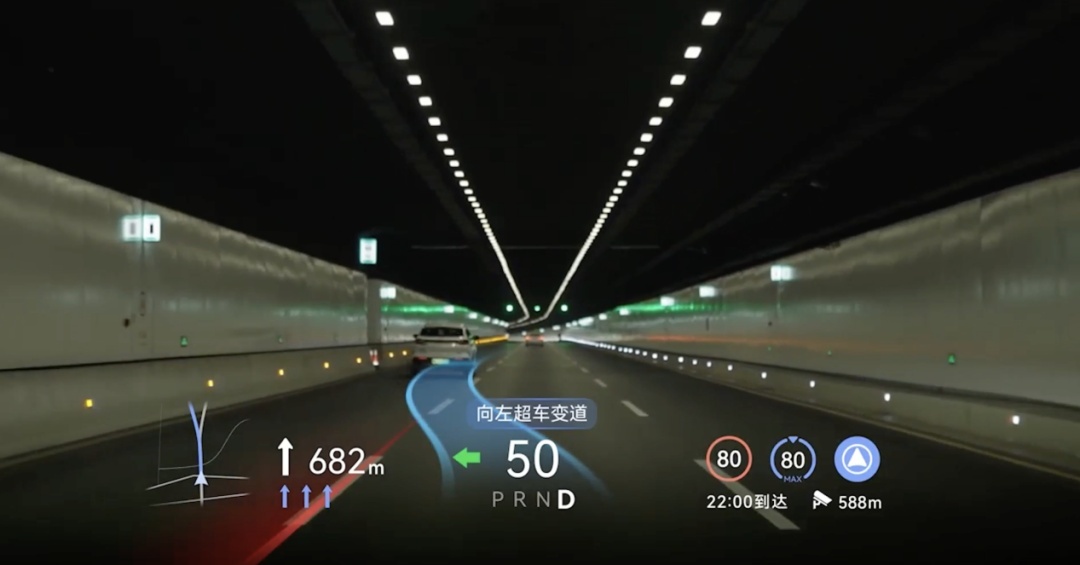
Under this philosophy, HUD products have redefined cockpit forms. For example, the XPeng G7 made AR-HUD standard across all trims, removing traditional instrument clusters, aiming for HUDs to carry core driving info.
But leading in philosophy doesn't mean maturity in experience.
Reality is, many current HUDs, including AR-HUDs, are frequently criticized as "looks advanced, feels dizzy," even becoming "gimmicks." A China Quality Association report on new energy vehicle user satisfaction ranked HUD display issues among the "top 10 faults per 100 new cars" and a top-six pain point in smart cockpits.
At this summit, Zhang Shiqi, Director of the Smart Cockpit Testing Lab at China Automotive Intelligent Technology, pinpointed two key AR-HUD issues:
- Compliance: Obstruction of forward view and functional safety risks;
- User experience: Insufficient viewing angles, unstable brightness, unreasonable UI sizing.
These are hurdles AR-HUD must clear to go from "usable" to "good."
Thus, the industry is re-evaluating AR-HUD value with stricter metrics, like real-world alignment accuracy. This tests whether AR-HUDs have precise enough environmental perception and spatial computing to keep virtual info tightly synced with real roads during dynamic driving, not "floating in view."
Under this standard, the XPeng P7 and Aito M8, backed by Huawei Qiankun's vehicle optics, delivered first. Their AR-HUDs passed specialized tests and earned certification for static display quality and dynamic scenario alignment, becoming rare mass-produced examples that truly "match the road."
Huawei Qiankun's precise solutions stem from systemic software-hardware synergy.
On one hand, full-chain optimization from chips to optical design meets complex imaging demands;
On the other, deep integration with smart cockpits and driving systems ensures stable visuals and consistent logic during high-speed, turning, or bumpy scenarios, reducing long-term visual fatigue.
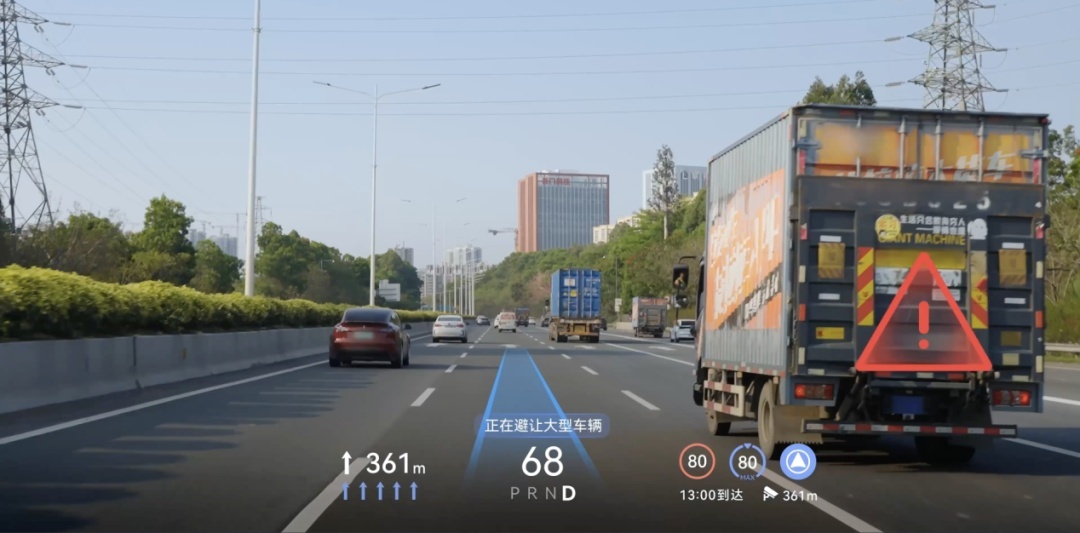
AR-HUD's next expansion is active safety, via:
- Instantly generating red warning frames for high-risk scenarios like "ghost pedestrians";
- Drastically reducing image drift with spatial computing engines and latency compensation algorithms;
- Gradually introducing natural interactions like gestures.
With these layered capabilities, AR-HUD's role is fundamentally shifting to a safety interaction hub in driving decisions.
This shift relies on long-term systemic capability building. Here, Huawei Qiankun's vehicle optics, through tech fusion and ecosystem collaboration, pushes AR-HUD past the "demo phase" into a truly dependable safety interaction layer.
03. Huawei Qiankun Ignites a Billion-Dollar Vehicle Optics Market
From smart headlights to AR-HUD, the rising value of vehicle optics is evident—it's becoming a key interface for smart car experience and safety.
A new consensus is forming: Vehicle optics is the next growth engine.
This is a rapidly opening billion-dollar blue ocean. The White Paper estimates the global smart headlight market will grow from $853 million in 2025 to $8.3 billion by 2030; similarly, AR-HUD revenue is projected to exceed $8 billion this year.
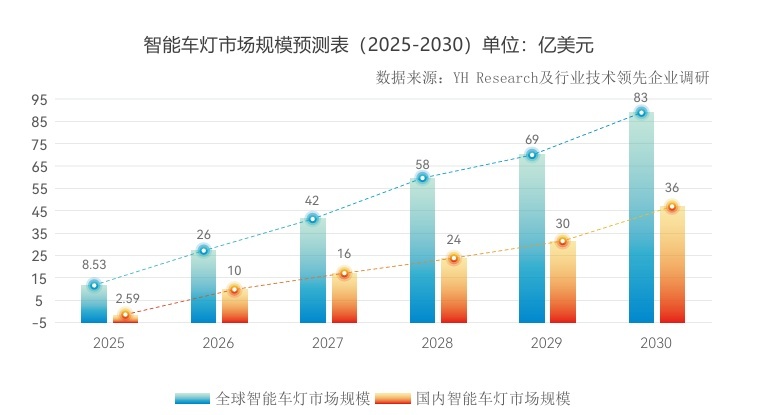
A more telling signal comes from penetration leaps. Chen Shuangbao, GM of Huawei's Smart Vehicle Optics BU, revealed at the summit: from Jan-Oct 2025, smart HUD penetration rose 70% YoY, smart headlights 127%.
This growth reflects a fundamental shift in how the industry perceives vehicle optics' value.
Thus, the vehicle optics market is entering a clear three-phase cycle:
Phase 1: Premium model validation.
Both AR-HUDs and smart headlights have mostly been in the 300,000 RMB+ segment over the past two years, validating display effects, system stability, and regulatory limits—a necessary starting point for all smart auto tech.
Phase 2: Experience upgrades and platform 下沉。
This is the most critical and competitive phase now.
The clearest sign is cost curve softening. The Smart Connected Vehicle Research Institute predicts 2025 new car AR-HUD installations already grew over 50% YoY, accelerating into sub-250,000 RMB models by 2026, potentially becoming a new "standard screen."
Smart headlights show a similar 下沉 path, with million-pixel units expected in 200,000 RMB models by 2026.
Phase 3: Standardization and mass adoption.
Here, the focus shifts from "having" to whose solution becomes the standard.
As the Matthew 效应 accelerates, only a few system-capable players will remain at the table.
Leaders like Huawei Qiankun are sketching winner profiles with first-mover advantages, centered on three core capabilities:
- Software-hardware synergy
- Cross-domain integration (smart driving × cockpit × optics)
- System-level safety and experience definition
These triple strengths form Huawei Qiankun's differentiated 壁垒 within its broader ecosystem.
Notably, since coining "vehicle optics," Huawei Qiankun hasn't treated it as a simple iteration of headlights or HUDs but redefined it within the smart vehicle architecture.
Thus, its investments aren't around specific product forms but building a full capability stack covering chips, optics, displays, algorithms, and system synergy.
The thrice-held Smart Vehicle Optics Summit reflects this. Discussions have shifted from product specs to higher-order topics like system safety, dynamic stability, and regulatory adaptation.
As the 坐标系 setter, Huawei Qiankun, via industry collaboration, continues to "reach higher" and "empower outward," exploring the boundaries of optics-display-algorithm-system fusion.
In this process, vehicle optics is transitioning into the foundation for smart cars' next-phase experience paradigm.
This isn't just a new track but likely another watershed in future smart car competition.
And Huawei Qiankun, through systemic capability prep and industry synergy, is accelerating the ignition of this billion-dollar market.
$Huawei(HUAWEI.NA) $SERES(09927.HK)
The copyright of this article belongs to the original author/organization.
The views expressed herein are solely those of the author and do not reflect the stance of the platform. The content is intended for investment reference purposes only and shall not be considered as investment advice. Please contact us if you have any questions or suggestions regarding the content services provided by the platform.
