


Key earnings dates for popular US stocks in January 2026! Critical window for options traders approaching

The U.S. stock earnings season has arrived in January, and earnings disclosures often become catalysts for significant stock price fluctuations, with single-day gains or losses exceeding 10% not uncommon. As the saying goes, high returns come with high risks. Options, with theirbuilt-in leverage, can potentially amplify returns by several times when the market direction is correctly predicted; however, it's important to note that misjudgment could result in the loss of the entire premium.
Remember our article on Micron Technology (MU) options published a week ago? If investors bullish on MU had chosen to Buy Call options at that time, they'd probably still be laughing in their dreams now.
Earnings Night Approaches: How MU Bulls Can Use Options to "Attack on the Upside, Defend on the Overvaluation"
https://mp.weixin.qq.com/s/dty6jCeuT58-Esxt8wL46Q
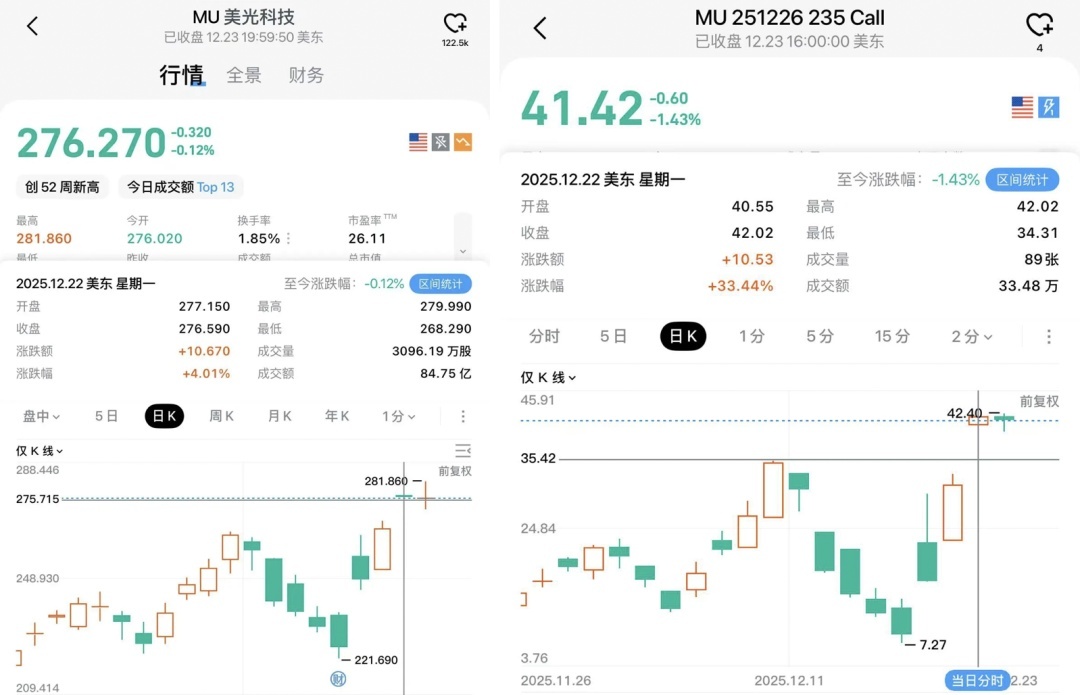
The article was published on December 17, Hong Kong time, with MU closing at $232.5/share the previous day. After the earnings release in the early hours of December 18, MU's results exceeded expectations, driving the stock price up rapidly to $276.59/share by the close on December 22.
If you had bought the stock, your return would have been roughly (276-232)/232 = 15%
If you had bought at-the-money (ATM) options expiring on December 26 at the U.S. market open on December 17 (strike price $235), with a purchase price of $12.65/share, the closing price on December 22 was $42.02/share, yielding a return of 232%—over 15 times the return from the stock investment!
As shown below, from the open on December 17 to the close on December 22, MU's stock price rose from $232 to $276, a gain of about 15% (left chart). Over the same period, the value of ATM options more than doubled, surging from $12.65 to $42.02 (right chart).
Key U.S. Stock Earnings Release Dates for January 2026
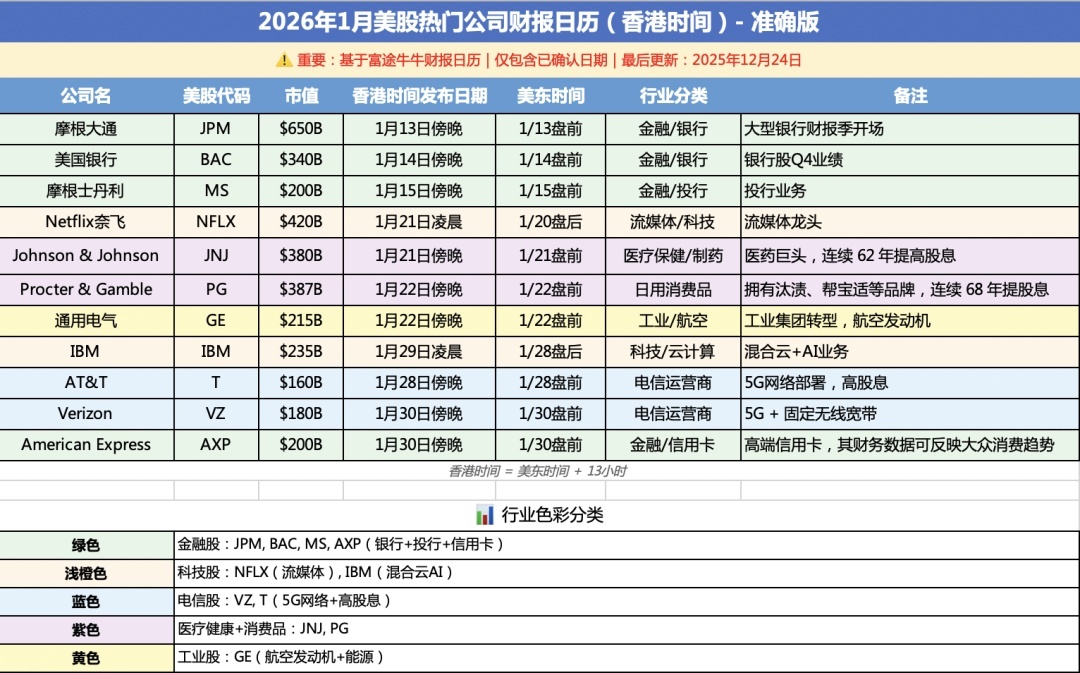
Key Highlights:
1. Financial Stocks Lead the Way - JPM/BAC/MS kick off Q4 earnings season (January 13-15)
2. High-Dividend Stocks Concentrated - JNJ/PG, the "Dividend Kings" (62 and 68 consecutive years of dividend increases), ideal for defensive investing
3. Tech Stocks to Watch: Netflix + IBM - Streaming leader (January 21) opens the tech earnings season, followed by IBM's hybrid cloud AI (January 29)
4. Telecom + Consumer Stocks for Defense - VZ/T offer stable high dividends, GE's industrial transformation
Note: Tech giants like AAPL, MSFT, TSLA, and AMD had not announced specific earnings dates at the time of writing, expected in late January to early February but unconfirmed.
Common Options Strategies for Betting on Earnings-Driven Stock Rallies
Disclaimer: This content represents the author's personal analysis and does not constitute investment advice. Options are high-risk derivatives with volatile prices that may result in total loss of principal. Investors should make decisions based on independent judgment and bear all investment risks.

Note:
1. The risks of the above strategies are limited, meaning the maximum potential loss equals the total cost of the initial position.
2. When constructing multi-leg options strategies, pay attention to margin requirements (selling options requires higher margin) and calculate breakeven points manually. The Beta APP plans to roll out guidance on building options strategies in the future, with interfaces displaying P&L charts, breakeven points, and margin reduction logic for combined strategies. We apologize for any inconvenience in the meantime.
3. Profitable U.S. options trades typically involve closing the position rather than exercising, as the latter not only loses time value but also incurs additional stock trading costs, creating significant capital pressure. Generally, options closer to expiration have poorer liquidity. To avoid difficulty closing positions, allow extra time when selecting expiration dates.
Example: If you expect a stock to surge in 10 days and stabilize around day 12, consider trading options expiring 18 days out, leaving 6 days to close the position while minimizing Theta (time decay) erosion near expiration.
In short: Always monitor the breakeven point of your options strategy to assess whether the stock price can reach that level, and allow extra time when selecting expiration dates to ensure smooth exits when profitable.
1. Buy Call — Betting on a Major Stock Rally
Use case: Predicting strong earnings and a significant stock price surge
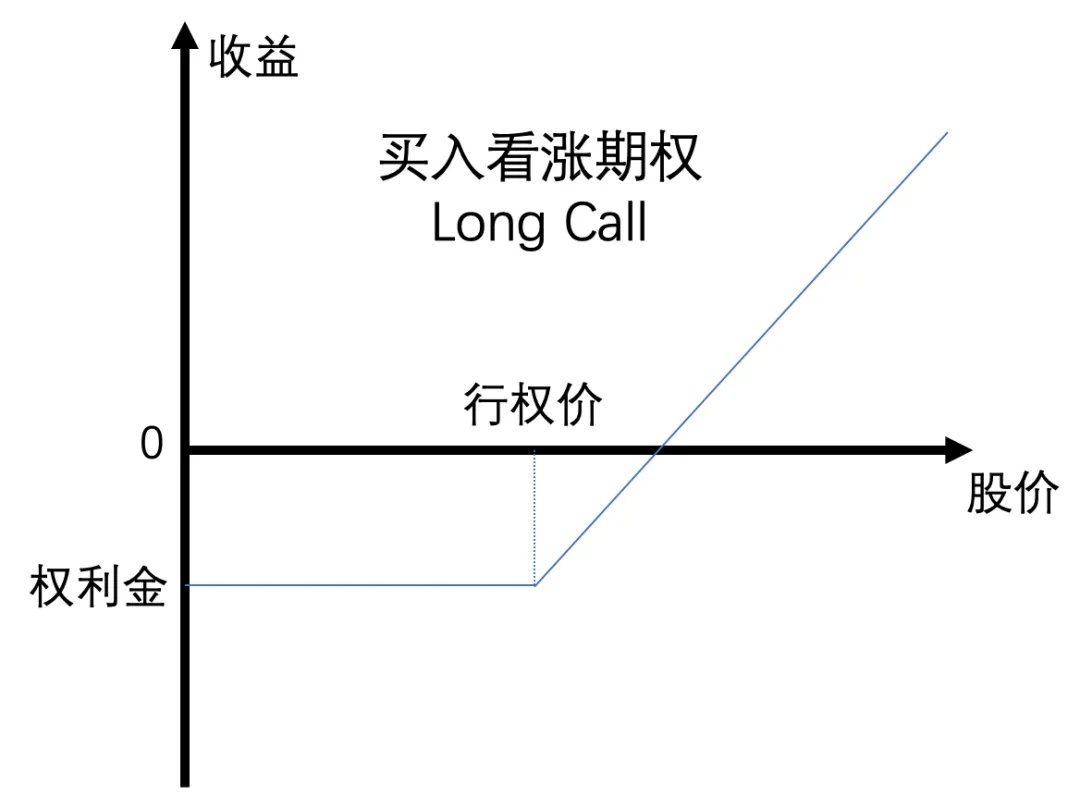
Breakeven stock price = Strike price + Premium per share
Profit when stock price > Breakeven
Maximum profit: Unlimited (if the stock keeps rising)
Profit per contract = [(Stock price - Strike price) - Premium per share] × 100
Maximum loss = Total premium paid
Maximum loss occurs when stock price <= Strike price
For details, revisit our Long Call strategy from Episode 3:
Million-Dollar Overnight Gains? How Options Pros Make Their Mark with Long Calls (Episode 3)
2. Bull Call Spread — Betting on Moderate, Capped Gains
Use case: The stock will rise, but the upside is limited to the higher strike price of the sold call.
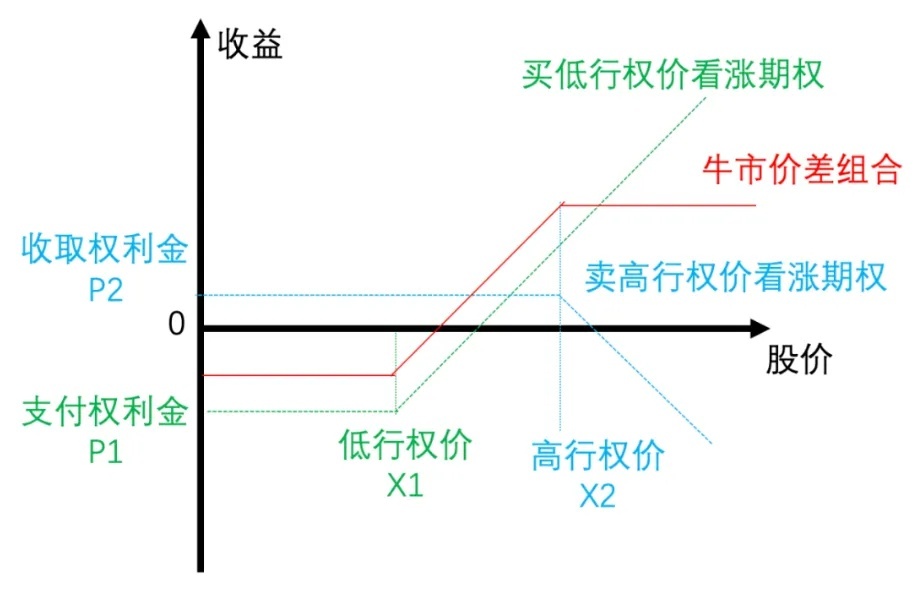
Strategy composition:
1. Buy one call option (Call1), typically at-the-money (ATM) (strike price = current stock price)
2. Sell one call option (Call2) with the same expiration but a higher strike price, reflecting your view that the stock won't exceed this level.
Net premium paid = Premium paid for Call1 - Premium received for Call2
Breakeven = Lower strike (X1) + Net premium paid (per share)
Note: This strategy's maximum gain is capped—achieved when stock price >= higher strike (X2)
Max gain = (X2 - X1) - Net premium paid
Maximum risk is also limited: when stock price <= lower strike (X1)
Max loss = Net premium paid = P1 - P2
Key difference from Buy Call:
Selling the call reduces max loss and lowers the bar for profitability, but caps upside potential compared to a pure long call.
For details, revisit our Bull Call Spread strategy from Episode 9:
Risk Warning: Options trading involves high risk and may result in total loss of principal. Investors should carefully consider whether such investments are suitable based on their experience, objectives, financial situation, and other relevant factors after fully understanding the product's characteristics and risks.
The copyright of this article belongs to the original author/organization.
The views expressed herein are solely those of the author and do not reflect the stance of the platform. The content is intended for investment reference purposes only and shall not be considered as investment advice. Please contact us if you have any questions or suggestions regarding the content services provided by the platform.
