


 Rate Of Return
<p>Bros, <span class="security-tag" type="security-tag" counter_id="ST/US/TSLA" name="Tesla, Inc." trend="0" language="en">$Tesla(TSLA.US)</span> is still falling so much today! I get trapped every time I enter, really fell into a trap. After the earnings report came out last night, the stock price skidded, and now it's stagnant, feels like it's going to liquidate. Just watching the show, bros.</p>

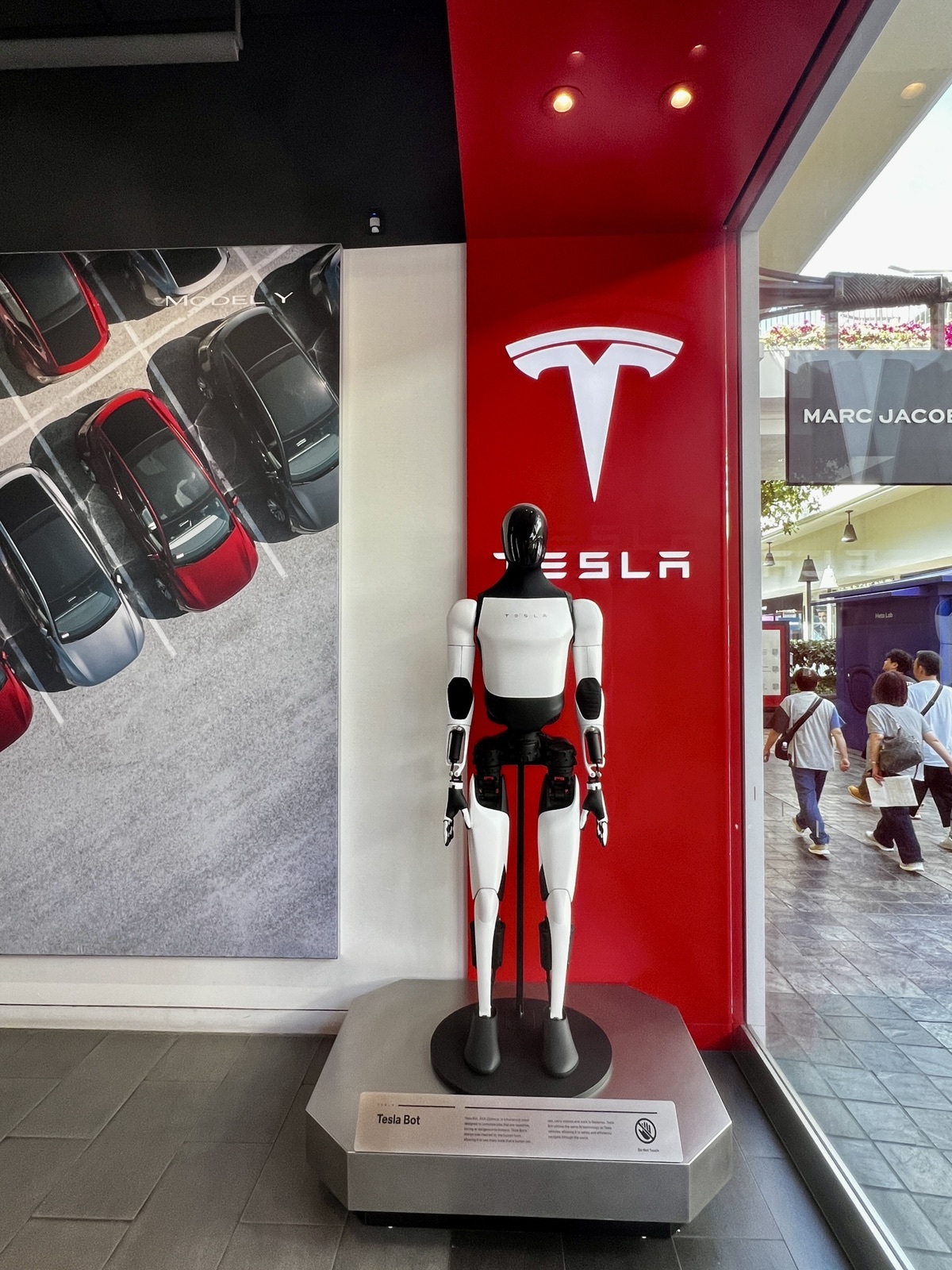
🔥 🚀 Elon Musk: $Tesla(TSLA.US)'s Optimus is not a robot; it's a "money-printing perpetual motion machine."
Elon Musk's judgment on Optimus was never about "whether it can be made," but rather about what structural changes would occur once it is made.
In his definition, the value of Optimus does not depend on a single breakthrough but comes from three variables simultaneously entering an exponential curve.
First, digital intelligence.
That is, #AI software capabilities, including perception, decision-making, planning, and continuous learning in the real world. As model capabilities improve, Optimus is no longer a machine that performs a single task but a general-purpose workforce that can migrate, generalize, and self-optimize across different scenarios.
Second, AI chip and computing efficiency.
Without sufficiently efficient and low-cost local inference capabilities, intelligence can only remain in the lab. With the improvement of self-developed chips and inference efficiency, Optimus can truly be deployed at scale, rather than being an expensive showcase.
Third, the dexterity of the electromechanical system.
This determines whether intelligence can be translated into real output. Hand degrees of freedom, balance control, energy efficiency, and fine manipulation capabilities are the key step for robots to go from "knowing how to think" to "being able to work."
Musk's core judgment is:
The practicality of robots is not the sum of the three, but their product.
This means that as long as any one of these dimensions continues to improve, the overall utility will be amplified at a faster rate.
But what truly puts Optimus into the "money-printing machine" category is not the above three points, but what he repeatedly emphasizes—the recursive effect.
Once Optimus matures, it doesn't just perform labor.
It can participate in manufacturing more Optimus robots.
When "robots manufacturing robots" becomes a reality, the bottleneck of production capacity will no longer be manpower, but materials, energy, and capital allocation efficiency. This is a manufacturing system that can self-accelerate.
This is also why Optimus is considered one of the most imaginative long-term businesses within $Tesla(TSLA.US).
It is not an independent project but is built on Tesla's existing capabilities in #AI, chips, manufacturing, and large-scale deployment.
The question has never been "whether there is a market for humanoid robots."
The real question is: who has the ability to integrate intelligence, hardware, and a recursive system into a closed loop.
Do you think Optimus is more like a long-term option or the core engine of future cash flow?
📬 I will periodically share observations and analyses of 10x potential trading opportunities and key trends in popular stocks, focusing on the long-term evolution of $Tesla(TSLA.US), #AI, automation, and industry-level transformations.
Welcome to subscribe, and don't miss the next window for positioning before a structural inflection point.
#ElonMusk #Tesla #Optimus #HumanoidRobots #Robotics #ArtificialIntelligence #Automation #FutureOfWork
The copyright of this article belongs to the original author/organization.
The views expressed herein are solely those of the author and do not reflect the stance of the platform. The content is intended for investment reference purposes only and shall not be considered as investment advice. Please contact us if you have any questions or suggestions regarding the content services provided by the platform.
