


 Likes Received
 Rate Of Return
🚨🔥 New Variable in the Middle East Situation: Iran Leverages Chinese Satellite Capabilities, Military Strikes Enter the "Precision Era"
The key to this information is not just "surveillance."
It's a deeper change:
Intelligence-gathering capabilities are being redistributed.
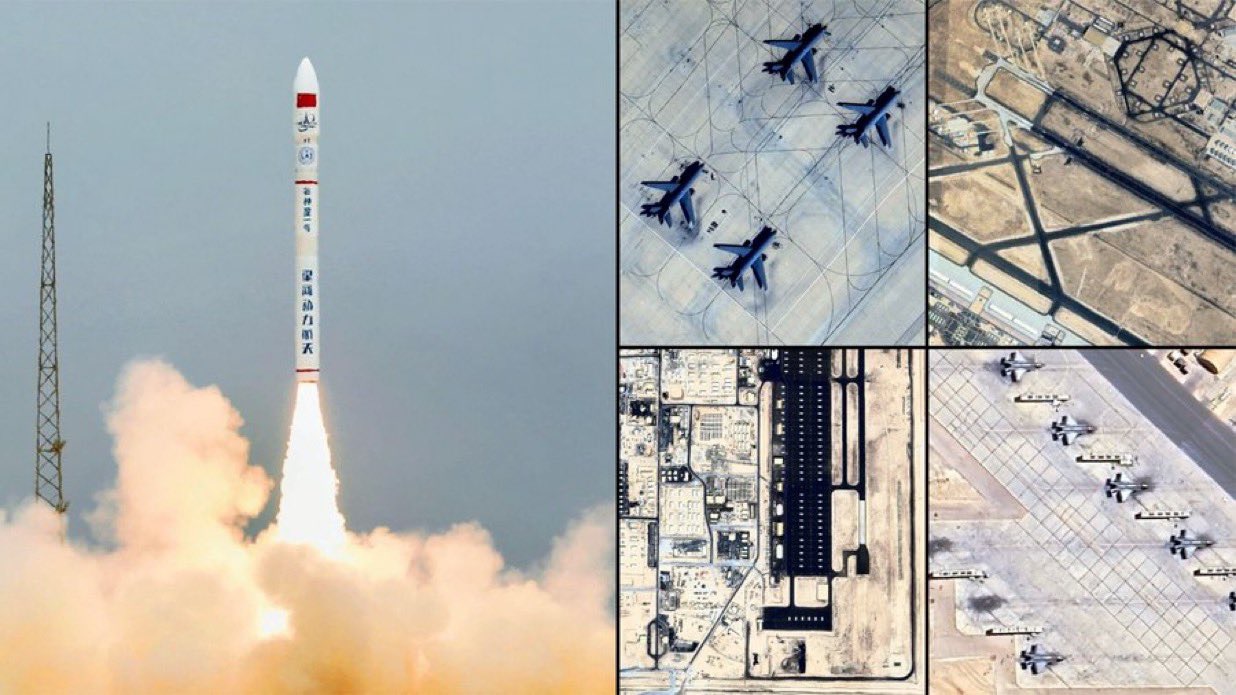
According to reports, the Islamic Revolutionary Guard Corps (IRGC) of Iran acquired a TEE-01B satellite provided by a Chinese company at the end of 2024.
This satellite has been used to monitor several key military targets, including:
Prince Sultan Air Base in Saudi Arabia
A military base in Jordan
The US Fifth Fleet in Bahrain
Erbil Airport in Iraq
More importantly, these surveillance activities closely coincided in time with subsequent drone and missile strikes.
Leaked documents show this was not a temporary action, but a planned, targeted precision strike process.
The significance behind this lies not in the operation itself.
But in the changing nature of warfare.
In the past, satellite reconnaissance capabilities of this level were primarily held by a few superpowers.
Now:
👉 Medium-sized countries are also beginning to possess "near real-time" intelligence-gathering capabilities.
👉 Precision strikes no longer rely on domestic high-end technology systems.
👉 External technology input is narrowing the military power gap.
This means that traditional military advantages are being partially eroded.
Especially in high-conflict regions like the Middle East:
Intelligence + Drones + Missiles
Have already formed a complete, replicable combat chain.
Another noteworthy point is the "time dimension."
Satellite imagery is used not only for pre-strike reconnaissance but also for post-strike assessment.
This means:
👉 Strike effectiveness can be quickly verified.
👉 The next round of operations can be rapidly optimized.
👉 Military operations are beginning to have a "data feedback loop."
This is closer to the model of modern high-tech warfare.
Of course, such information itself still carries uncertainty.
Including:
The accuracy and real-time nature of satellite data.
Whether countries will take countermeasures.
Whether intelligence dependence will create new vulnerabilities.
But one thing is certain:
The proliferation of intelligence capabilities is changing the threshold for conflict.
This is not just a military issue; it will gradually affect market expectations.
Energy, security, and geopolitical risk premiums may all be impacted.
Especially against the backdrop of still-sensitive global supply chains,
Any proliferation of "precision strike capabilities" will be magnified and interpreted by the market.
What needs attention next is not just this one operation,
But whether this model will be replicated by more countries.
Once it becomes the norm,
The frequency and intensity of fluctuations in the Middle East situation could reach a new level.
Regarding this "asymmetry reduction brought about by technology proliferation,"
Do you lean more towards it increasing conflict,
Or rather forming some new kind of balance?
The copyright of this article belongs to the original author/organization.
The views expressed herein are solely those of the author and do not reflect the stance of the platform. The content is intended for investment reference purposes only and shall not be considered as investment advice. Please contact us if you have any questions or suggestions regarding the content services provided by the platform.
