


No WBD deal, NFLX still bombed — is it out of ideas?
$Netflix(NFLX.US) Q1 bombed on guidance again, even as a top-line beat reinforced management’s consistently conservative stance.
Pre-print sentiment was elevated. Since scrapping the WBD deal, risk appetite improved, and a surprise late-Mar price hike strengthened the pricing-power narrative, driving a 25% countertrend rally into earnings.
This embedded hopes NFLX would revert to the ‘price hikes + cost discipline’ playbook. However, profit guidance implies investment continues despite the aborted acquisition, underscoring anxieties about sustaining secular growth beyond the current content cycle.
In detail: See below.
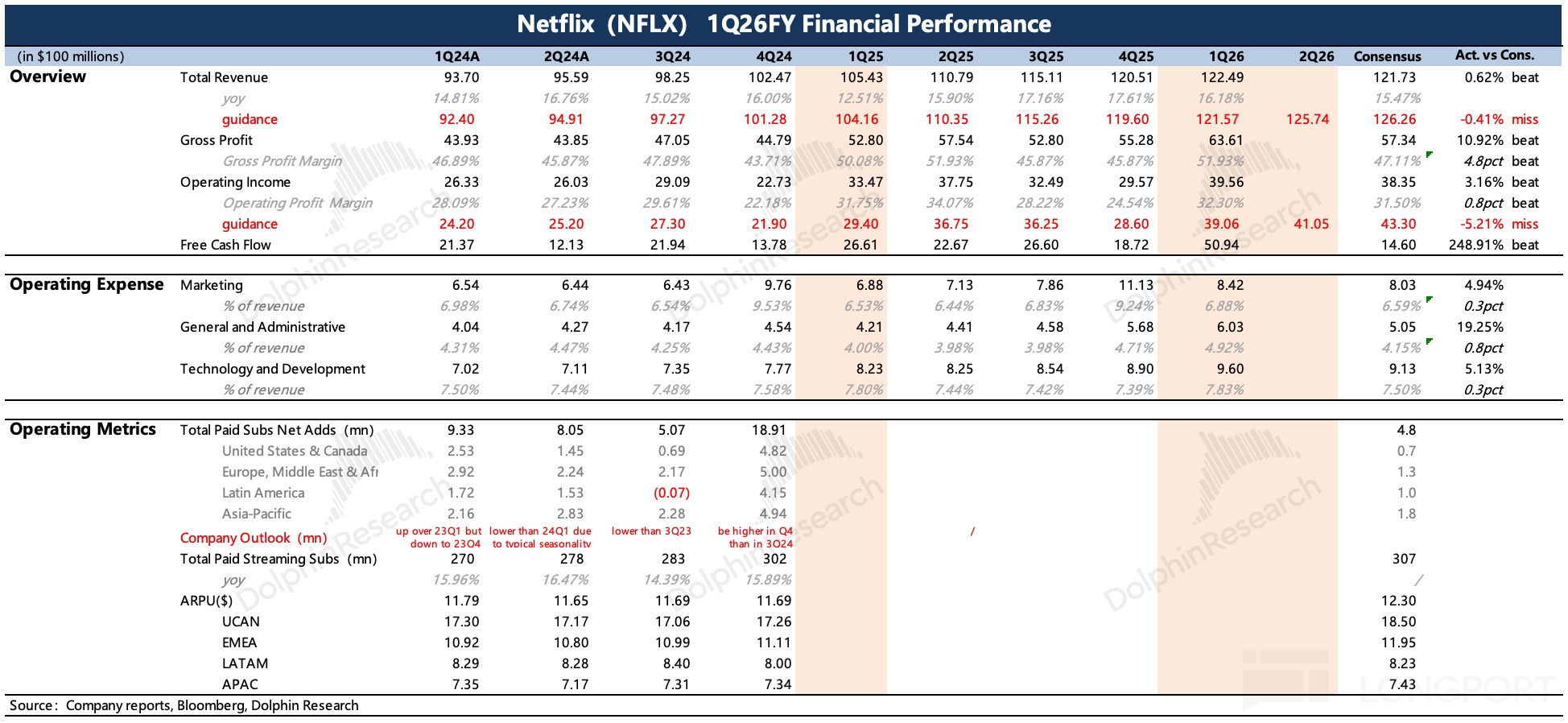
1) Revenue growth to slow? Q1 revenue was $12.2bn, +16% YoY (+14% at cc), beating guidance and the Street. Based on a simple volume/price split, we think the upside came mainly from subscriber scale and ad revenue.
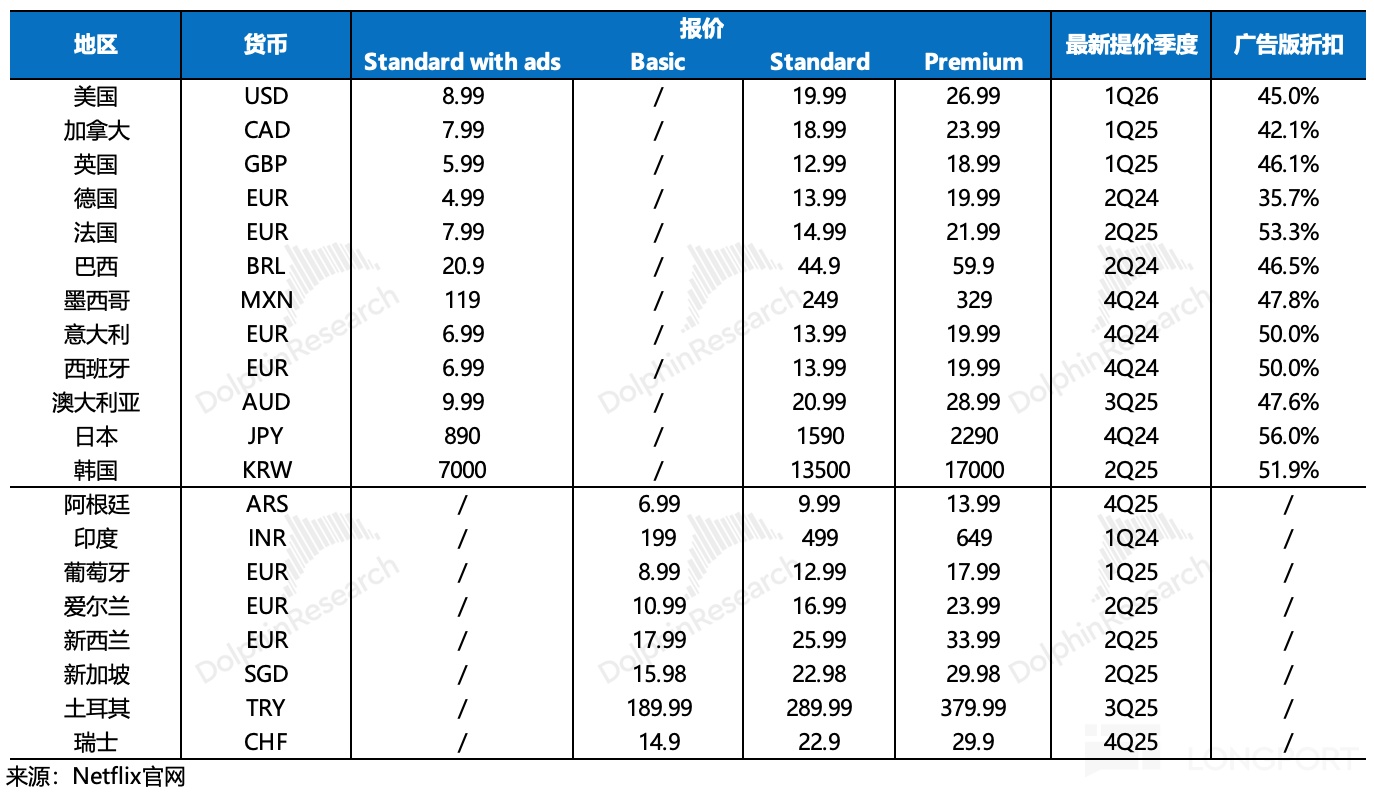
There were few broad-based price hikes in Q1; the late-quarter U.S. increase will fully flow through in Q2. Even so, management guided Q2 revenue to under $12.6bn, below consensus, implying a decel from 16% to ~13% growth, including a 1ppt FX tailwind.
Despite the Q1 beat, management did not lift the FY revenue range, keeping it at $50.7–51.7bn. This implies 12–14% growth (at Jan FX), still including a 1ppt FX tailwind.
NFLX is clearly pushing new monetization levers this year. Management expects ads to double to $3bn (in line with sell-side), and rolled out the kids-focused standalone gaming app Netflix Playground in early Apr, with more titles coming in 2026.
Game publishing is primarily to enrich member benefits and boost stickiness, with limited direct incremental revenue. Even so, management’s revenue outlook still skews conservative.
2) Margin noise slowing the recovery? Q1 OP beat, with OPM up 50bps YoY; the $2.8bn break fee from WBD was booked in other income and did not affect OP. Core operations thus improved on their own.
But Q2 margin guidance disappointed, with OPM guided below last year due to content cost recognition for the kids gaming app. In addition, NFLX acquired AI film-production shop Interposition in Q1, and post-integration may add personnel costs.
Full-year OPM was left unchanged at 31.5% (+2ppt YoY). Last quarter management said the WBD deal would have been a 50bps drag, so after the cancellation, the Street had lifted OPM expectations to ~32%.
3) Buybacks resume After deciding in late Feb to stop the acquisition, NFLX restarted repurchases, spending $1.3bn in Q1, with $6.8bn capacity remaining. At a $2.0–2.5bn per-quarter pace, shareholder yield is ~2% this year.
While the buyback lends limited price support, it signals commitment to capital returns amid constrained excess cash. The wallet simply isn’t flush.
With the extra $2.8bn break fee, the cash position improved, and FY FCF was raised from $11bn to $12.5bn (the $2.8bn is taxable). Liquidity has eased at the margin.
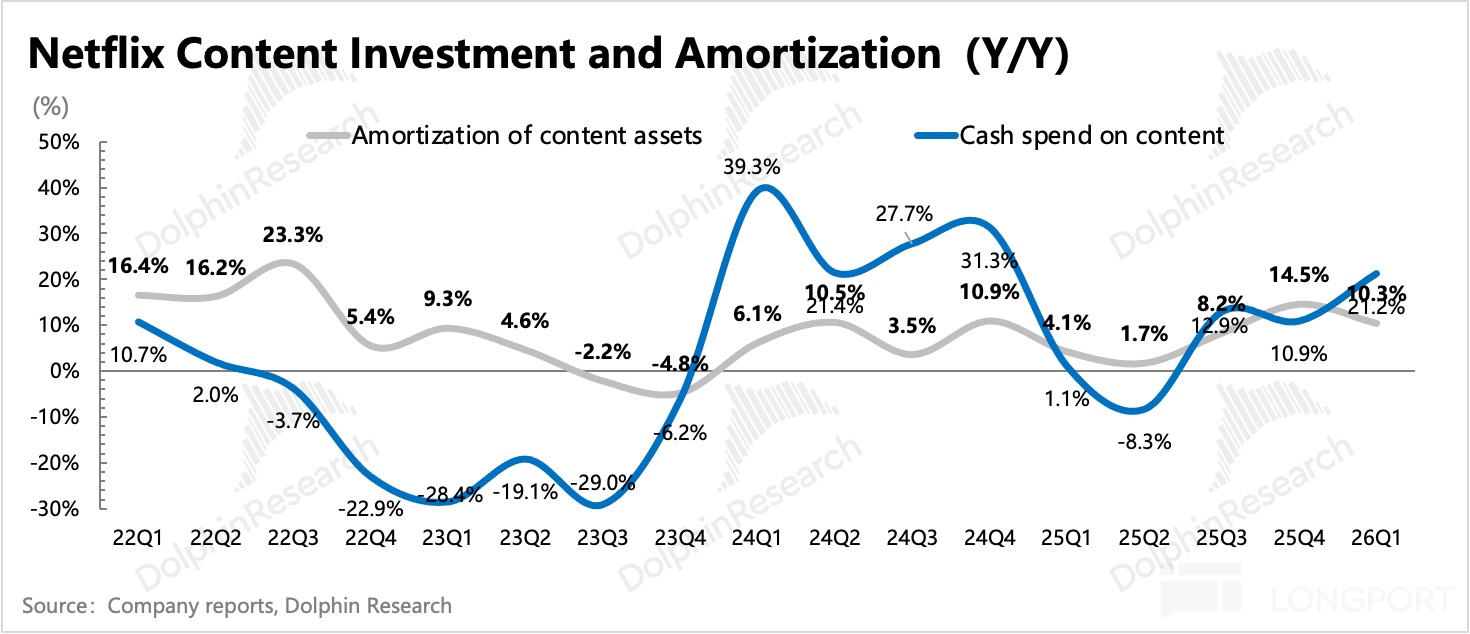
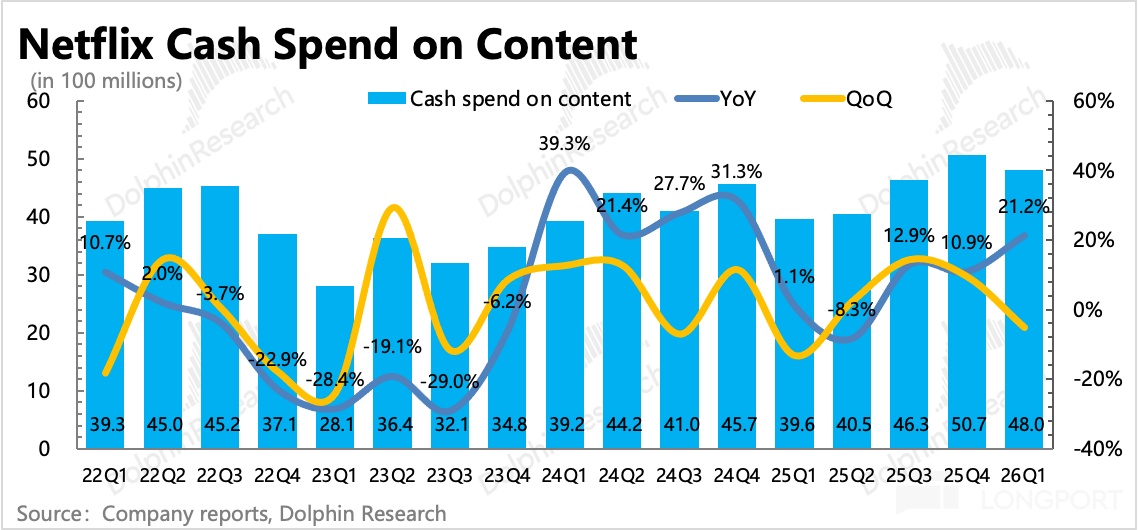
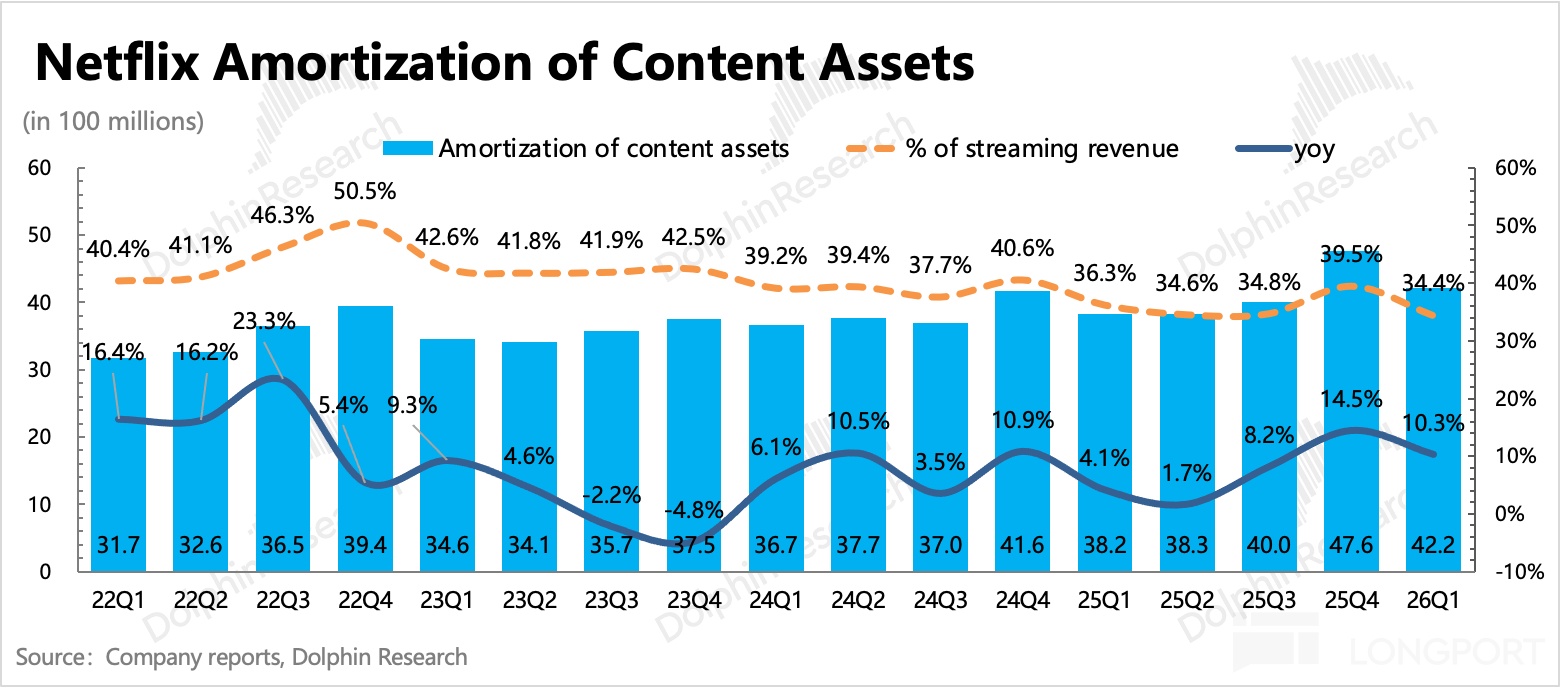
Still, management reiterated a content-first capital allocation. Q1 content cash spend was $4.8bn, +21% YoY, and the FY budget is near $20bn; investors worry higher amortization could cap near-term margin expansion.
4) KPI snapshot
Dolphin Research View
Solid Q1 prints suggest NFLX’s organic growth engine remains intact. Guidance may have ‘bombed’, but given management’s conservative bias, the true negative read-through should be discounted.
The sharp risk-off reaction also reflects over-bullish positioning into the print. With the content cycle rolling off in Q2, weaker tentpoles heighten external and internal competitive risks, from short-form and miniseries to peer asset consolidation.
Rising competition can blunt pricing power and push down the long-term valuation anchor. Thus, the late-Mar price increases warrant close tracking to see if they perform as in prior cycles.
While we were constructive on the now-abandoned WBD acquisition (given concerns about sustaining organic growth beyond the content cycle), we acknowledge the transaction would have visibly strained cash flow and leverage. That outcome would have displeased many NFLX longs.
Without WBD, near-term ops—especially content investment and new-biz expansion—are more agile. For most current holders (value-growth leaning, focused on profitability and FCF), the original model is clearer: revenue via pricing + ads, and OP uplift via efficiency, without the integration risk and medium-term uncertainty of a large deal.
Easing positioning, the ‘surprise’ core-market price hike, and a business that doesn’t require urgent capex burn pushed NFLX up 26% since late Feb, handily beating the market. March was a risk-off tape, yet shares rallied.
Post-market, shares fell 9% to a ~$415bn mkt cap, implying ~30x 2026E P/E (assumes ~14% revenue growth, 32% OPM, 15% tax rate). That sits near the lower bound of the historical subscription-platform range.
While there’s theoretical room vs. NFLX’s mid-cycle 35–40x, slower EPS growth this year (down from >30% 2-yr CAGR to sub-20%) makes a return to 40x hard. Multiple expansion may thus be capped unless re-acceleration materializes.
Unlike last quarter when we argued against getting more bearish, we now see most of the multiple repair done (24x to 30x). If price hikes don’t prompt user backlash, warming sentiment could take the multiple toward ~35x near term; otherwise, upside likely relies more on beta.
Details below
I. Conservative guidance reiterates a growth slowdown
Q1 revenue was $12.2bn, +16% YoY, with 14% organic growth at cc, slightly above guidance and consensus. A rough volume/price split suggests the beat came from subs and ads, as engagement remained high at the tail end of this content cycle.
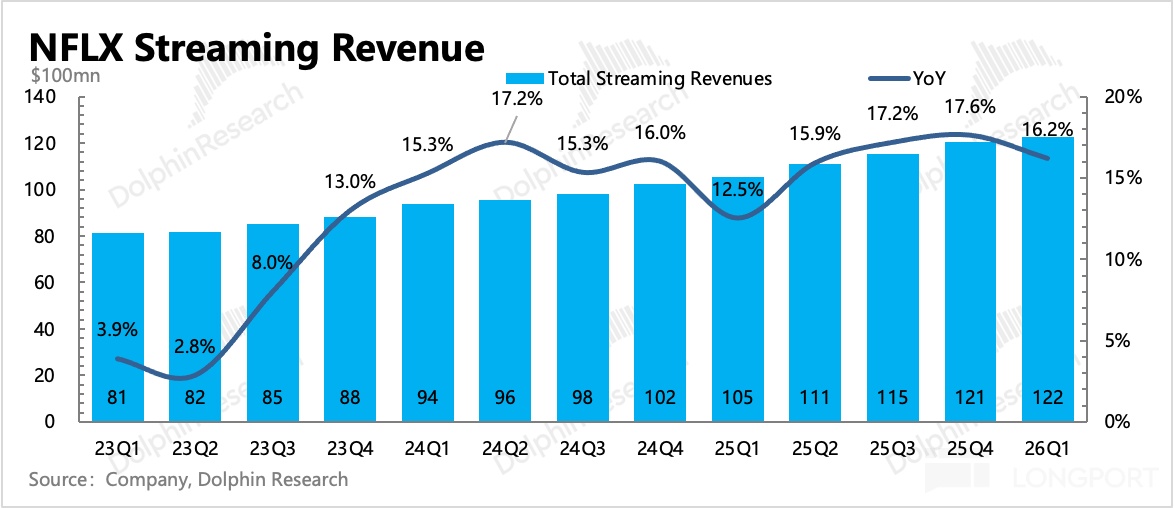
There were no broad multi-market price hikes in Q1; the late-quarter U.S. increase will fully impact Q2. Yet management guided Q2 revenue below $12.6bn, implying a decel to ~13% growth, including a 1ppt FX tailwind.

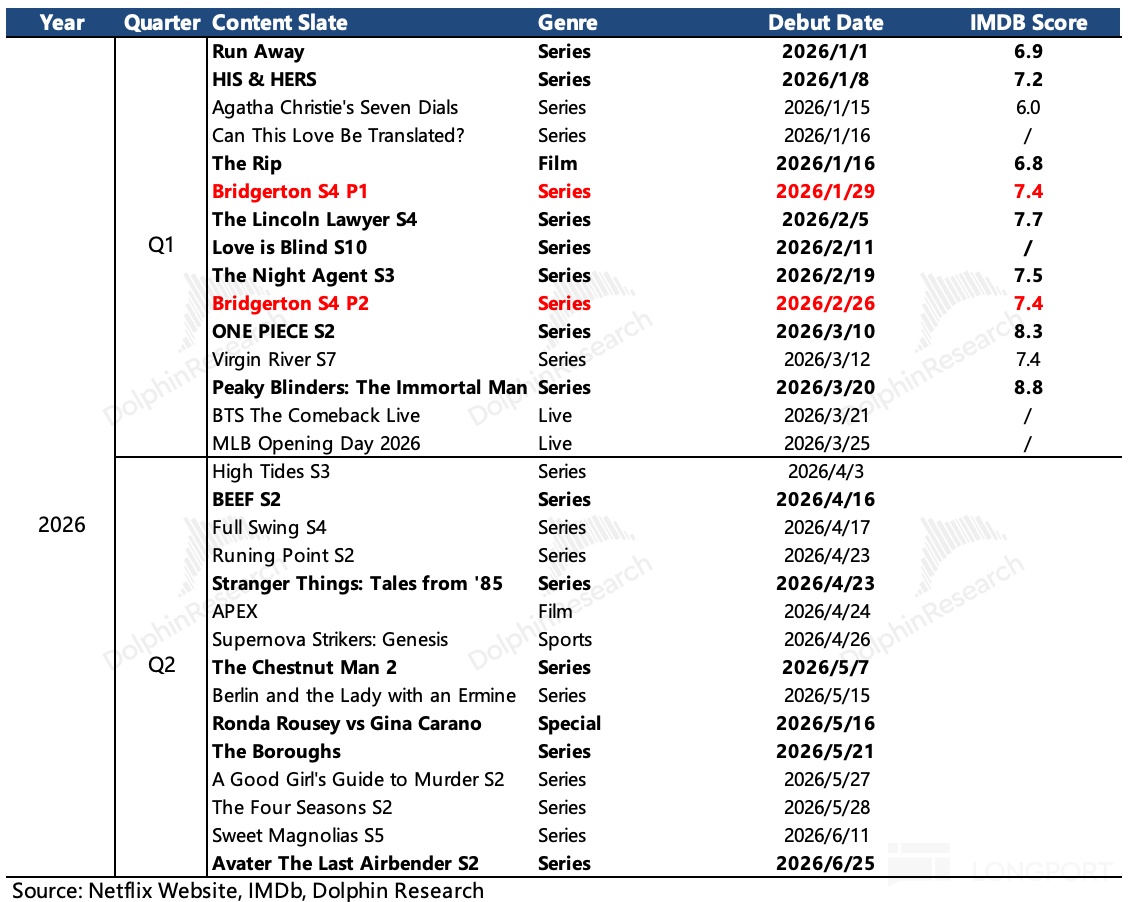
Pipeline signals also point to Q2 growth pressure: We flagged last quarter that the strongest content phase is ending. Q1 still had Bridgerton S4 and the late-2025 launch of Stranger Things S5 propping up engagement.
By contrast, Q2 lacks big legacy IP tentpoles. Potential hits skew toward prestige titles, spin-offs, and auteur projects, making audience response less predictable. For example:
(1) The highly acclaimed ‘BEEF’ S2 drops today, and ‘The Four Seasons’ S2 brings back the original cast.
(2) Netflix’s big-budget ‘Avatar: The Last Airbender’ S2 introduces new characters and core plot lines.
(3) Stranger Things spin-off animation ‘Stranger Things: Tales from ‘85’, and ‘The Boroughs’, a Duffer Brothers-produced ‘elderly ST’ vibe title.
II. Deal is off, but investment must continue As a bellwether, NFLX’s content spend cadence reflects competitive intensity. Q1 content cash spend was $4.8bn, +21% YoY, a clear acceleration.
On last quarter’s call, management outlined 2026 content budgeting: with content amortization up ~10% and a cash-to-amortization ratio of ~1.1x, FY content cash spend is near $20bn. We had thought WBD-related cash strain might lead to tighter control, as in 2025.
After walking away from WBD and receiving the $2.8bn break fee, management has more incentive to fully deploy the content budget to defend share. This fuels concerns about ‘excess’ amortization pressuring OPM.
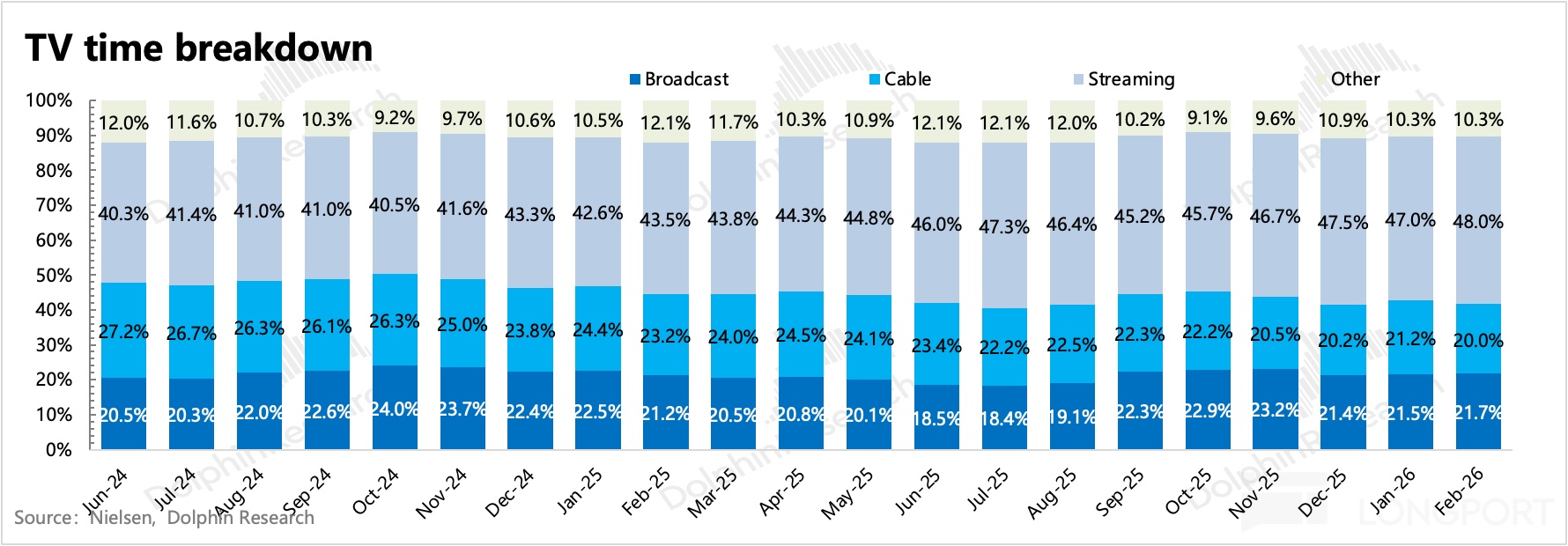
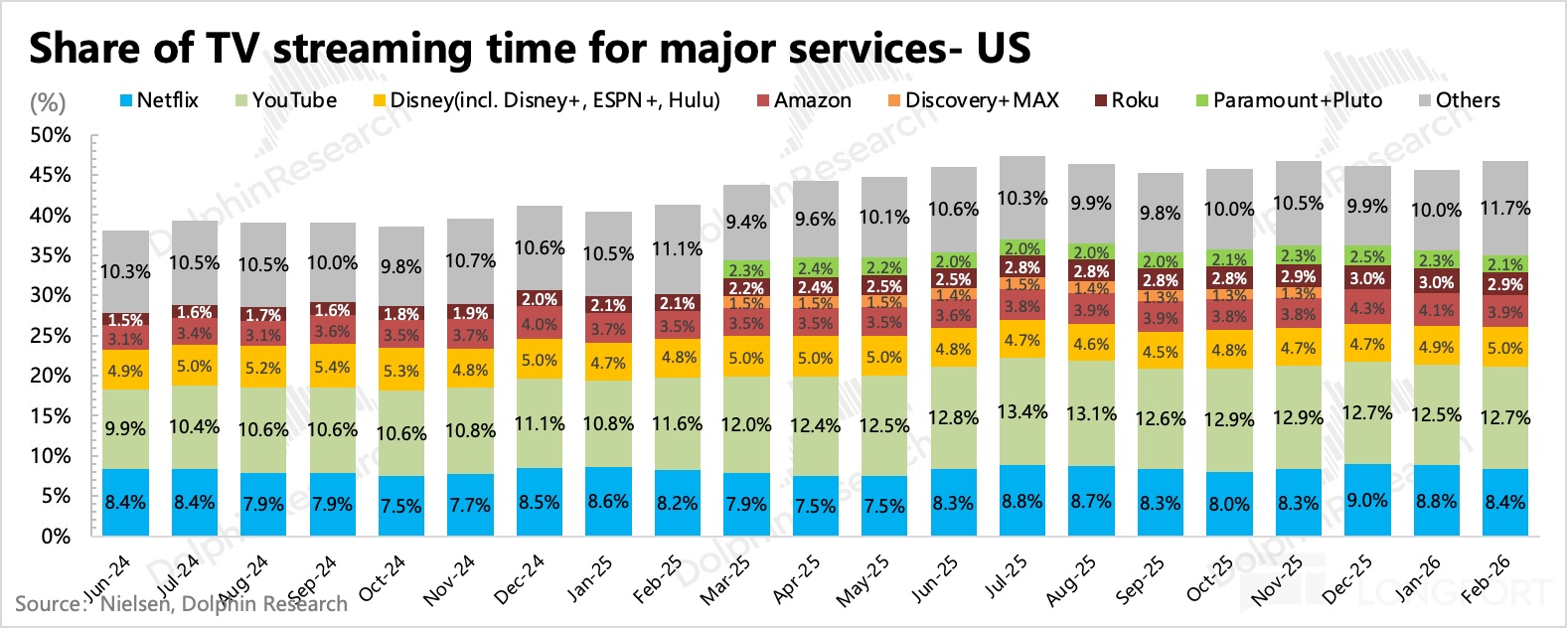
Nielsen North America data show cord-cutting re-accelerating after a post-pandemic plateau, with streaming share at 48% as of Feb. The secular shift is intact.
Within streaming, NFLX share is relatively stable, with a Dec bump from Stranger Things S5. YouTube held steady, Disney rebounded, and gains by smaller platforms suggest niche strengths outside the top tier.
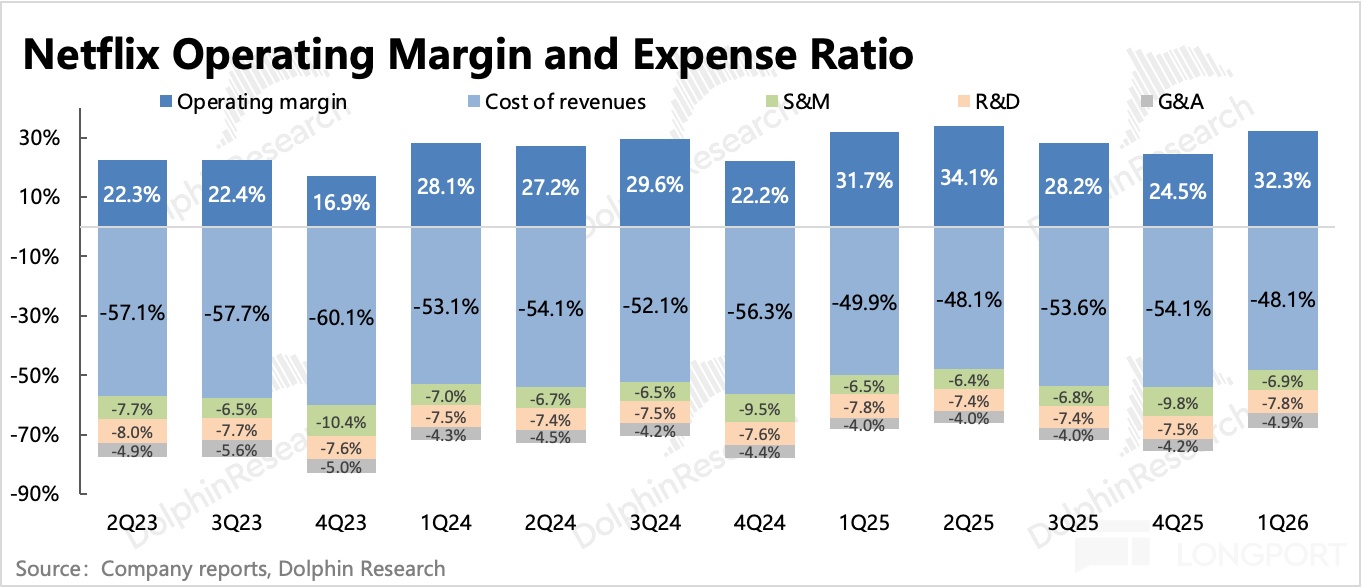
III. The Street had expected higher full-year margins Q1 OP was nearly $4.0bn with OPM of 32.3%, beating on cost optimization. Management guided a 1–2ppt YoY dip in Q2 OPM due to kids gaming app and game publishing costs, plus some sports-related content expense timing.
On opex, there may be M&A effects: in Mar, NFLX acquired AI film-production firm InterPositive. Post-integration, staffing expenses may increase.
Another disappointment: full-year OPM guidance stayed at 31.5% (+2.5ppt YoY). Since management previously said WBD would have cut OPM by 50bps, the Street had reset expectations to ~32% after the deal was abandoned.
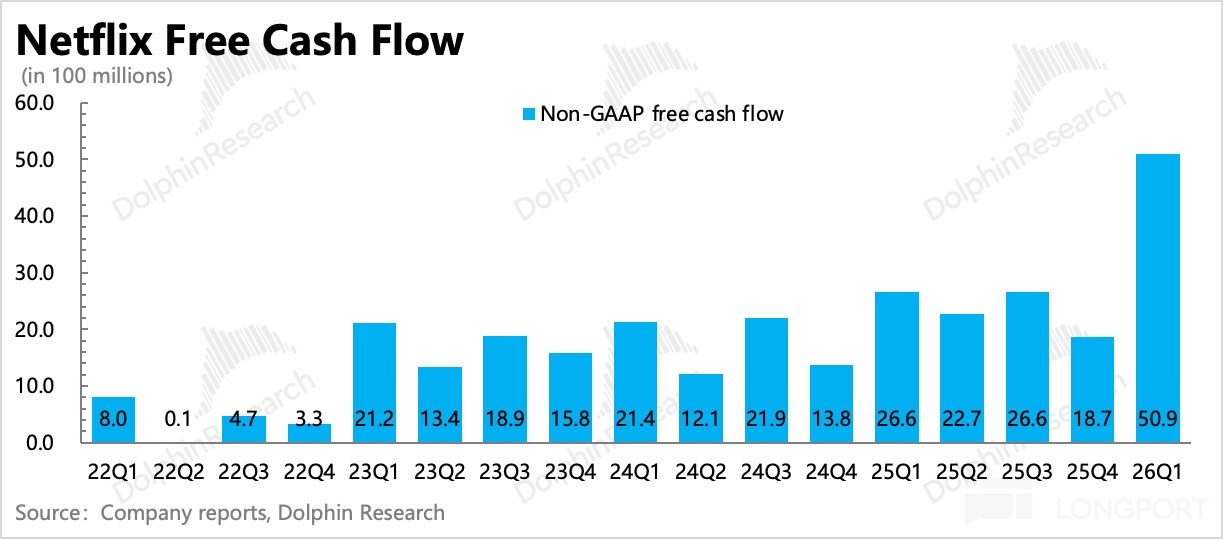
Q1 FCF was $5.1bn, including the $2.8bn break fee (taxable). FY FCF guidance was raised from $11bn to $12.5bn, and quarter-end net cash stood at ~$11.2bn (with $1bn in ST debt), modestly more comfortable than before.
With the acquisition off, buybacks resumed; NFLX repurchased $1.3bn in Q1. At a consistent $2.0–2.5bn per quarter run-rate, shareholder yield is ~2%, offering limited support and more a signaling effect.
<End here>
Dolphin Research 'Netflix' archive
Earnings season (recent)
Jan 21, 2026 call notes ‘Netflix (Trans): Linear TV is fiercely competitive; confident on deal approvals’
Jan 21, 2026 earnings take ‘Netflix: Another plunge — are the tentpoles now ordinary?’
Oct 22, 2025 call notes ‘Netflix (Trans): Programmatic ads will be a key revenue driver’
Oct 22, 2025 earnings take ‘Netflix: Another selloff — has the ‘king of series’ turned mediocre?’
Hot takes
Dec 8, 2025 spotlight ‘Netflix changed: breaking principles to bet RMB 80bn on a film-TV champion’
Risk disclosures and statements for this piece:Dolphin Research disclaimer and general disclosures
The copyright of this article belongs to the original author/organization.
The views expressed herein are solely those of the author and do not reflect the stance of the platform. The content is intended for investment reference purposes only and shall not be considered as investment advice. Please contact us if you have any questions or suggestions regarding the content services provided by the platform.
