


 Likes Received
 Posts
PostsA $5.6 million options bet ahead of Oracle's earnings report
Last night, there was a very interesting set of option orders for $Oracle(ORCL.US): At 10:14 AM ET, a $225 Call order worth $2.42 million for 2,049 contracts, expiring on 6/26; nine minutes later at 22:23 and 22:32, two consecutive $215 Call orders totaling $2.64 million for 1,725 contracts, also expiring on 6/26, with only a 1.4% out-of-the-money premium at execution, almost at-the-money; at 1:00 PM, another short-term $212.5 Call for $517,000 expiring on 6/18 was added. Three strike prices, $5.58 million in total, all crossing the earnings night. Last night was the last full trading day before the earnings, and this set of orders is clearly betting on the earnings.
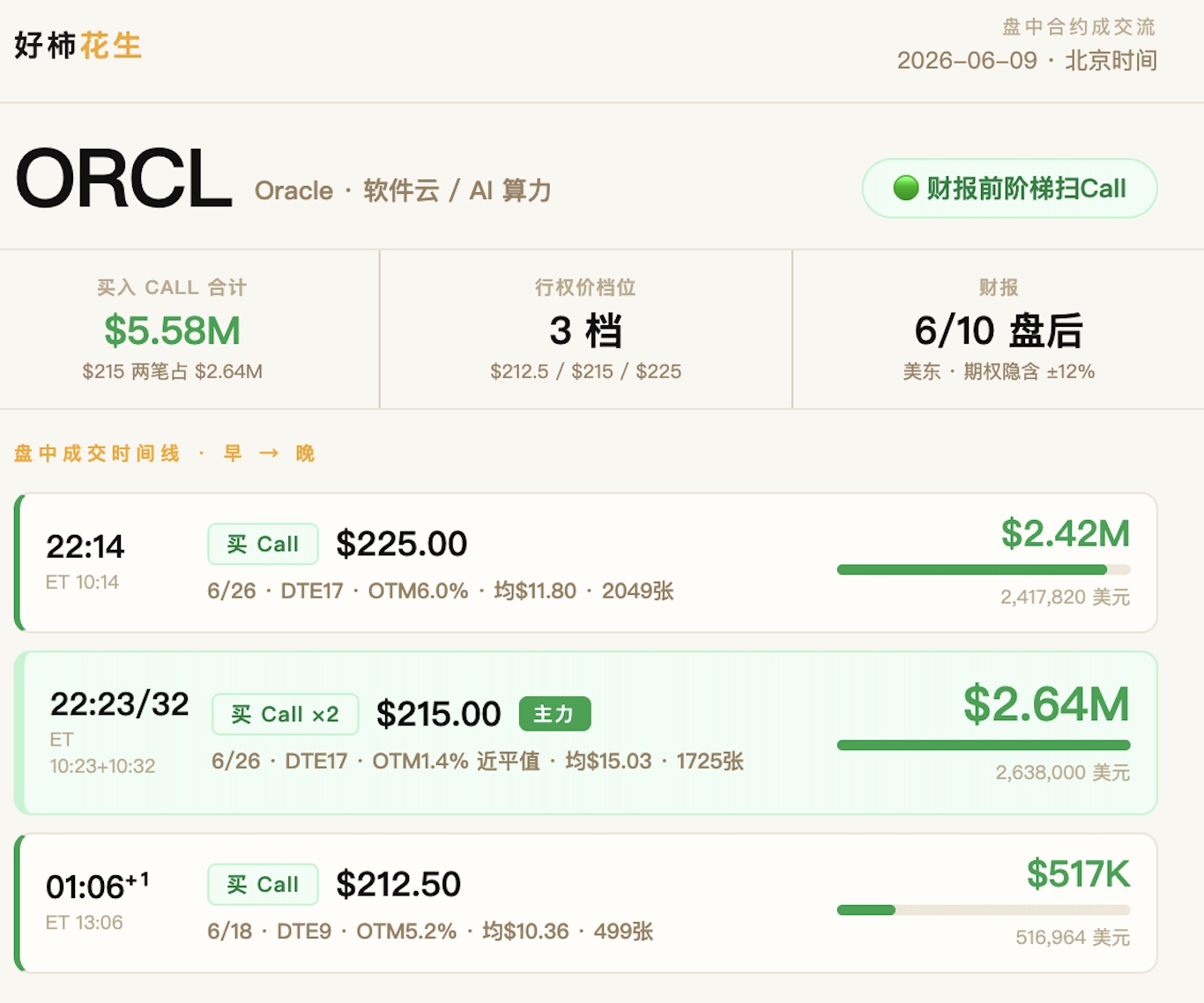
The structure is straightforward: the $215 near-ATM is the main leg, with high delta, betting on direction; the $225 second tier spreads the cost for flexibility; the 6/18 short-term order is an express ticket, expecting results within a week after earnings.
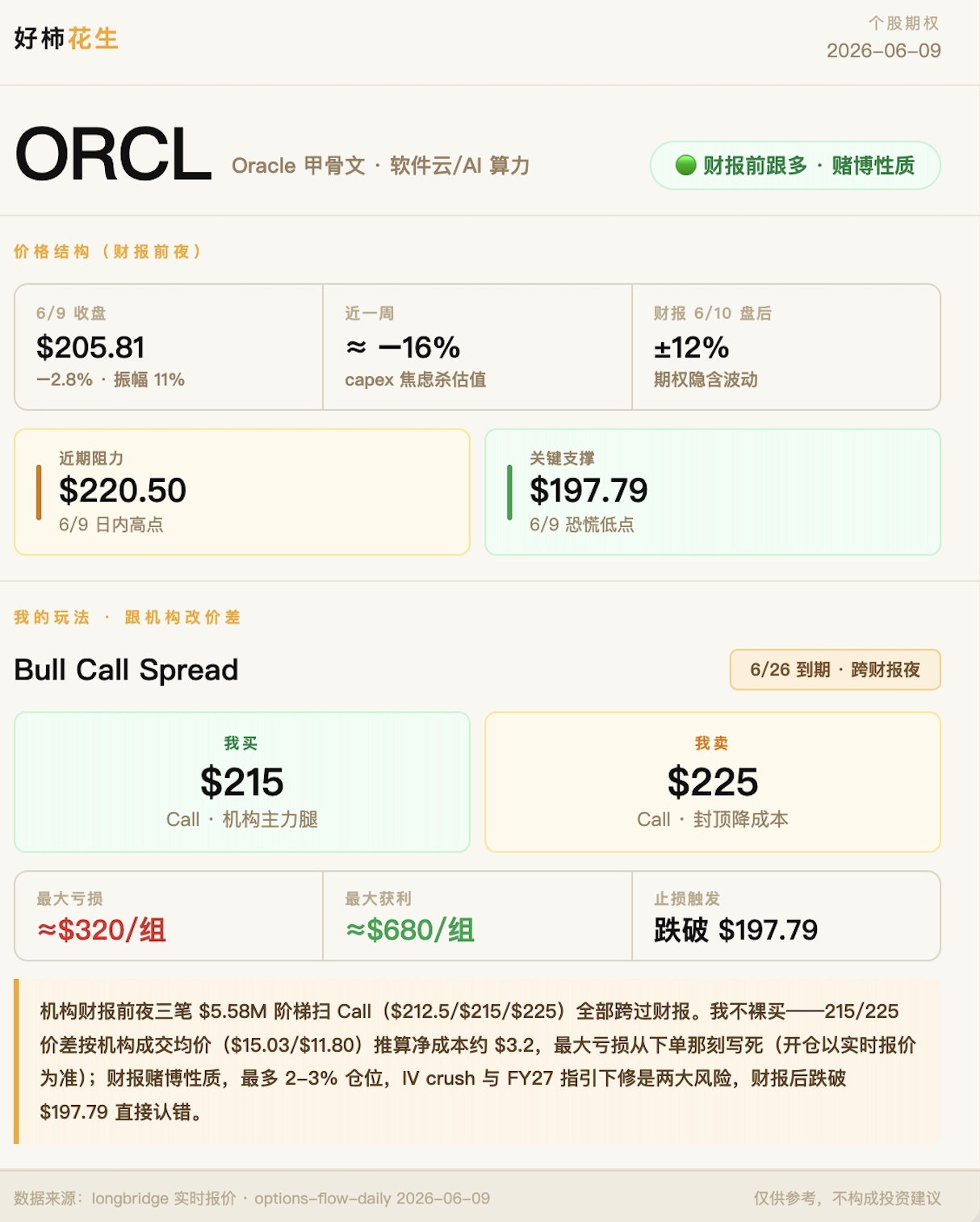
This is a textbook two-tier ladder earnings bet—he's not guessing how high the top is, but betting on one thing: "the stock price returning above $215 after earnings." What's even more aggressive is the timing of the purchase: Oracle was just hit by Iran news, causing an 11% swing, with an intraday low of $197.79 and a close of $205.81. These Calls were bought amidst the panic. Oracle has already fallen nearly 16% over the past week, but Bank of America, Citi, and Oppenheimer collectively raised their price targets before the earnings, with the highest seeing $330. The consensus target implies about 30% upside; while the options market prices in an implied volatility of around 12% for this earnings.
Key points to watch in the earnings:
- Market expects revenue of $19 billion and EPS of $1.96;
- OCI cloud infrastructure revenue is expected to grow +90.8% YoY to $5.17 billion;
- Will RPO (Remaining Performance Obligation) reach $600 billion—last quarter it was $553 billion.
As for risks: it's the new CFO's debut, and how she answers the question about "$80 billion in capital expenditure over the next three years, with free cash flow turning positive only in 2029" is more important than the revenue numbers themselves. If the FY27 guidance is revised downward, the ±12% volatility will directly hit the downside.
On the eve of earnings, it is not advisable to nakedly buy Calls—IV is already very expensive now, and even if the direction is correct, an IV crush can still cause losses. You can learn from the institutional structure and switch to a Bull Call Spread to control losses: buy the $215 Call and simultaneously sell the $225 Call (both using 6/26). Based on the average execution price from the institutions yesterday ($15.03 vs. $11.80), the net cost is about $3.2. The maximum loss for one spread is around $320, with a maximum profit of about $680, giving a risk-reward ratio close to 1:2. If the stock opens below $197.79 (yesterday's panic low) the day after earnings, exit immediately without holding onto the illusion of "waiting to break even." When scratching this kind of earnings lottery ticket, you must also pay close attention to position sizing.
The copyright of this article belongs to the original author/organization.
The views expressed herein are solely those of the author and do not reflect the stance of the platform. The content is intended for investment reference purposes only and shall not be considered as investment advice. Please contact us if you have any questions or suggestions regarding the content services provided by the platform.
