


ATFX: USD/JPY exchange rate breaks through 162, hitting a new high since 1987
ATFX: The Bank of Japan is in a rate-hiking cycle, but the absolute value of Japanese interest rates remains low. Driven by the Japan-U.S. interest rate differential, the yen continues to depreciate. Japan's Ministry of Finance has repeatedly publicly stated that it will intervene in the yen's exchange rate, but the actual effect is concerning. The USD/JPY rate broke above the 162 integer level today, hitting a new high since 1987.
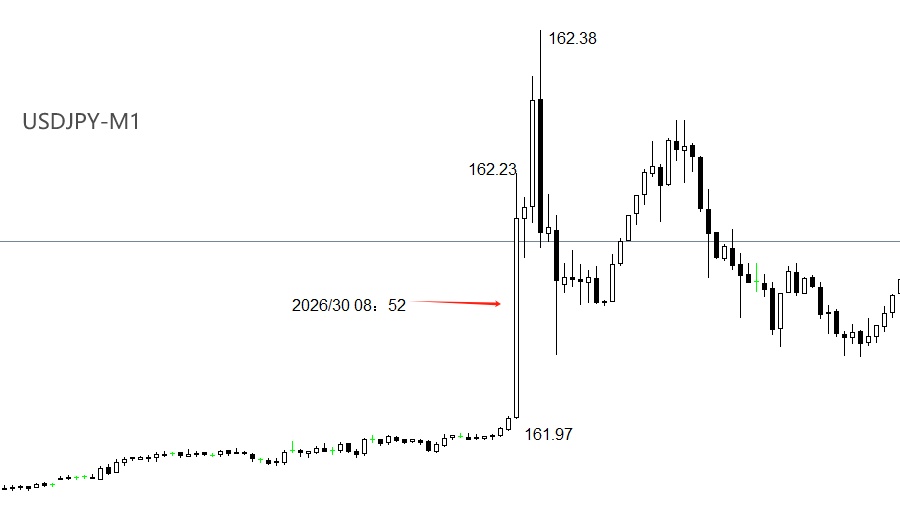
The chart above shows the USDJPY minute-level price chart - ATFX
At 08:52 Beijing time today, USDJPY suddenly formed a long bullish candlestick, with an opening price of 161.97, reaching a high of 162.23, breaking through the 162.00 integer level and setting a new high in nearly 39 years. Coincidentally, at 08:47, Japan's Chief Cabinet Secretary Minoru Kihara stated, "We are always prepared to take action in the foreign exchange market." This hawkish statement not only failed to promote yen appreciation but instead led to a new round of yen depreciation five minutes later, highlighting the fragility of market confidence.
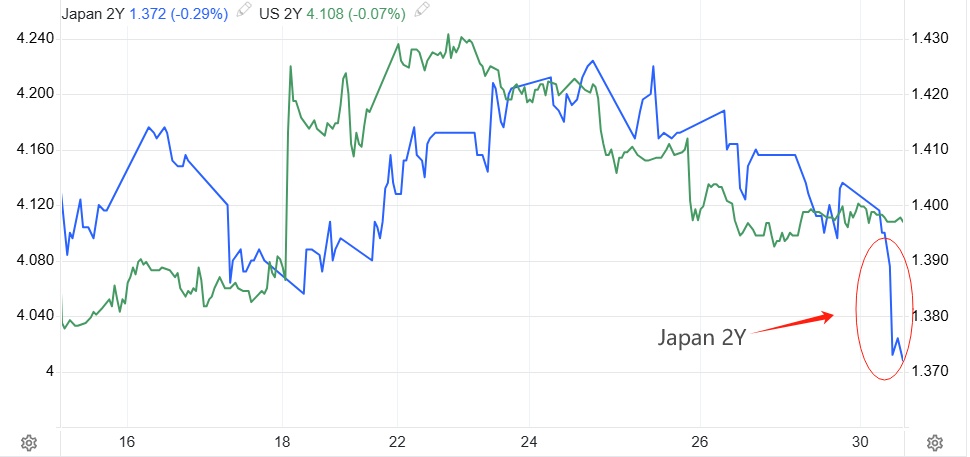
The chart above shows the yield trends of 2-year U.S. and Japanese government bonds, with the blue line representing the Japanese bond curve - ATFX
It is evident that Japanese bond yields experienced a rapid decline within the red box in the chart, while U.S. bond yields during the same period showed almost no change. This round of yield decline occurred between 11:30 and 12:00, which coincides with the period of minute-level decline in USDJPY. It can be argued that the decline in Japanese government bond yields led to the rapid rise in USDJPY.
Bond yields and bond prices move inversely. The decline in Japanese bond yields means a large amount of capital flowed into Japanese bonds in a short period, causing bond prices to surge. The bond market is a "safe haven" for capital. Large-scale buying suggests that market capital may have sensed unfavorable changes in the macroeconomy.
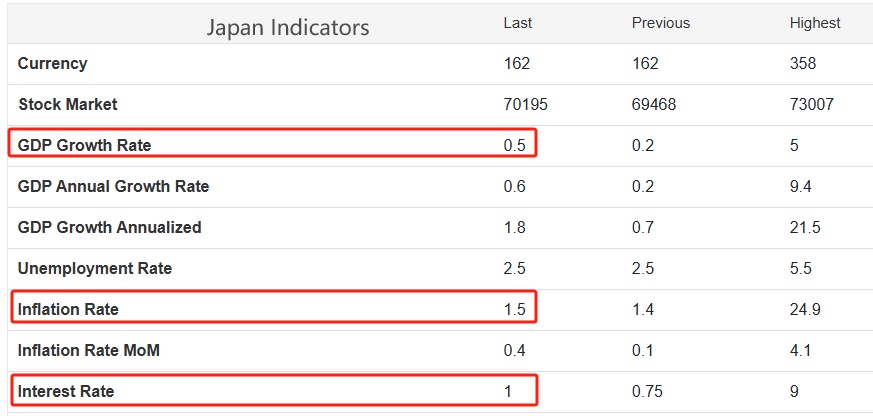
The chart above shows Japan's key macroeconomic data - ATFX
Quarter-on-quarter GDP growth is 0.5%. Even the annual growth rate is only 0.6%, indicating no clear signs of macroeconomic growth. The inflation rate is 1.5%, higher than the previous 1.4% but below the 2% standard for mild inflation. The benchmark interest rate is 1%, having moved away from negative interest rate policy, but it remains low compared to mainstream European and American rates. Japan's unemployment rate has consistently been low, but the inflation rate only rebounded quickly due to imported factors like high oil prices, which may be related to an aging population structure.
Due to weak inflation and slow GDP growth, although the Bank of Japan is in a monetary tightening cycle, the pace of rate hikes may be exceptionally slow. Mainstream market expectations suggest the Bank of Japan may choose to raise rates by 25 basis points every six months. This is unlikely to significantly narrow the Japan-U.S. interest rate differential or boost confidence in the yen.
Against the backdrop of the short-term ineffectiveness of monetary policy, the short-term trend of the yen still requires close attention to the Japanese Ministry of Finance's intervention in the exchange rate. At 9:11 today, Japanese Finance Minister Tsuyoshi Katayama stated, "We will respond to the exchange rate at any time." Be alert to extreme downward movements in minute-level USDJPY due to intervention by the Japanese Ministry of Finance.
ATFX Risk Warning, Disclaimer, Special Statement: The market carries risks, and investment requires caution. The above content only represents the analyst's personal views and does not constitute any operational advice. Please do not consider this report as the sole reference. The analyst's views may change over different periods, and updates will not be notified separately.
The copyright of this article belongs to the original author/organization.
The views expressed herein are solely those of the author and do not reflect the stance of the platform. The content is intended for investment reference purposes only and shall not be considered as investment advice. Please contact us if you have any questions or suggestions regarding the content services provided by the platform.
