


 SpaceX Option
🚨 This could be the beginning of the curtain rising on Japan's bond crisis.
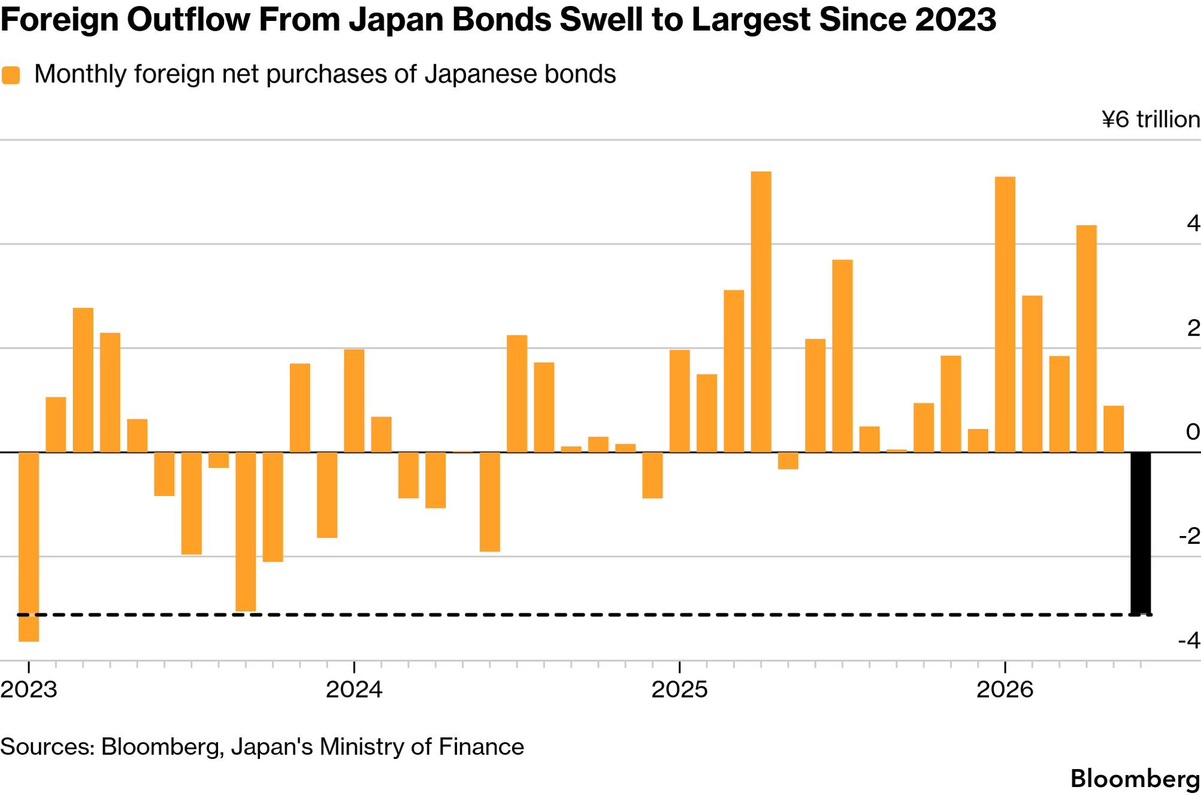
Foreign investors sold 3.12 trillion yen ($19.2 billion) of Japanese government bonds in June, the largest monthly outflow since January 2023.
Increased Japanese government spending means it needs to issue more bonds.
At the same time, the Bank of Japan (BOJ) is buying fewer bonds than before. This means the market needs to absorb more supply with less support.
When foreign investors start to leave, yields must rise to attract buyers.
Rising yields are particularly dangerous for Japan because the country's debt-to-GDP ratio is over 260%, one of the highest in the world.
Whenever yields rise, debt servicing costs increase. At some point, this cost will become unbearable.
A research strategist at Pepperstone said, "The era of viewing JGBs as near-risk-free, low-volatility assets is over."
The BOJ just announced it will suspend bond tapering from the next fiscal year, buying some time.
But the $19.2 billion outflow in a single month shows how quickly confidence can shift in a market that has been stable for decades.
If foreign selling persists and yields continue to rise, Japan will face compounding problems: higher borrowing costs on an already massive debt pile, a weaker yen, and limited room for the central bank to respond without fueling inflation.
The copyright of this article belongs to the original author/organization.
The views expressed herein are solely those of the author and do not reflect the stance of the platform. The content is intended for investment reference purposes only and shall not be considered as investment advice. Please contact us if you have any questions or suggestions regarding the content services provided by the platform.
