



Zhuji Power sprints for Hong Kong listing: After raising $400 million in half a year, robots begin to compete on delivery capabilities
On August 18, it was reported that Ziji Dynamics had submitted a confidential application for an IPO in Hong Kong, aiming to raise hundreds of millions of dollars. Over the past six months, Ziji Dynamics has maintained a very tight financing pace.
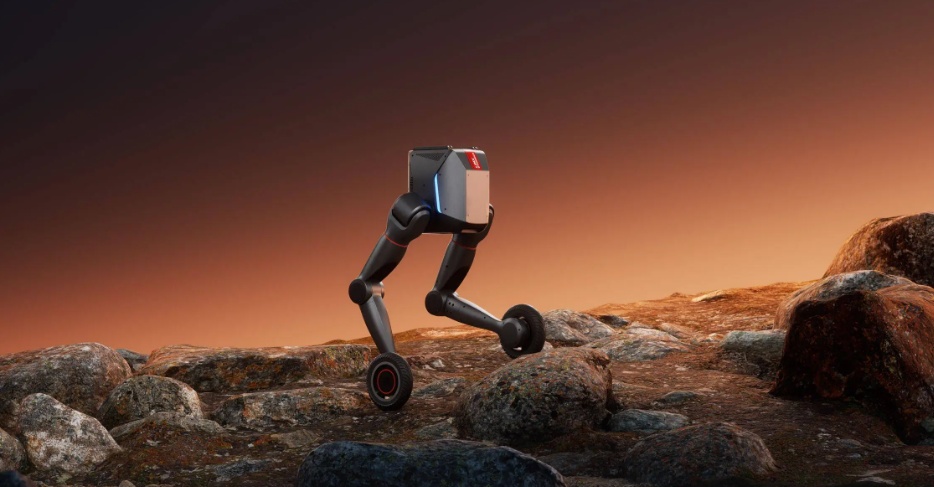
A month ago, the company just completed a nearly $200 million Pre-IPO round, reaching a post-money valuation of 15 billion RMB; in February this year, Ziji Dynamics also completed a $200 million Series B financing.
Currently, embodied intelligence is still in a stage of high R&D investment and high capital demand. Ziji Dynamics is preparing the next phase of funding for product scaling, global delivery systems, and continued expansion of embodied models.
The company accumulated approximately $400 million in financing over half a year, immediately followed by an IPO. In the context of the external environment, the timing of the IPO choice is quite clever. Yushu Technology, another robotics company, also recently completed its STAR Market IPO issuance; in July this year, the HKEX expanded its confidential submission mechanism to all potential listing applicants.
At the same time, industry evaluation standards are beginning to become pragmatic. On the eve of the World Robot Conference on August 18, Reuters interviewed industry insiders and found that customers are increasingly concerned about how much economic value robots can create, how much manual intervention is required, and how long it takes to recover procurement costs.
Therefore, the questions Ziji Dynamics needs to answer have become more specific: Can the product matrix be delivered stably? Can thousands of orders be converted into revenue? Can overseas demand form a sustainable business? Can full-stack technology ultimately reduce deployment costs in real-world scenarios?
Embodied intelligence enters engineering competition; completing tasks continuously is more important than single actions.
Currently, the scale of the humanoid robot industry remains limited, but supply has increased rapidly. However, there is still a significant gap between shipment volume growth and production efficiency improvement.
Reuters cited IDC data stating that Chinese companies currently account for about 82% of global humanoid robot shipments; the industry simultaneously faces challenges such as reliability, dexterous manipulation, battery life, and generalization in unstructured environments.
An industry analyst estimated that among humanoid robots produced in 2026, 50% to 70% may eventually enter so-called "data factories," mainly used for collecting training data, and will not directly create production value for paying customers.
Against this industry backdrop, Ziji Dynamics' technical route becomes easier to understand.
The company was founded in Shenzhen in 2022, initially focusing on solving bipedal and whole-body motion control, and subsequently gradually expanding to operational intelligence and embodied systems. The product rhythm has been frequent in the last six months: releasing the embodied intelligence agent operating system COSA in January 2026, open-sourcing the FluxVLA Engine in April, and updating COSA 0.5 in July.
Ziji Dynamics currently divides its technical system into three layers: System 0 handles whole-body motion, System 1 covers VLA/WAM capabilities, and System 2 introduces large language models, world models, and COSA for higher-level task understanding and decision-making.
The V³-0 released in July further pushes this approach toward real-world tasks. This system runs on the 43-degree-of-freedom Oli robot, integrating visual understanding, walking, bending, single or dual-hand operation, and dynamic balance into a unified control system, adding human-in-the-loop intervention and real-machine reinforcement learning to improve the robot's ability to recover from failure states and continue executing tasks.
This involves a fundamental issue becoming increasingly important in the robotics industry: Single-point capabilities are hard to directly convert into customer value; systems engineering capabilities determine deployment efficiency.
When robots enter real environments, they need to simultaneously handle 本体 reliability, visual perception, motion control, task planning, data collection, model training, and on-site debugging. Any layer lacking stability could increase the time engineering personnel spend on-site and customer usage costs. Based on this, Ziji Dynamics chose to advance the 本体, models, OS, and training toolchain simultaneously, essentially compressing the friction between these links.
Schumpeter described capitalism in "Capitalism, Socialism and Democracy" as "an evolutionary process." The technology industry is no different; its innovation rarely completes industrial substitution relying on a single isolated indicator. Therefore, companies that ultimately survive in the robotics industry need the ability to organize complex technologies into stable products and then replicate these stable products into more scenarios.
In the coming years, if COSA can continuously lower development and deployment thresholds, full-stack capabilities may form product advantages; if the system always requires a large number of engineers to customize around single scenarios, the economies of scale brought by the technical system will also be limited.
The product matrix has taken shape, but the "thousands of orders" still need answers from financial statements.
In the market, most embodied intelligence companies still rely on experimental prototypes, whereas Ziji Dynamics has already built a relatively complete product echelon.
According to company disclosures, various robot products have cumulatively received thousands of orders since their launch, with over half coming from overseas. The full-size interactive robot Luna, released in May 2026, began delivering to domestic and international customers in less than a month; TRON 2, launched at the end of 2025, has also secured bulk orders domestically and internationally. Application directions cover scientific research education, commercial services, all-terrain inspection, industry, and construction fields.
Through product pricing, one can further understand the company's commercialization path.
The full-size humanoid robot Oli, aimed at developers and system integrators, has a starting price of 158,000 RMB; TRON 2, emphasizing modular design and VLA R&D, starts at 49,800 RMB; Luna, launched this year for commercial interaction scenarios such as malls, scenic spots, and brand events, has a domestic retail price of 298,000 RMB. Luna also adds features like video action learning, manual teaching, and task editing, supporting cluster control of up to 200 devices.
Industrial humanoid robots need to face strict return on investment, stable operation times, and safety requirements, while the procurement thresholds for commercial exhibitions, scientific research development, education, and system integration are different.
Ziji Dynamics enters developers, research institutions, and commercial clients through robots of different prices and forms, allowing it to establish revenue sources before general humanoid robots truly enter factories on a large scale, and also accumulate data and engineering experience in different task environments. Such a product combination reduces the company's dependence on a single scenario.
Peers have raised the bar for commercialization; Yushu Technology's data provides a good reference.
Yushu Technology's revenue in Q1 2026 was approximately 423 million RMB, a YoY increase of 68.5%; due to increased R&D and sales investments, profit after deducting non-recurring items decreased by 52.6% YoY.
This shows that after robotics companies achieve scale sales, R&D investment, brand building, supply chain, and mass production expansion will continue to consume profits.
The biggest unknown currently comes from the financial level.
Ziji Dynamics adopted a confidential submission method, and as of now, the prospectus has not been made public, so the outside world cannot reliably obtain the company's latest revenue, gross margin, R&D expenses, loss level, operating cash flow, and customer concentration indicators.
The "thousands of orders" indicate that demand has appeared, but order amounts, delivery cycles, repurchase rates, and final revenue recognition situations all need to wait for public declaration materials for verification. Additionally, indicators such as order conversion efficiency, gross margin, R&D expense ratio, per-unit product economics, and operating cash flow more directly reflect the company's commercialization quality and should be closely monitored.
Overseas orders expand growth space but also expose the difficulty of global delivery in advance.
Globalization has entered Ziji Dynamics' current business structure.
The company disclosed in July that Pre-IPO investors come from China, Europe, the Middle East, and North America; the new round of funds will be used to improve global manufacturing and delivery capabilities and further layout markets in the Middle East, Europe, and other parts of Asia. Combined with the company's disclosure that "over half of orders come from overseas," international business is no longer just a long-term plan.
This route has practical significance for robotics companies. Global universities, research institutions, developers, and commercial customers can expand the early demand pool, and application scenarios in different countries also help verify product generalization capabilities.
However, globalization also brings after-sales systems, certifications, data compliance, channel capabilities, and policy risks to the forefront of the company.
In July this year, the US FCC tightened conditions for foreign advanced robotics equipment to obtain new device authorization, facing greater policy uncertainty for Chinese robotics companies entering the US market with future new products.
Ziji Dynamics has not publicly disclosed its revenue share in the US market, so the potential impact cannot be quantified, but the geographic structure of overseas sales will become key information to observe after the prospectus is disclosed.
Hardware determines the current stage of revenue scale, while COSA, FluxVLA Engine, and developer toolchains relate to whether Ziji Dynamics can extend one-time equipment sales into longer-term customer relationships. Longer-term space still comes from software and developer ecosystems.
If developers continue to train models, deploy tasks, call tools, and 沉淀 data based on Ziji Dynamics robots in the future, the relationship between the company and customers will be deeper than simply selling hardware.
It is worth noting that platform capability and platform business model are not the same concept.
If COSA and FluxVLA are mainly used to improve the development efficiency of own robots, these technologies first improve product competitiveness; only when there are enough third-party developers, external device adaptations, and continuous software revenue can the software ecosystem possess independent commercial value. Ziji Dynamics has already set up the technical framework; next, it needs to prove the depth of the open ecosystem through the number of developers, customer retention, and actual deployments.
Ziji Dynamics' IPO process has pushed the most realistic contradiction in the current embodied intelligence industry to the forefront: technological progress is fast, but the real world has its own cost discipline.
In the coming years, the truly scarce resource in the embodied intelligence industry may well be how many robots can operate independently of engineers long-term, how many customers are willing to continue purchasing, and how many scenarios can be replicated.
Ziji Dynamics has formed a relatively complete product outline; what is currently missing is further verification of this system by public financial data.
The copyright of this article belongs to the original author/organization.
The views expressed herein are solely those of the author and do not reflect the stance of the platform. The content is intended for investment reference purposes only and shall not be considered as investment advice. Please contact us if you have any questions or suggestions regarding the content services provided by the platform.
