


2228 JingTai Technology Visit Record and Thoughts 02.1
$XTALPI(02228.HK) The questions collected and organized from the community have returned. There is a lot of content, so I will publish it in multiple segments.
Industry Status and Differentiation:
What is the overall status of the current AI pharmaceutical industry?
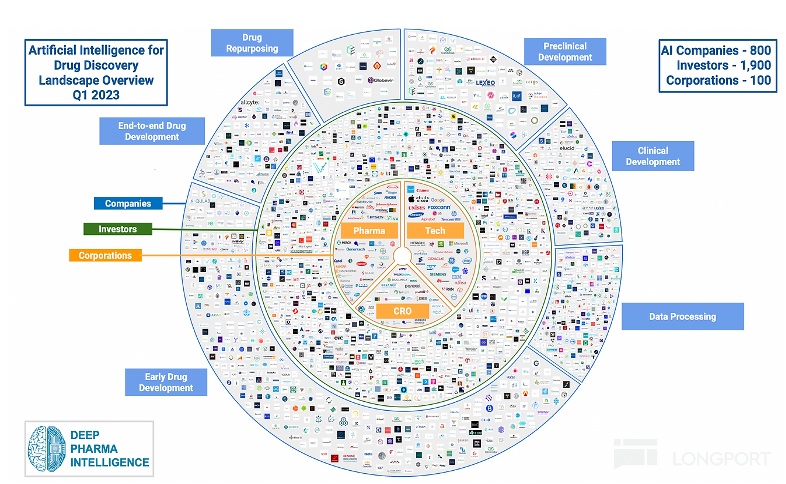
There are over a thousand AI pharmaceutical companies globally, with the total market investment and financing amount for AI pharmaceutical companies reaching $5.93 billion, growing nearly 27 times over the past nine years. At the same time, there are 100 large innovative drug R&D, traditional CRO, and technology companies involved in AI pharmaceutical-related businesses, with over 1,900 institutions participating in investments.
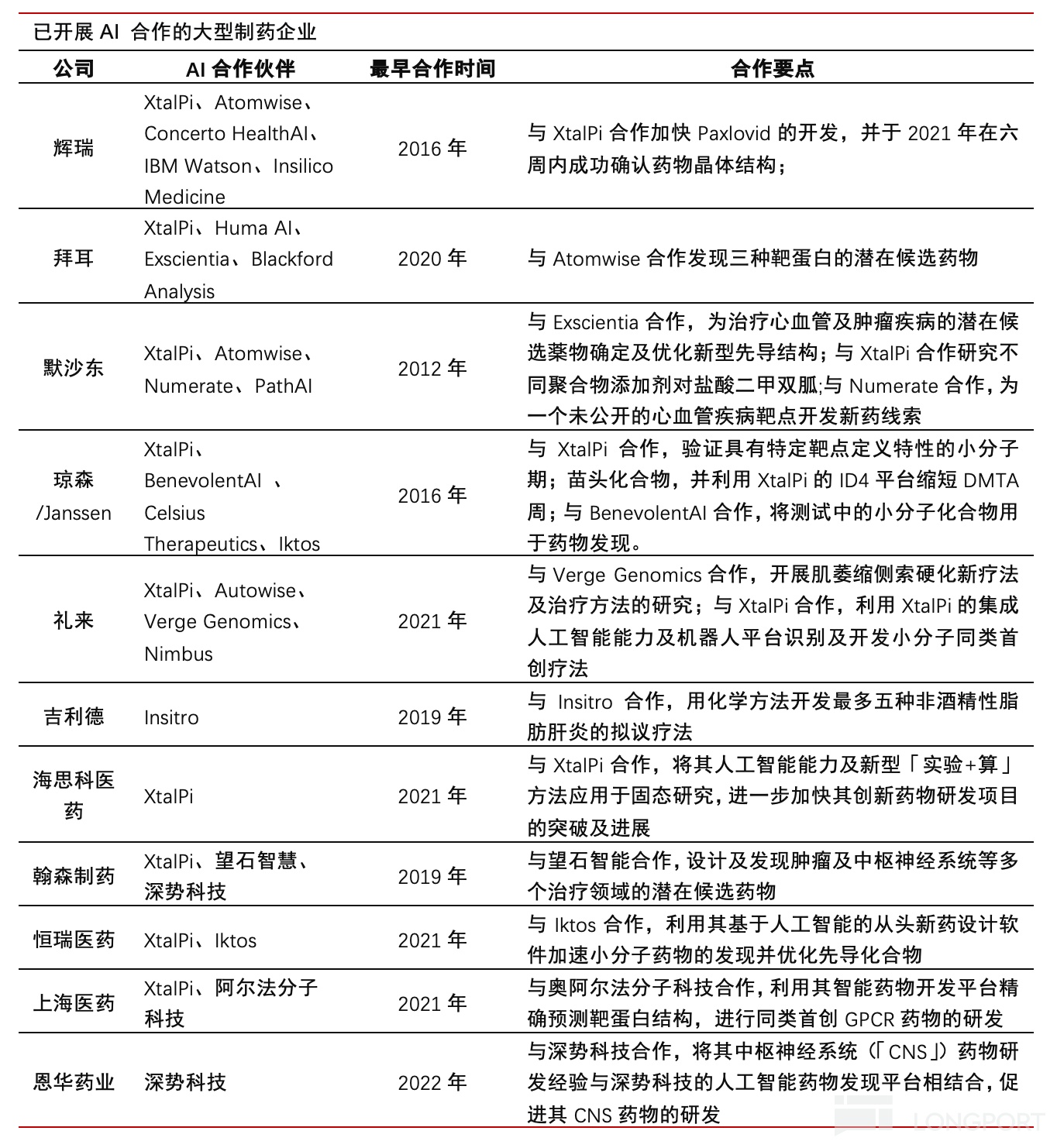
The enormous potential of AI in drug discovery has attracted collaborations from several well-known global and domestic pharmaceutical companies. Large pharmaceutical companies tend to use AI CRO agency R&D services in several key areas where AI empowerment effects are best, such as target discovery and compound screening in drug discovery, while other areas are still entrusted to traditional CRO vendors. Overseas pharmaceutical companies mainly include top global pharmaceutical companies such as Pfizer, Bayer, Merck, Johnson & Johnson, and Eli Lilly, while domestic companies mainly include HengRui Medicine, Shanghai Pharmaceuticals, and Enhua Pharmaceutical.
In the past two years, the global AI pharmaceutical industry has shown strong growth in both financing and industrial transactions. Overseas AI sector financing is booming; in related fields of AI4S, for example, Alphabet's Isomorphic Labs raised £180 million last year, while AI drug development companies such as Terray, AI+protein structure prediction company Evolutionary Scale, AI drug development company Genesis Therapeutics, Israeli company CytoReason, which uses artificial intelligence to develop disease research models, and AI drug development company Recursion have also announced financing last year. NVIDIA also announced collaborations with Illumina, Mayo Clinic, and IQVIA to jointly promote the development of genomics, clinical research, and healthcare. In 2023, the total financing amount of the global AI pharmaceutical Top 10 was approximately $1.53 billion, a year-on-year increase of about 65%, mainly concentrated in cutting-edge fields such as generative AI protein drugs, mRNA vaccines, and gene editing. In the first half of 2024, a total of 69 AI pharmaceutical companies globally completed financing, disclosing a total amount of approximately $3.336 billion, with the United States accounting for about 84.33% of the global market share with a total financing amount of $2.814 billion In 2024, there were 102 global AI pharmaceutical financing events, with a total financing amount of USD 4.663 billion. Among them, Xaira Therapeutics completed a USD 1 billion seed round financing in April, becoming the largest financing event of the year.
In terms of industry transactions, there were 11 AI-related cooperation deals by multinational pharmaceutical companies in 2023, and this number increased to 21 in 2024, with a total amount reaching USD 12.932 billion. In 2024, giants like Eli Lilly, Novartis, and Merck continued to increase their investment in the AI pharmaceutical field, announcing around 20 transactions. For example, Insitro signed three strategic agreements with Eli Lilly to jointly advance the research and development of new drugs for metabolic diseases; AstraZeneca reached an agreement with CSPC Pharmaceutical Group with an estimated total transaction amount of USD 2.02 billion; and Genentech entered into a purchase agreement with a USD 850 million upfront payment with Regeneron. These significant transactions demonstrate the rapid development and wide application of AI pharmaceuticals globally.
Jensen Huang is extremely optimistic about the development prospects of the AI pharmaceutical industry, believing that digital biology and generative artificial intelligence are reshaping fields such as drug discovery, surgery, medical imaging, and wearable devices. He emphasized that the combination of data science, artificial intelligence, and automation will lead to exponential improvements in biology, and AI pharmaceuticals will become the next golden track. Paul Hudson, CEO of Sanofi, stated that AI heralds a great era of drug discovery and announced in 2023 an "All in" commitment to artificial intelligence and data science, aiming to become the first large-scale AI-driven pharmaceutical company by optimizing drug development processes through AI technology, enhancing research and development efficiency, and establishing a comprehensive AI regulatory framework. Dr. Tang Qiusheng from Roche China Accelerator pointed out that AI plays an important role in drug discovery and will be widely applied throughout the drug development process in the future. Pharmaceutical companies need to enhance their computing capabilities and algorithms, while collaboration between startups and large pharmaceutical companies will drive industry innovation. Roche actively promotes the construction of the AI pharmaceutical ecosystem through its accelerator. Overall, the AI pharmaceutical industry is in a rapid development phase, transitioning from "theoretical experiments" to "technical validation," demonstrating significant advantages in various stages of drug development. However, the industry still faces challenges such as talent shortages, data privacy, and ethics. With the continued investment from multinational pharmaceutical companies and technology giants, the commercialization breakthrough point is approaching.
From a technological development perspective, the maturity of AI technologies, especially generative AI, machine learning, and deep learning, has brought disruptive changes to new drug development. For example, AI can shorten drug discovery time by 40% and save 50% to 60% of clinical trial time, greatly improving research and development efficiency. Additionally, the 2024 Nobel Prize in Chemistry was awarded to the inventors of AlphaFold2, further proving the immense potential of AI in fundamental research areas such as protein structure prediction, providing strong support for the technological development of AI pharmaceuticals. In terms of market demand, the traditional pharmaceutical industry faces challenges such as long research and development cycles, high failure rates, and exorbitant costs, while AI pharmaceuticals can effectively reduce costs and increase efficiency, meeting the demand for innovation and efficiency from pharmaceutical companies. It is predicted that the AI pharmaceutical market will maintain rapid growth over the next decade, with the global market size expected to exceed USD 11.8 billion by 2032 The outbreak period of the AI pharmaceutical industry has arrived. As the industry ecosystem continues to mature, many companies worldwide have entered the AI pharmaceutical space, including tech giants like NVIDIA, Tencent, and Alibaba. Their participation has accelerated the promotion and application of technology. Policy support and capital investment have also provided strong guarantees for the development of AI pharmaceuticals. In 2024, there have been several large-scale financings and strategic collaborations with multinational pharmaceutical companies in the AI pharmaceutical field, demonstrating the high level of capital interest in this sector. Therefore, the accumulation of technology, market, ecosystem, and capital in AI pharmaceuticals brings it close to an outbreak period, with the potential for rapid development in the coming years.
To be continued, next chapter: What is JingTai's core competitive advantage in this industry?
The copyright of this article belongs to the original author/organization.
The views expressed herein are solely those of the author and do not reflect the stance of the platform. The content is intended for investment reference purposes only and shall not be considered as investment advice. Please contact us if you have any questions or suggestions regarding the content services provided by the platform.
