


SCHW: Solid Organic Growth; Short-Term Blips Not a Major Concern
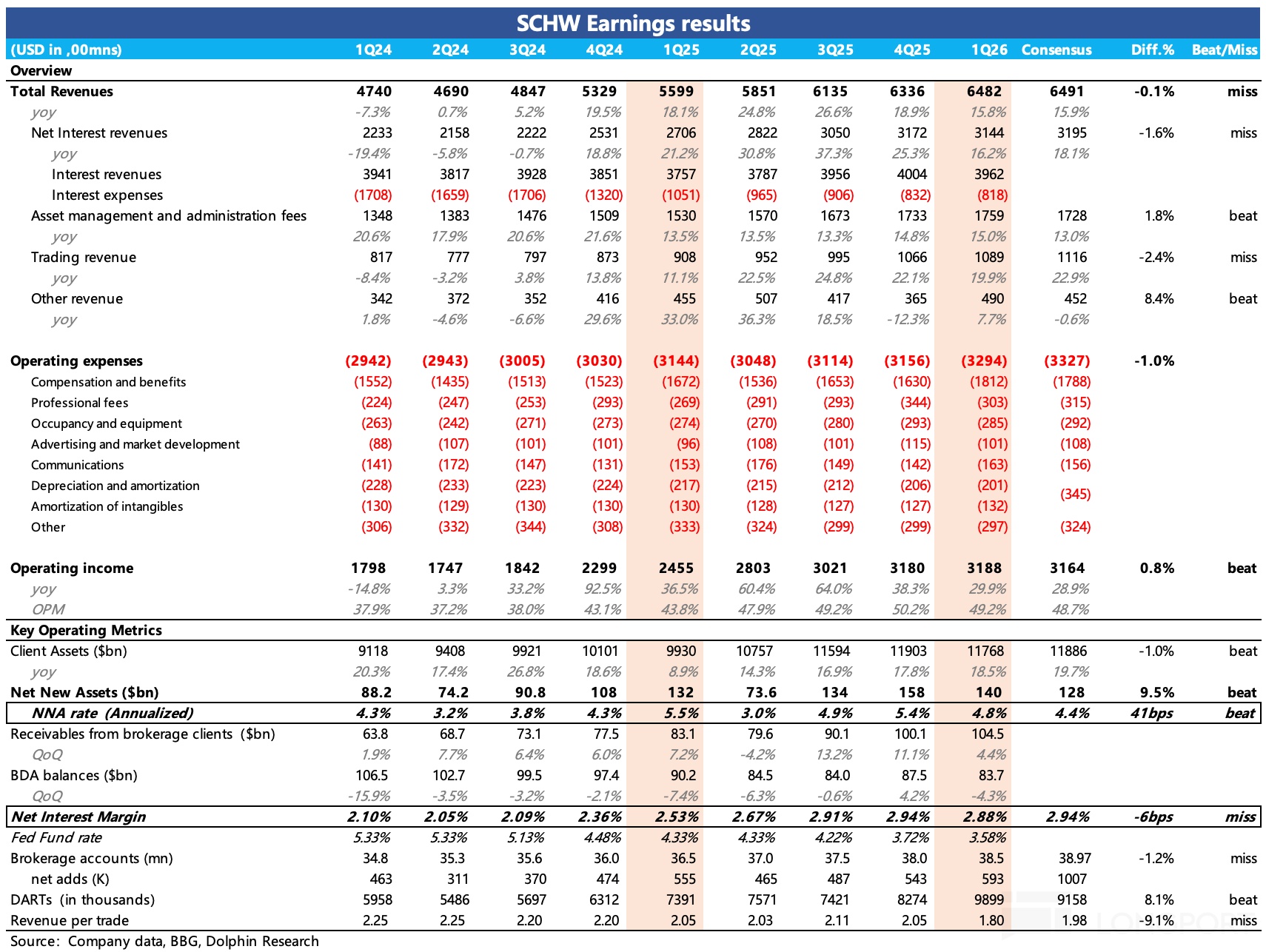
$Charles Schwab(SCHW.US) Q1 results were solid, but expectations were lofty, so the market may focus on a slight revenue miss and a QoQ dip in net interest margin (NIM).
After releasing strong Feb operating metrics, management preannounced Q1 revenue growth of 16% vs. the then-consensus ~14.5%. This effectively raised the bar a month earlier.
Key takeaways:
1) Key gauges — NNA and NIM: Simplifying SCHW’s model, the two core levers are net new assets (NNA) and NIM. NNA captures long-term, scale-driven organic growth, while NIM reflects monetization of client assets with net interest still the primary driver.
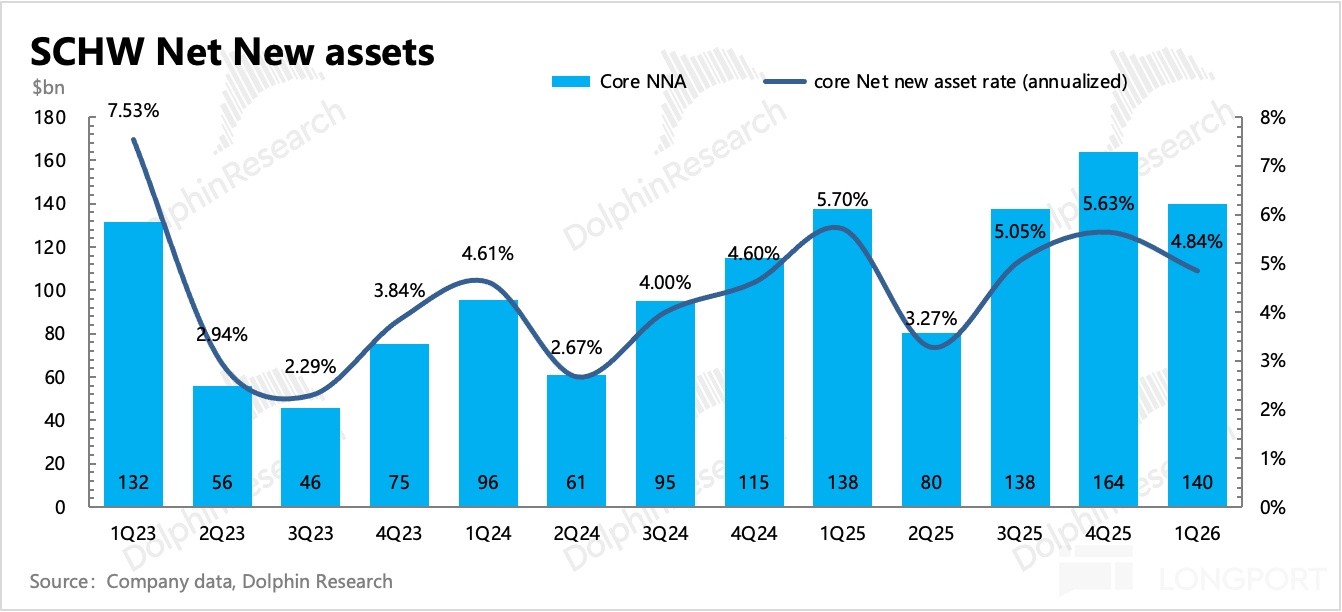
(1) NNA: Q1 NNA was $140bn, implying a 4.8% annualized pace. This includes a planned $17.5bn outflow from maturing mutual fund liquidations; ex this, the annualized run-rate was 5.3%, above the 5% full-year guide (Mar alone reached 7.5% amid geopolitical noise).
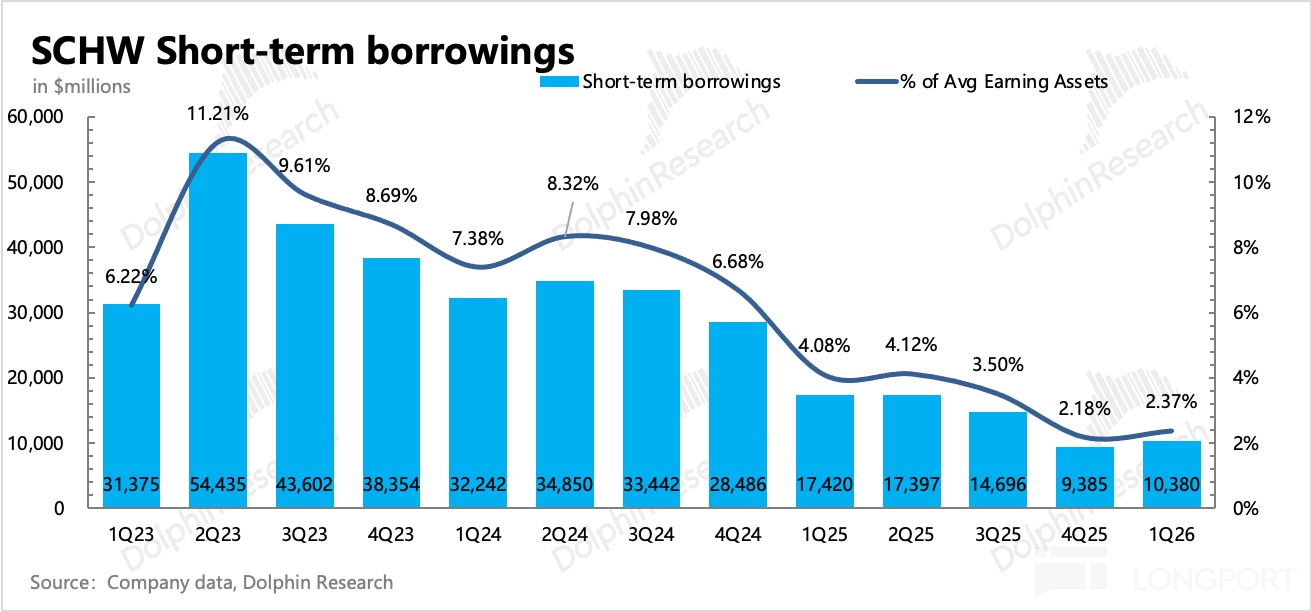
(2) NIM: NIM was 2.88%, down slightly QoQ. The interest income line began to reflect late-4Q rate cuts, while interest costs rose on higher short-term borrowings.
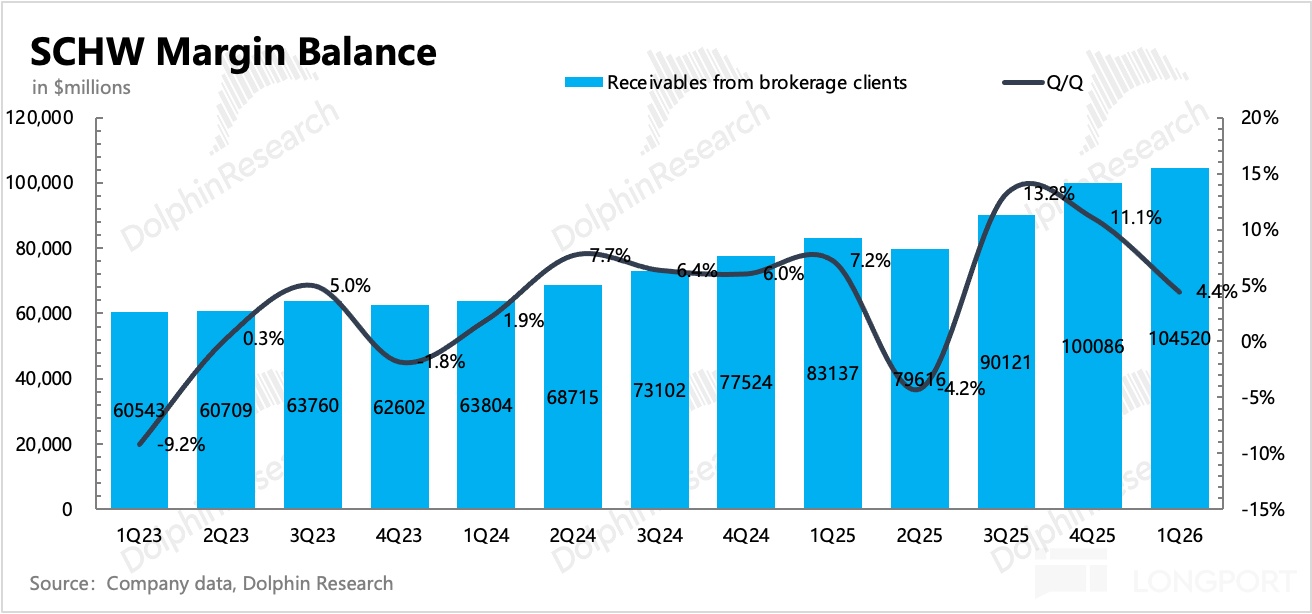
Given a healthy trend in margin balances (ex-RIA long/short strategies, platform margin balances still rose 4% QoQ, ahead of the industry), our read is that incremental short-term borrowings likely bridged financing demand. If so, that near-term ‘noise’ should be viewed constructively over a medium to long horizon. Federal Home Loan Bank borrowings continue to roll off in order, with under $1.3bn remaining at quarter-end.
2) Segment performance
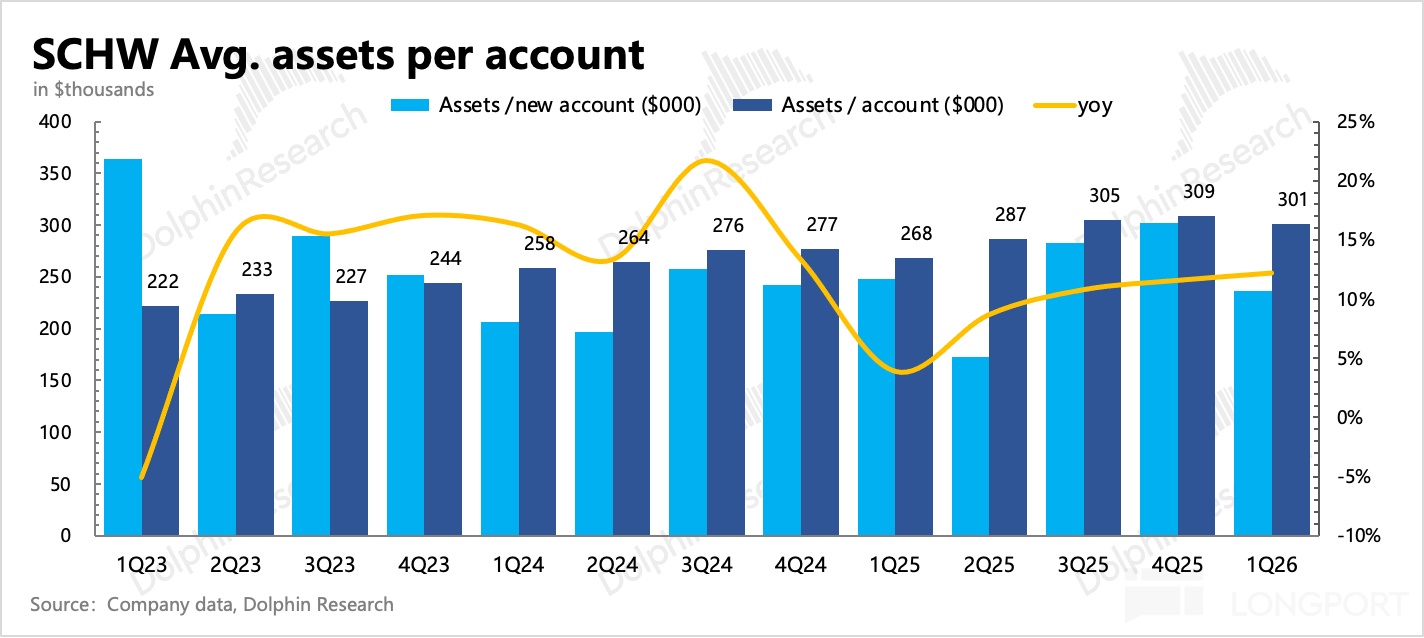
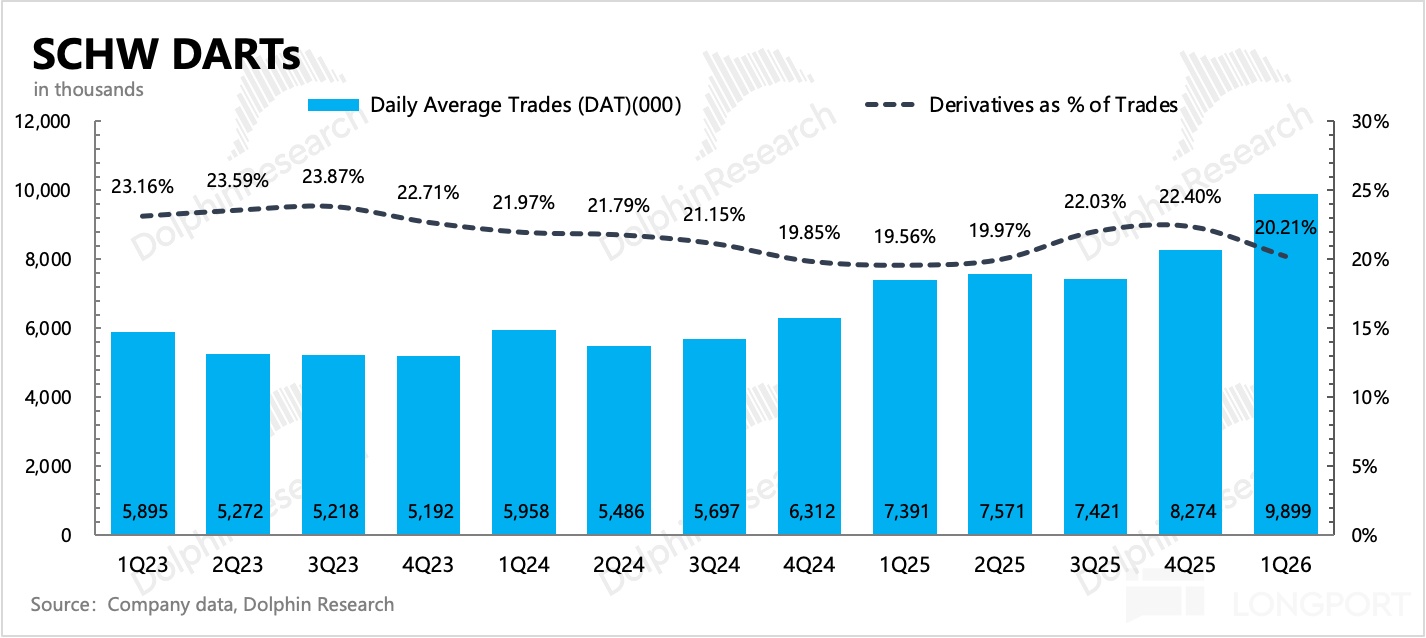
(1) Trading: DARTs rose 34%, beating expectations. The upside was driven by 6% growth in accounts, a 12% increase in average assets per account, and a higher mix of derivatives YoY.
(2) Net interest income: +16% YoY, moderating on tough comps and the impact of rate cuts. Interest-earning assets were up ~1% YoY; NII expansion primarily came from higher NIM and a rapid runoff of short-duration debt that lowered interest expense.
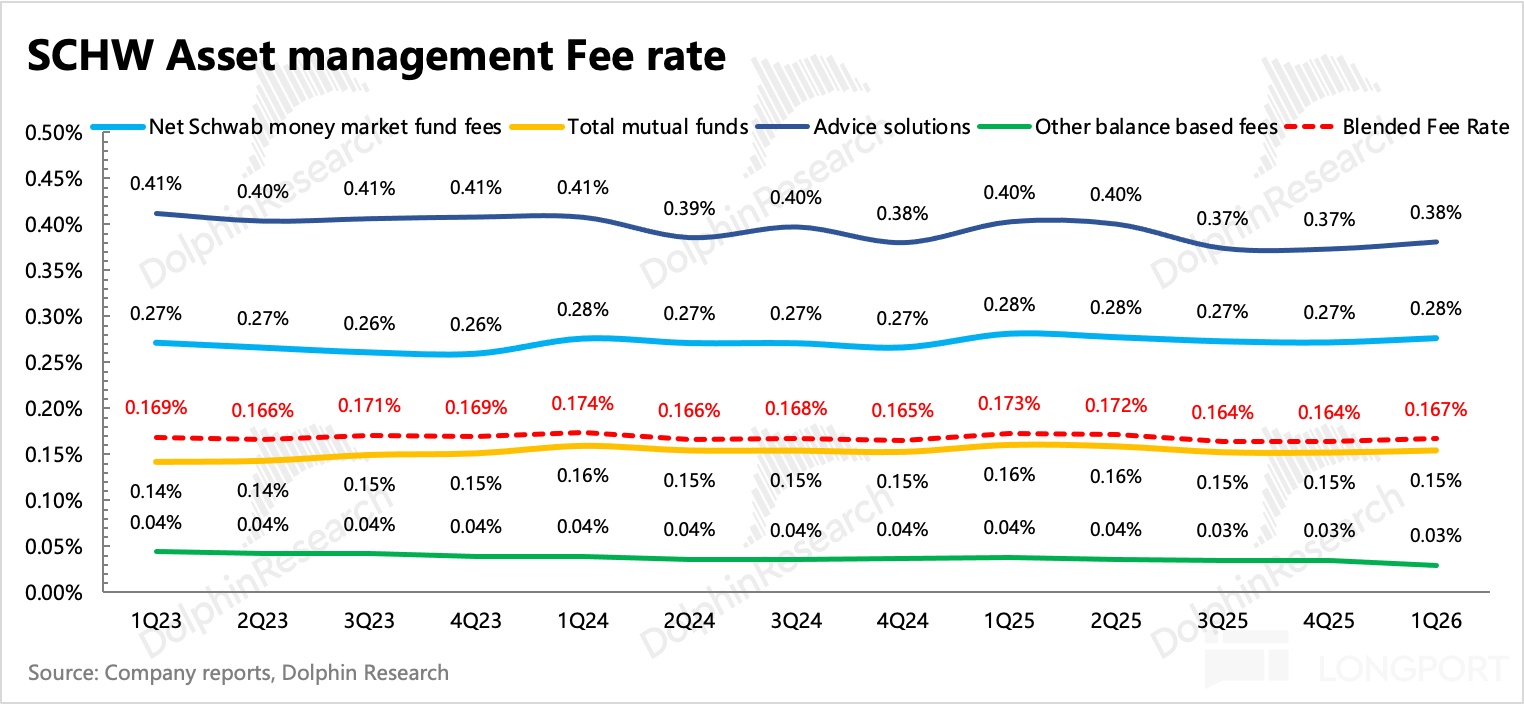
(3) Wealth management: +15% YoY, consistent with SCHW’s franchise strength. Total advised assets including money funds reached ~$11.8tn at quarter-end, +17% YoY, with the blended fee rate stable.
3) Margin improvement cadence — NIM and M&A effects: Operating margin was 49% in Q1, up meaningfully YoY but down 100bps QoQ. Beyond the small QoQ NIM downtick, March completion of the Forge Global acquisition likely lifted personnel expense, which rose 11% QoQ.
4) Capital returns remain attractive: The quarterly dividend was raised to $0.32/share (+19% QoQ). Buybacks totaled $2.4bn in Q1 vs. $2.7bn in Q4, implying an annualized buyback yield of ~5.7%; adding a 1%+ dividend, total shareholder return is near 7%.
5) Key metrics at a glance:
Dolphin Research view
Overall, SCHW posted a steady Q1, yet the market clearly wanted more. We think investors are most concerned about the QoQ decline in NIM. As noted, some of this may be near-term noise and not a structural drag on medium to long-term performance.
While a pause in rate cuts naturally tempers trading activity, SCHW’s earnings remain highly sensitive to NIM. After the mid-Feb sell-off on weak Jan NNA, shares were more resilient in Mar as Middle East tensions lifted inflation expectations, and Feb operating metrics plus the revenue growth pre-announcement supported the stock.
Given macro volatility this year and meaningful product updates at SCHW, new growth guidance from management is worth tracking on the call.
Current market cap is under $170bn, implying ~17x 2026E P/E. Assuming steady execution (continued Ameritrade integration, cross-sell, and new products such as crypto), we think once short-term disappointment washes out, SCHW can still trade back toward its 18x–20x historical midpoint. That embeds ~6%–15% upside, underpinned by ~7% current total shareholder return.
Detailed analysis below
I. SCHW business overview
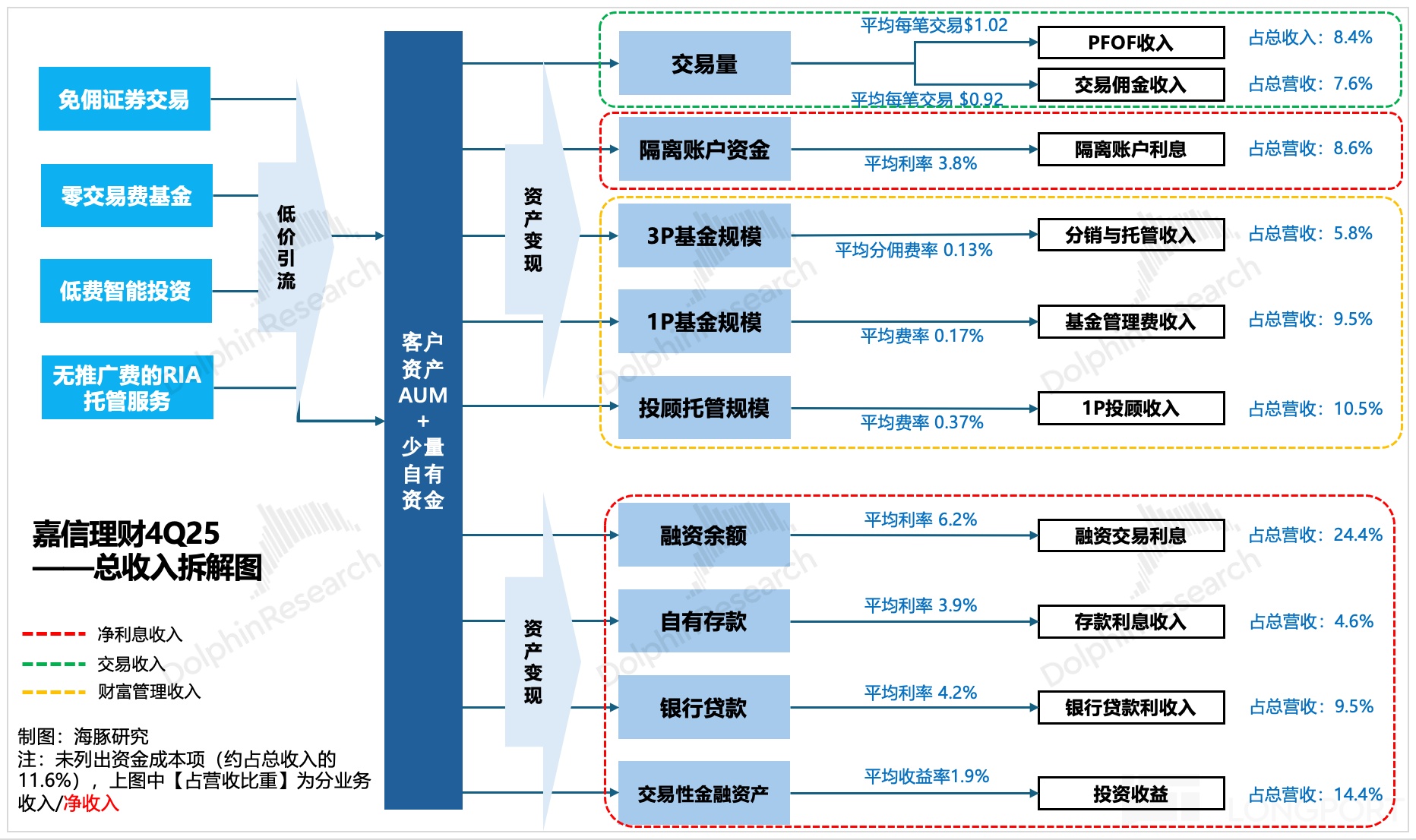
Charles Schwab is one of the go-to platforms for household wealth management in the U.S. On SCHW’s platform, retail clients can trade stocks and bonds, buy funds, seek investment advice, and access banking, lending, and trust services, forming an end-to-end wealth solution.
On the institutional side, SCHW supports independent RIAs with trading, custody, financing and more. The two engines are complementary: by serving outsourced RIAs, SCHW scales its wealth offering with a capital-light model and reaches more high-quality clients, while RIAs leverage SCHW’s brand, custody safety, and broad product shelf to run independently.
As commissions compress across trading and funds, SCHW fills the gap with net interest from deposits and investments in fixed-income assets. The model is set: attract and retain assets via zero-commission brokerage, low-channel-fee and zero-transaction-fee funds, low-fee robo-advice, and no-promo-fee RIA custody to scale AUM, then monetize primarily through asset yield (deposit/loan interest and investment income).
II. Organic expansion within the ecosystem
The SCHW ecosystem continued to expand steadily in Q1. Key metrics:
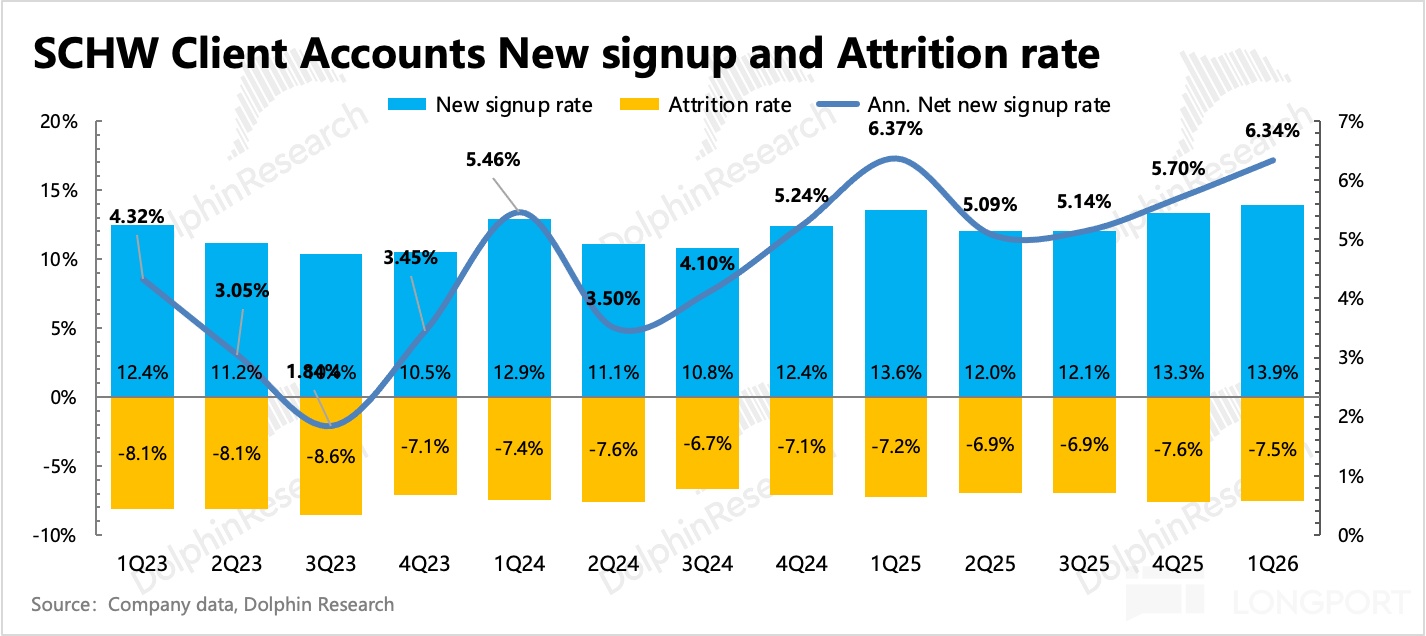
(1) Brokerage accounts rose by 1.3mn gross; after removing 0.71mn inactive accounts, net adds were 0.59mn. On an annualized basis, that equates to 14% gross adds, 8% attrition, and 6% net growth.
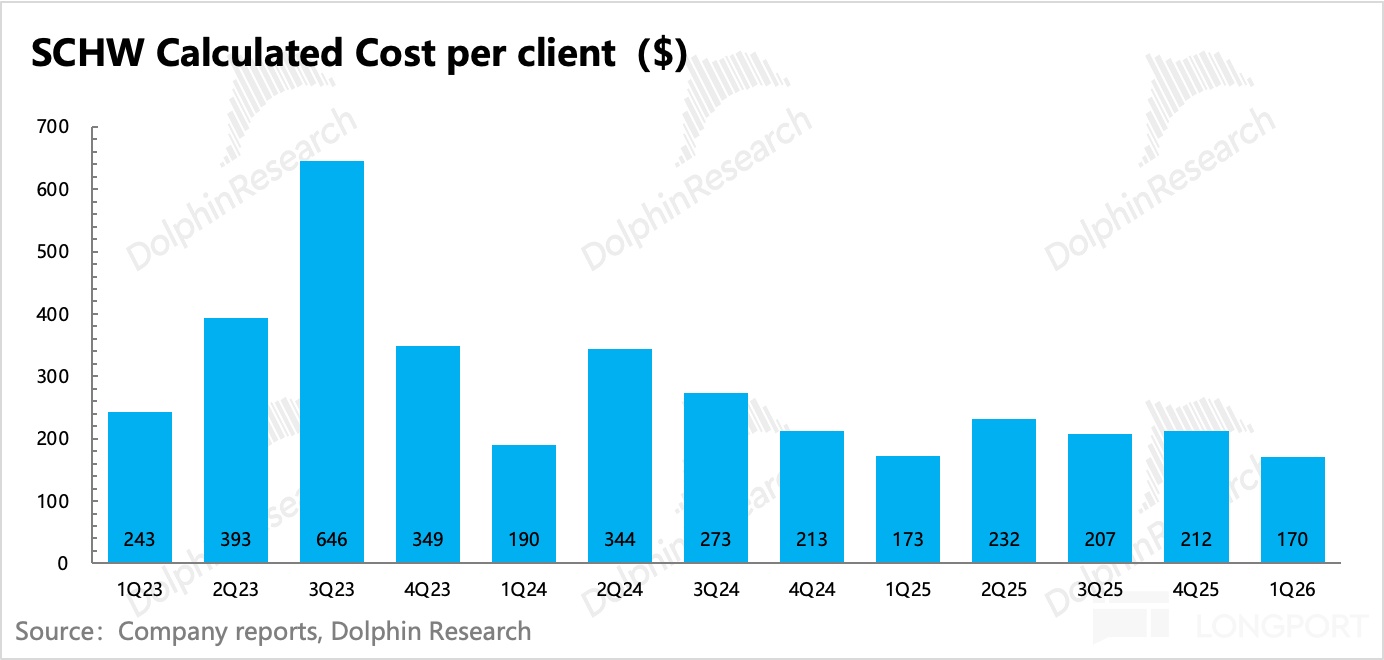
Long-standing brand equity supports steady user growth with stable CAC around $200 per client. In Q1, blended CAC was ~$170 per client.
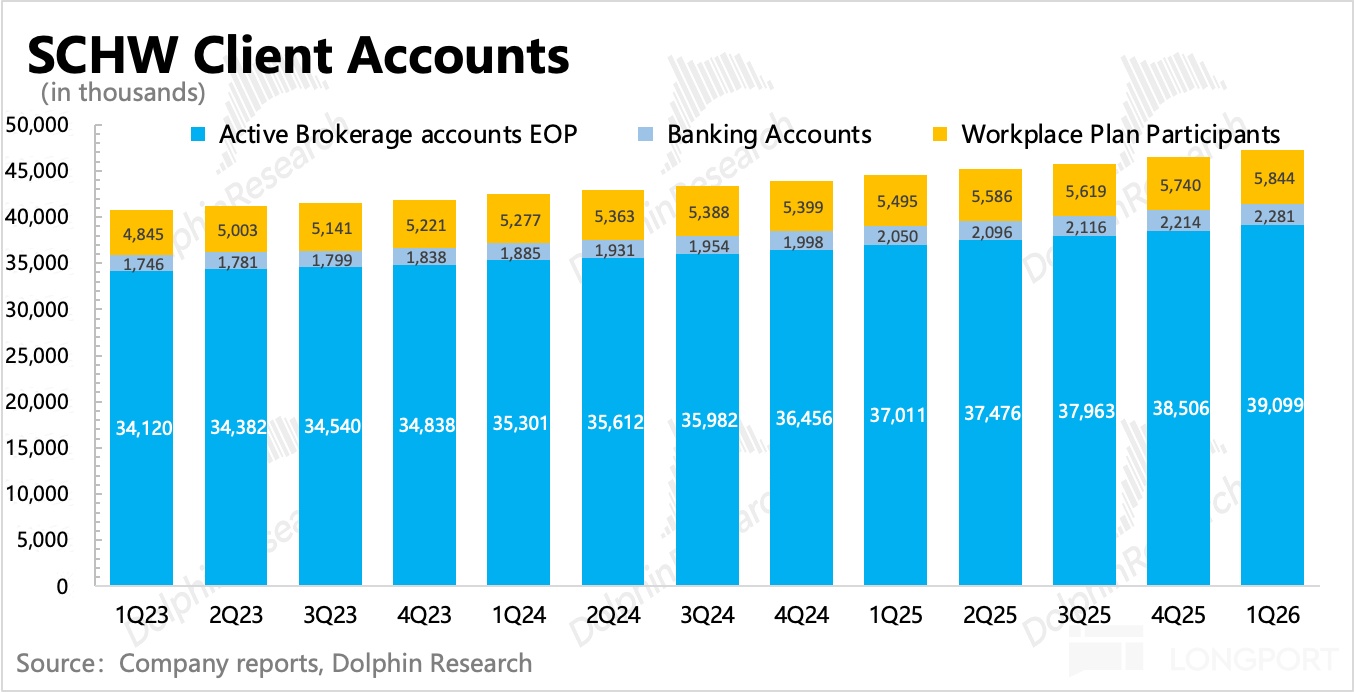
(2) Total client assets reached nearly $11.8tn in Q1, with average assets per account at ~$300k, down from ~$310k in Q4 on market volatility.
Total client assets fell by just over $120bn QoQ, driven by $140bn of inflows (including the $17.5bn mutual fund maturity outflow), implying a 4.8% annualized NNA pace (5.3% ex the mutual fund factor), and a $275bn headwind from market moves.
Management maintains a long-term NNA CAGR target of 5%–7% and guides 5% for this year. Mar’s counter-trend strength suggests SCHW’s organic engine remains intact.
III. Trading — below expectations as the backdrop turned tougher
Geopolitical frictions pressured risk appetite through the quarter. The Middle East flare-up in Mar drove sharp equity swings, and despite indices finishing near where they began, volatility weighed on investor sentiment.
Industry-wide, trading cooled notably:
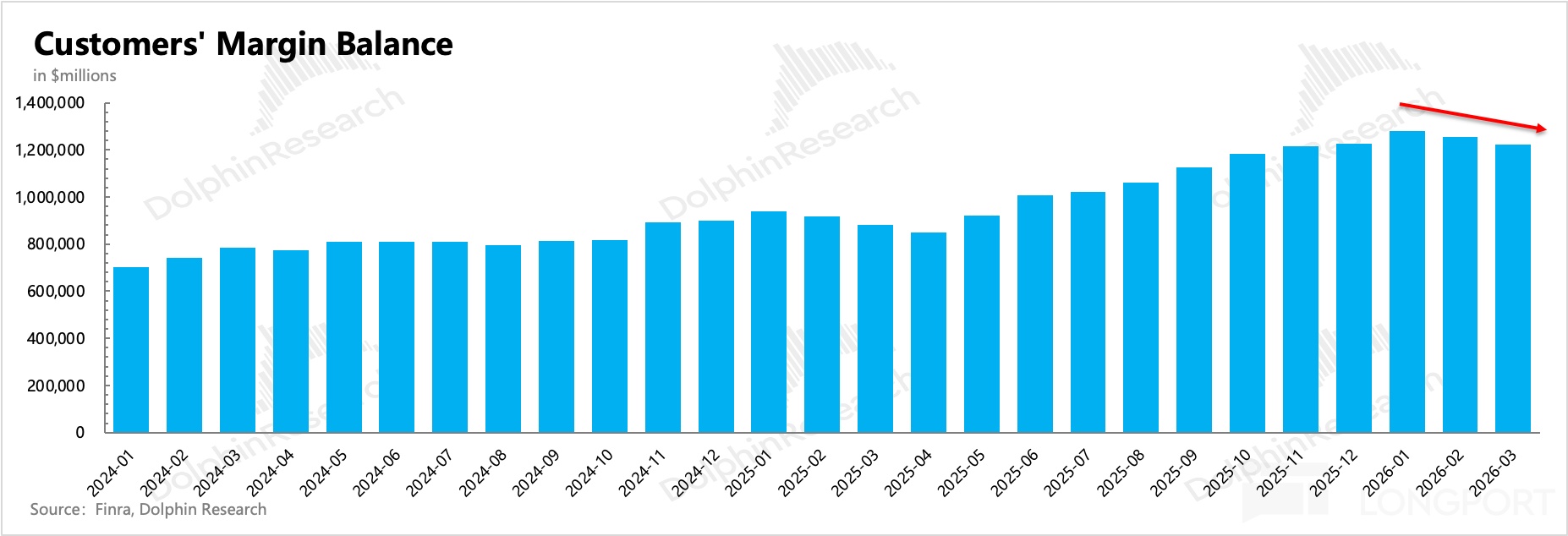
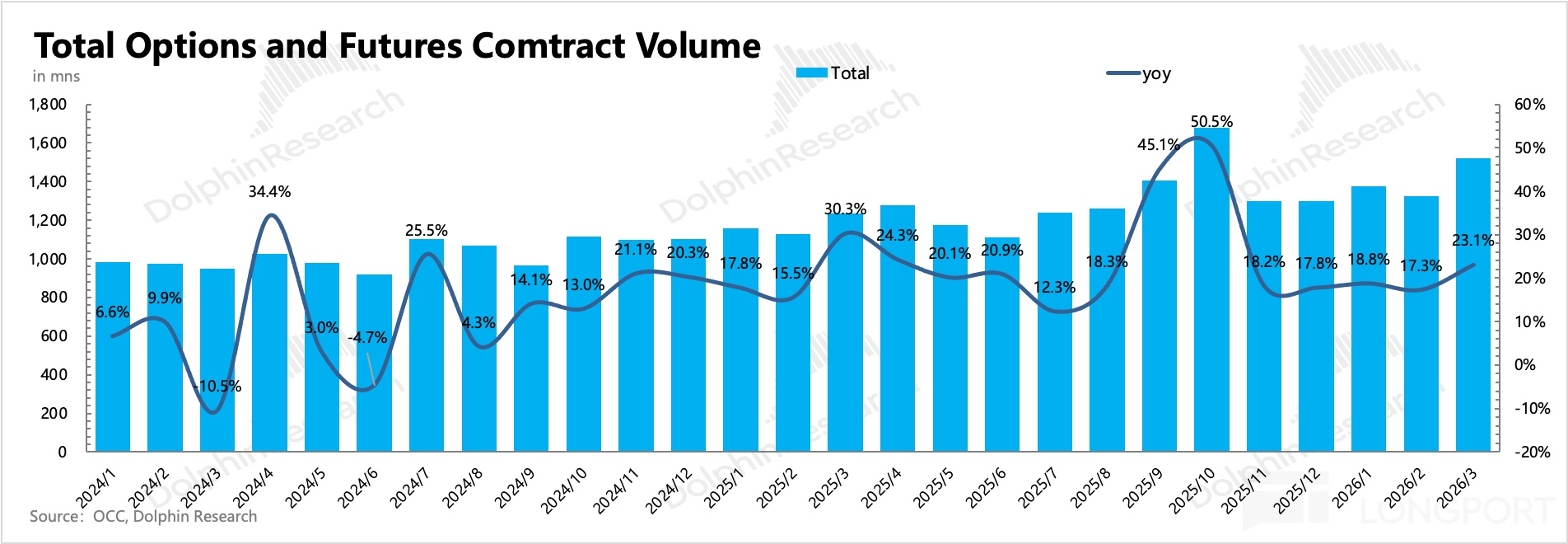
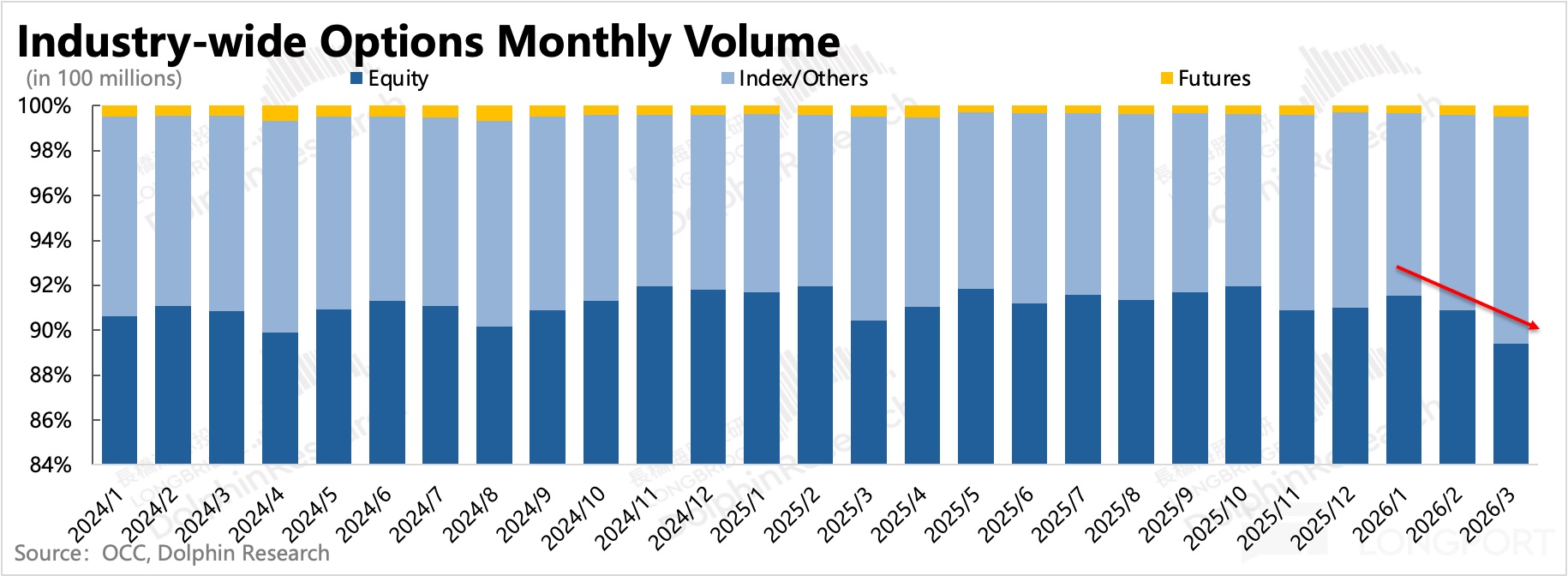
(1) Equities: QoQ growth in margin balances slowed and absolute balances declined through the quarter, signaling a fast risk-off by retail. Overall derivatives volumes fell QoQ, with a mix shift: single-stock options volume share fell, while index options — often used by institutions for hedging — surged.
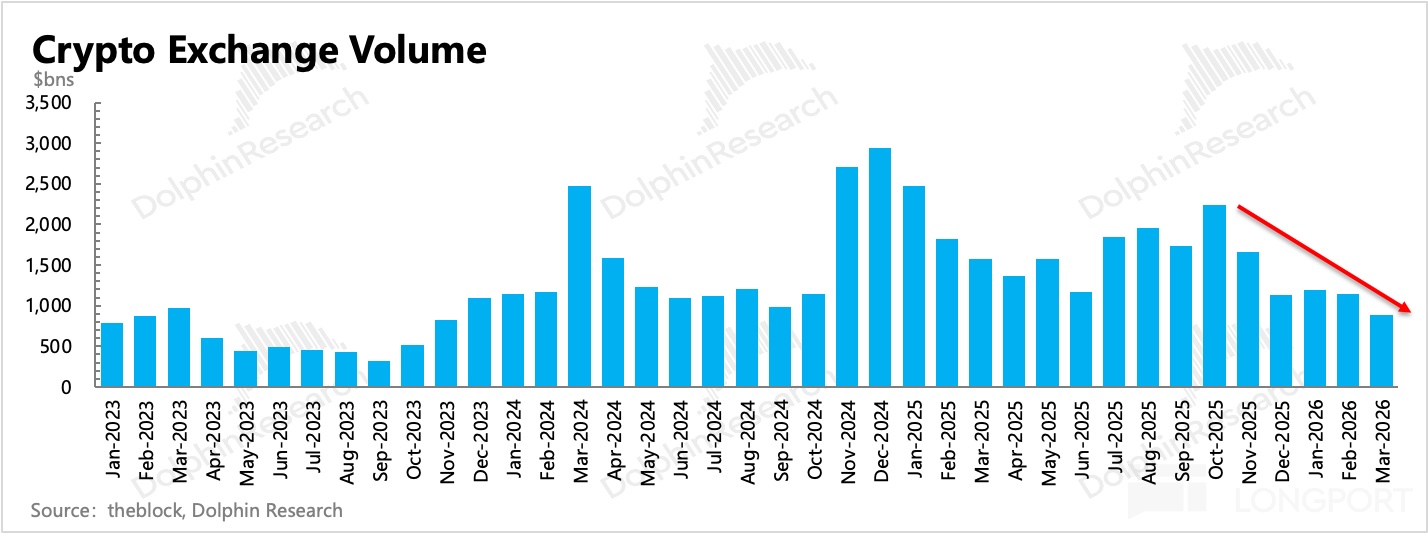
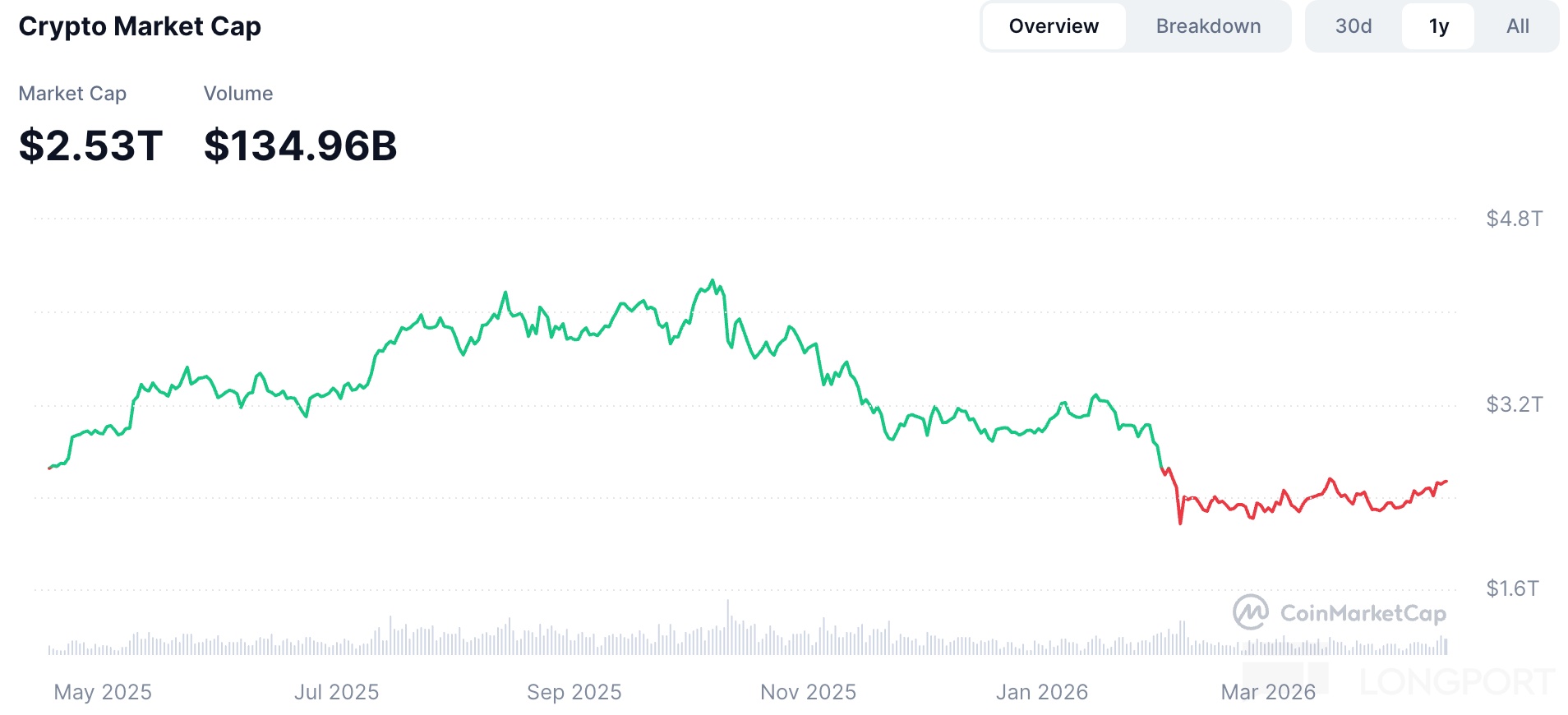
(2) Crypto: The proposed ‘CLARIFY’ framework added uncertainty (late-Mar Banking Committee draft still opposed paying stablecoin yield to holders unless for specific activities). With risk appetite subdued, crypto suffered a further slide after Q4’s pullback — volumes sank, and total market cap fell from just above $3tn to as low as ~$2.2tn.
Against this backdrop, SCHW held up well — active brokerage accounts hit a record, and DARTs grew fast in Q1. User mix matters: when volatility spikes and drawdowns mount, retail cools quickly, particularly younger traders with higher equity allocation and trading agility than older, fund-heavy cohorts.
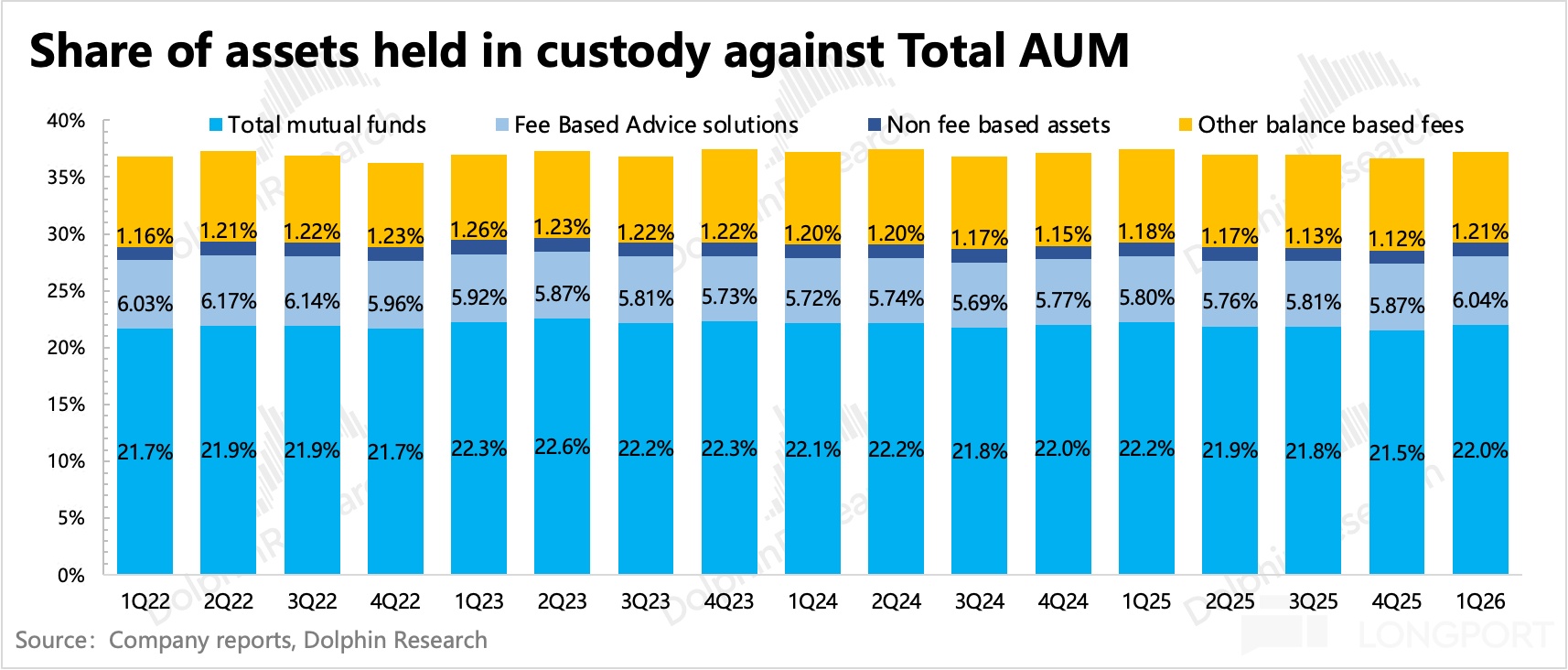
Extreme tapes thus hit platforms skewed to younger retail like Robinhood harder. By contrast, about half of SCHW client assets sit in mutual funds and ~10% in fixed income, offering better shock absorption, while institutional fund managers manage drawdowns and hedge, often lifting DARTs in choppy markets.
STAX also reflects this; after peaking in Feb, the index only eased modestly in a volatile Mar. For comparison, during the tariff scare last Apr, STAX fell from 48.4 in Mar to 41.2 — a sharper fear spike than this time.
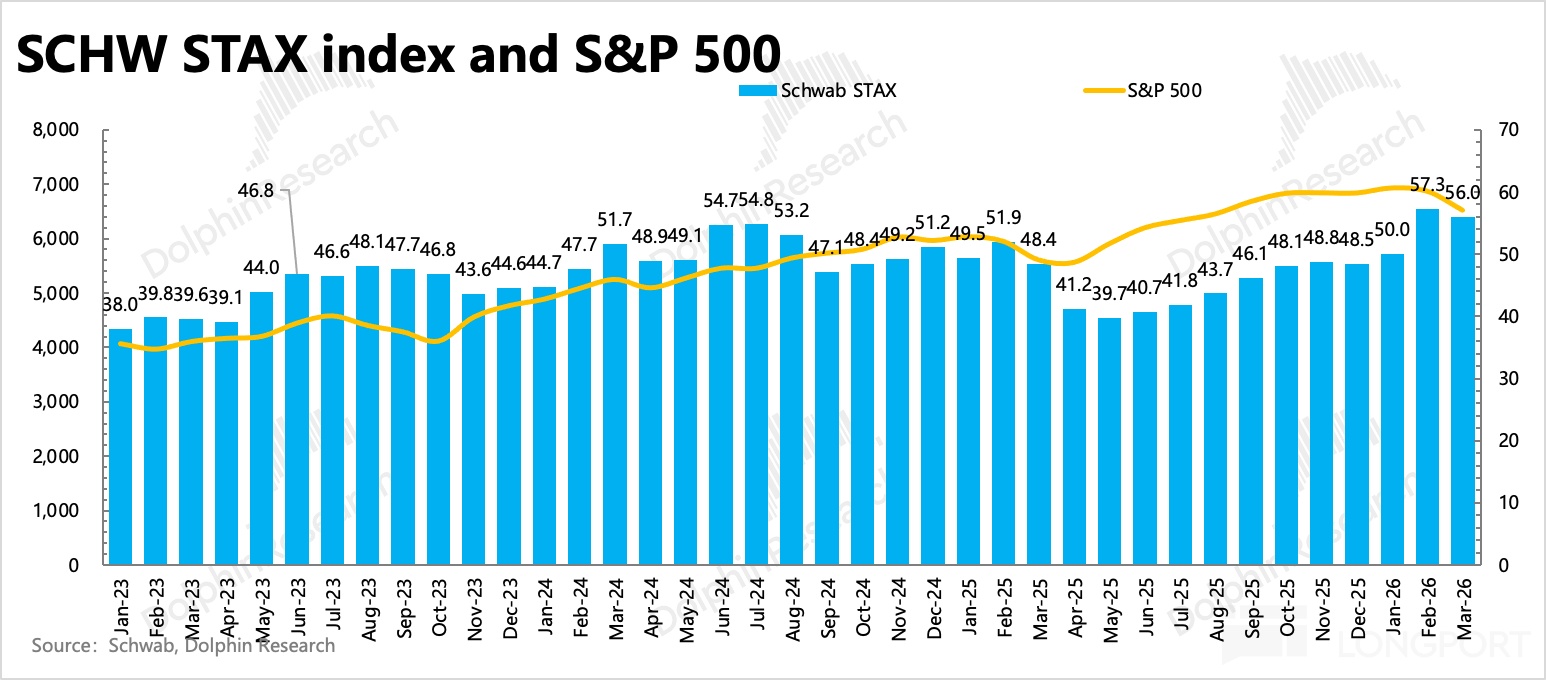
Net-net, trading revenue rose ~20% YoY in the quarter, only slightly softer than last year’s stronger quarter. DARTs were 9.9mn, +34% YoY, with derivatives mix up YoY but down QoQ.
IV. Net interest — NIM below expectations, full-year guide intact
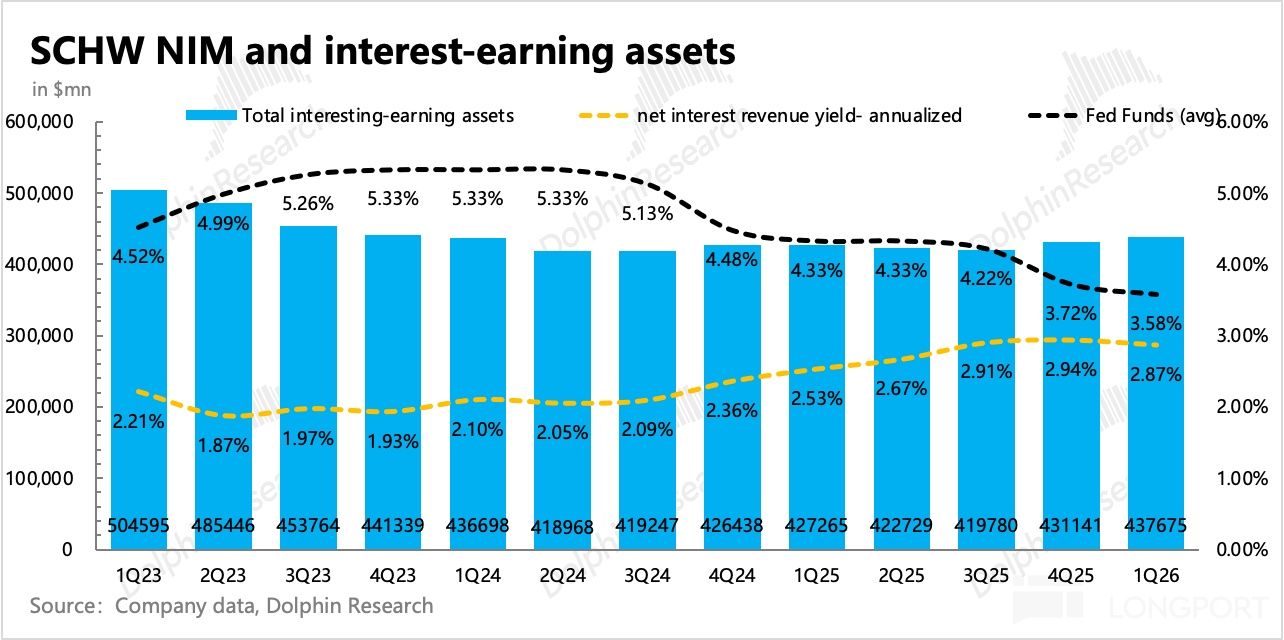
NII grew 16% YoY but decelerated on tough comps, rate cuts, and higher short-term funding.
Growth was driven by client financing needs: margin balances rose 4% QoQ (or +13% including RIA long/short strategies). The latter does not generate interest income for SCHW, so we focus on platform-driven demand.
By decomposition, interest-earning assets were up ~1.5% YoY, while NIM rose ~30bps YoY but slipped ~6bps QoQ, missing expectations.
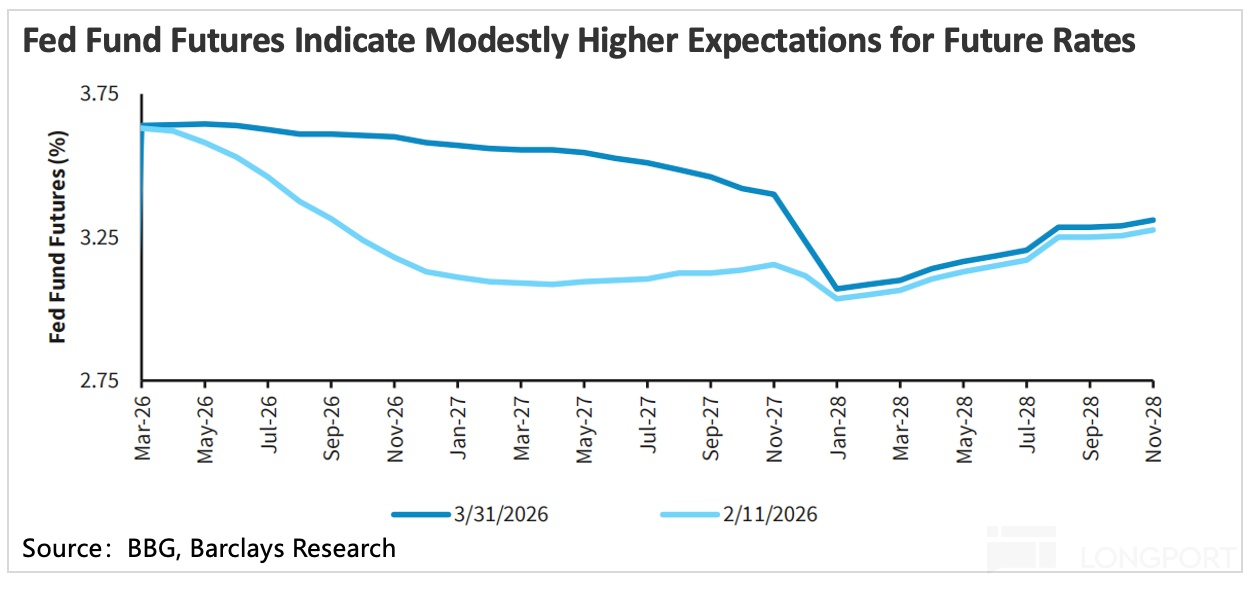
Last quarter, SCHW lifted its 2024 NIM target from 2.75% to 2.89%–2.95%. Despite Q1’s 2.88% print, the company kept its full-year NIM guide unchanged based on the expected rate path and did not raise it on Middle East developments.
V. Wealth management — continued scale-led organic growth
Wealth revenue rose ~15% YoY in the quarter, driven by AUM expansion with a broadly flat blended fee rate. AUM grew briskly in Jan–Feb, then saw notable outflows in Mar, while idle balances rose by ~$25bn vs. Feb.
Even so, quarter-end AUM was up QoQ and accelerated vs. earlier quarters last year.
VI. Profit improvement slowed
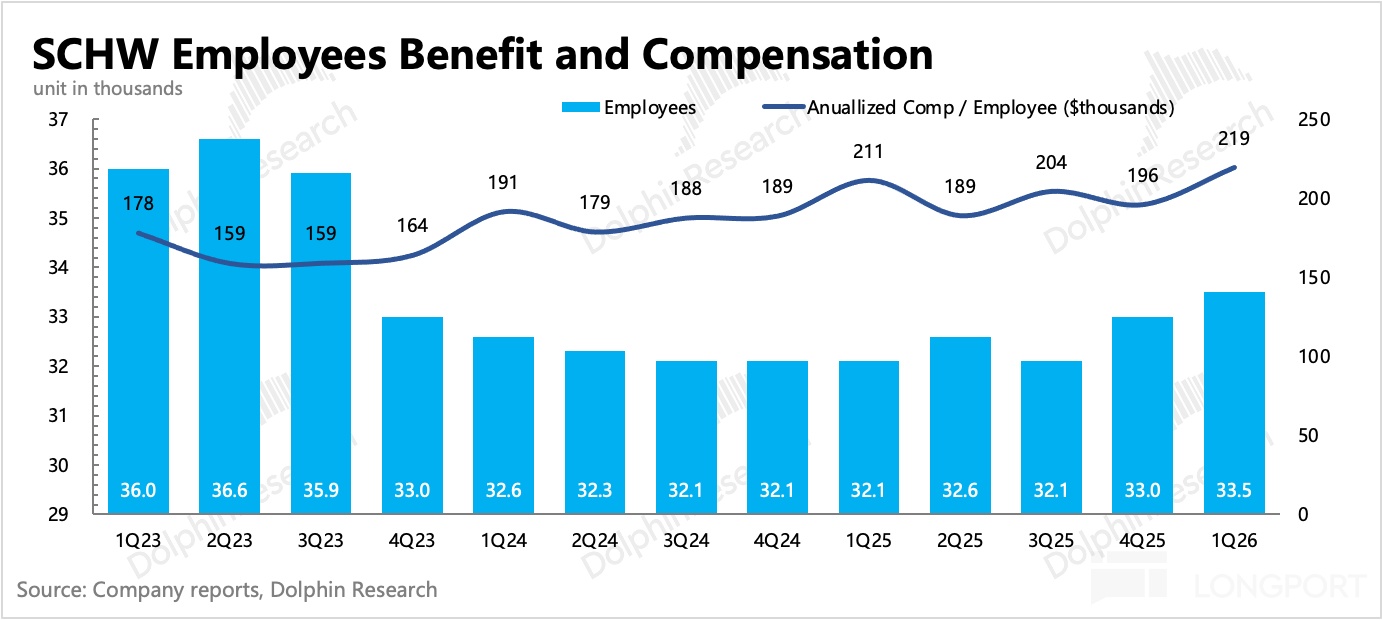
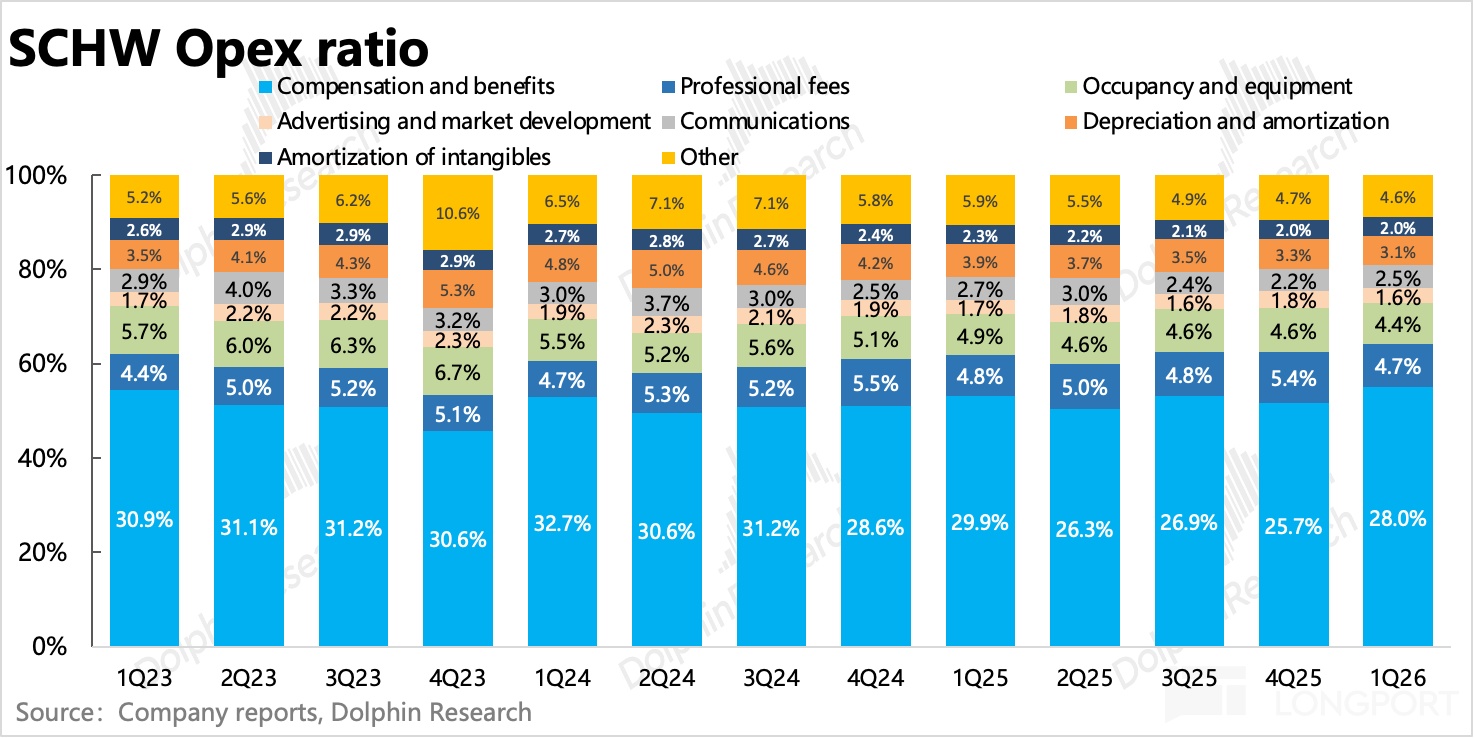
As a mature platform, expenses are usually stable, though SCHW is investing in product innovation, keeping specialist personnel costs on an upward trend.
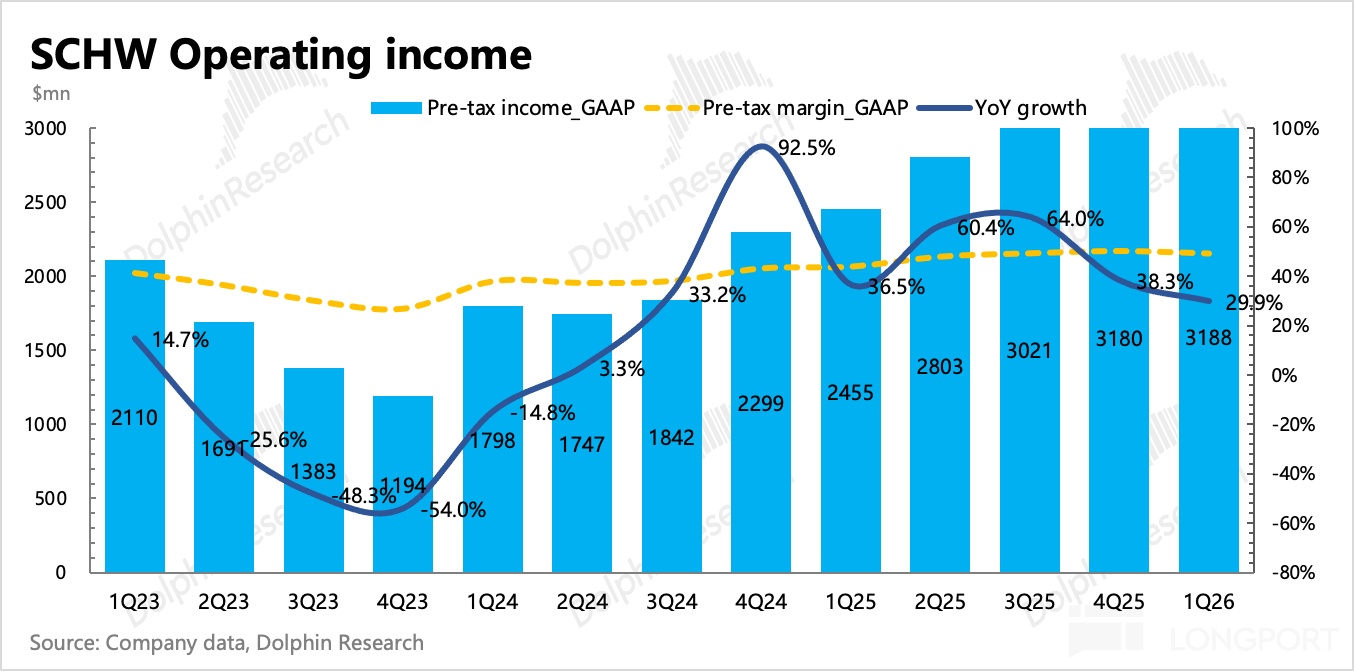
Q1 operating margin was 49%, up markedly YoY but down 100bps QoQ, reflecting the modest NIM decline and the Mar close of Forge Global, with personnel expense up 11% QoQ.
<End>
Dolphin Research on Charles Schwab
Earnings
Jan 22, 2026 call notes: ‘Charles Schwab (Trans): Key moves this year in ‘Digital Assets’ and ‘Alternatives’’
Jan 22, 2026 earnings take: ‘Charles Schwab: Steady as it goes for a seasoned franchise’
Oct 17, 2025 call notes: ‘Charles Schwab (Trans): Crypto trading next year, but skeptical on stock tokenization’
Oct 17, 2025 earnings take: ‘Charles Schwab: Great fundamentals, needs an extra spark to re-accelerate’
Deep Dive
Oct 9, 2025 initiation, Part II: ‘After missing the crypto wave, can ‘the veteran’ Schwab mount a comeback?’
Sep 17, 2025 initiation, Part I: ‘Charles Schwab: How a ‘people’s broker’ outcompeted in a crowded market’
Risk disclosure and disclaimer: Dolphin Research Disclaimer and General Disclosure
The copyright of this article belongs to the original author/organization.
The views expressed herein are solely those of the author and do not reflect the stance of the platform. The content is intended for investment reference purposes only and shall not be considered as investment advice. Please contact us if you have any questions or suggestions regarding the content services provided by the platform.
